The Post-from world war II 1945 Order at a Turning new Point 2026

From a U.S.-Led System to a Multipolar World, the Institutions Built After World War II Are Facing Their Biggest Test in Generations
NEW YORK, September 3, 2026 — Castle Journal Global
For more than eight decades, the international system has been built around institutions created after the Second World War.
The United Nations, the Bretton Woods financial institutions, the Security Council, international trade arrangements and a network of alliances were designed for a world in which a relatively small group of powers exercised disproportionate influence.
That world is changing.
In September 2026, the question is no longer whether the international order is becoming multipolar.
The question is whether its institutions can adapt quickly enough to govern it.
United Nations Secretary-General António Guterres made that argument directly this week at the Shanghai Cooperation Organization summit in Bishkek, calling for global governance to be reshaped for a more multipolar international system and warning that existing institutions remain influenced by power relationships established in 1945. (United Nations)
The timing could hardly be more significant.
The Institutions Are Still the Same — The World Is Not
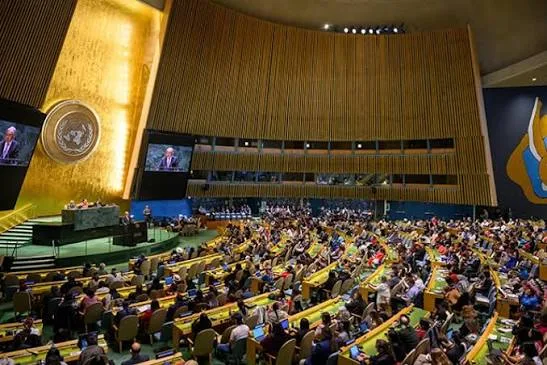
The United Nations remains the central universal diplomatic institution, with 193 member states.
Its authority, however, increasingly collides with geopolitical realities.
The Security Council’s permanent members still reflect the distribution of power at the end of the Second World War: the United States, Russia, China, France and the United Kingdom.
But the global economy and strategic balance have changed dramatically.
Asia has become the centre of much of the world’s economic expansion. China has become a major industrial, technological and financial power. India has emerged as a major global economy. Gulf states have accumulated growing financial and geopolitical influence. African states are demanding greater representation in global institutions.
Yet the architecture of global decision-making has not changed at the same speed.
That creates a legitimacy problem.
The Rise of the Global South
The emerging international order is not simply a contest between Washington and Beijing.
A broader group of countries is attempting to gain greater strategic independence.
The BRICS grouping has expanded its membership, while the Shanghai Cooperation Organization has strengthened its role as a forum connecting major Eurasian powers and developing economies.
These organisations do not constitute a replacement for the United Nations.
They represent something different: the growing desire of non-Western countries to have greater influence over the institutions and rules that shape international finance, trade, technology and security.
This shift was visible at the SCO summit this week, where Guterres argued that a more representative global governance system could strengthen multilateralism rather than destroy it. (United Nations)
That distinction is crucial.
Multipolarity does not necessarily mean the end of international cooperation.
It may instead mean that cooperation has to be redesigned.

Washington’s Changing Role
The United States remains the world’s most powerful military and financial actor, with enormous influence over technology, global finance and international security.
But America’s relationship with multilateral institutions is changing.
Washington increasingly places greater emphasis on national economic interests, trade protection, technological leadership and strategic competition with China.
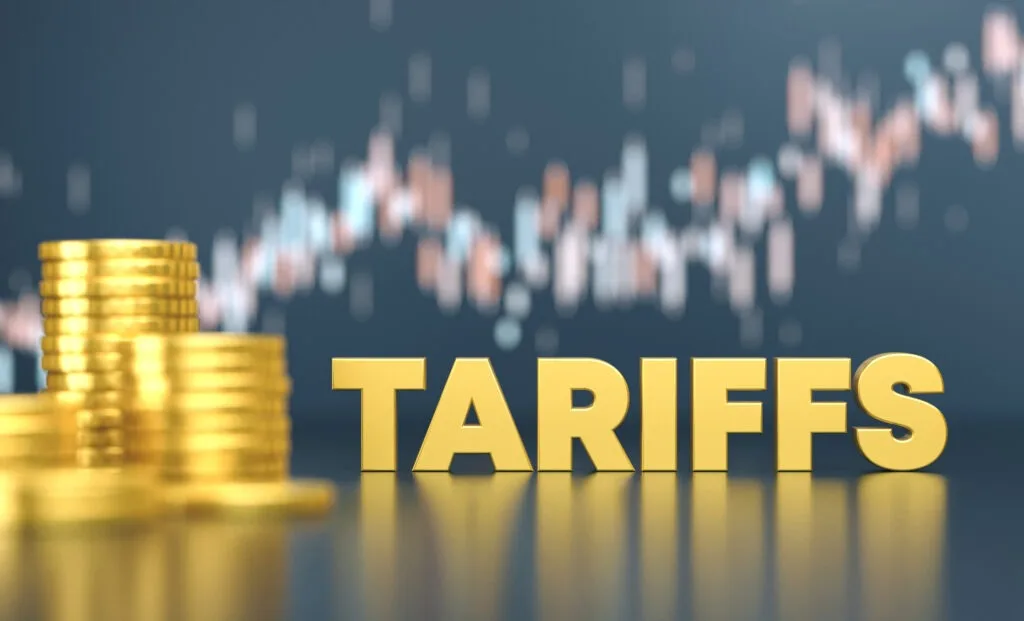
At the G20 this week, U.S. officials pressed other countries to address global trade imbalances, particularly those connected to China’s export model. China resisted several elements of the approach.
The dispute is more than a disagreement over tariffs.
It represents a deeper argument over what the global economic system should look like.
Should the international economy remain highly integrated?
Or should national governments prioritise domestic production, strategic industries and economic security?
There is no simple answer.
Europe Wants Security — and Strategic Independence
Europe is experiencing its own transformation.
The war in Ukraine has forced European governments to reconsider defence, energy security and industrial capacity.
At the same time, Europe remains deeply connected to the United States through NATO.
This produces a strategic dilemma.
Europe wants the protection of the transatlantic alliance, but it also wants greater capacity to act independently when American and European interests diverge.
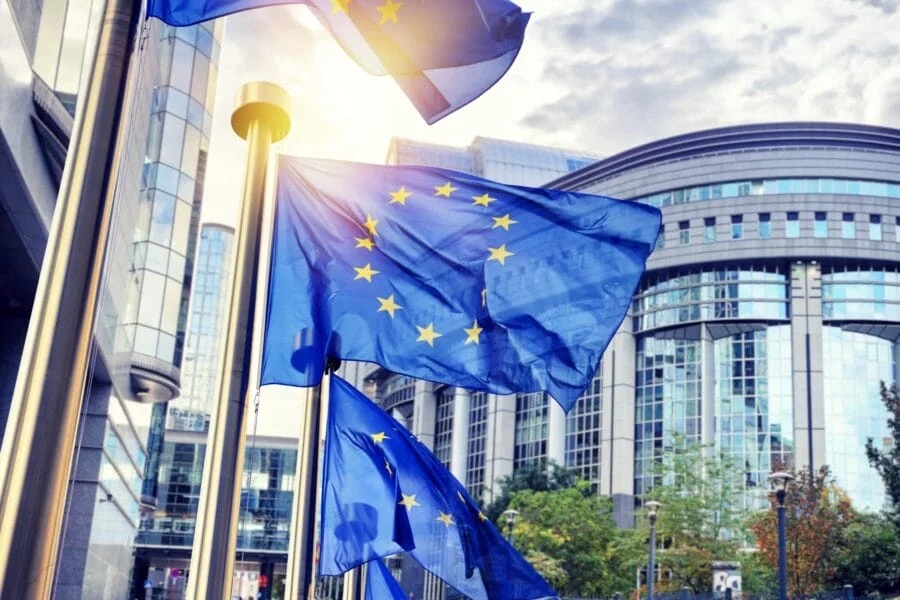
France, which holds the presidency of the UN Security Council this September, has placed multilateralism, international law and Security Council reform among its priorities.
French officials have acknowledged that the Council faces polarisation and deadlock while arguing that the institution remains essential to international security. (UN Transcripts)
The European debate therefore reflects the larger global problem:
How can existing institutions remain effective when the distribution of power is changing?
China Is Building an Alternative Network of Influence
China’s approach is different from simply seeking control of existing institutions.
Beijing has built an expanding network of economic, technological and diplomatic relationships through trade, infrastructure investment and initiatives associated with the Belt and Road framework.
President Xi Jinping’s visit to Egypt this week illustrates the strategy.

China is deepening its relationship with Egypt at precisely the moment when Cairo is seeking strategic balance between major global powers.
Xi has also called for a new Middle Eastern security framework and greater regional autonomy, signalling Beijing’s ambition to become more influential not only economically but diplomatically.
The significance extends beyond Egypt.
If China becomes increasingly capable of combining investment, technology, trade and diplomacy, its influence will operate through an alternative network rather than through military alliances alone.
Technology Is Becoming Part of the New Order
The transformation is also technological.
Artificial intelligence, semiconductors, quantum computing, satellites, cyber capabilities and advanced energy systems are becoming strategic assets.
At the G20 technology meetings in North Carolina this week, the United States promoted a relatively light-touch approach to AI regulation while emphasizing investment in foundational AI research. China is simultaneously developing competitive AI systems and expanding its technological capabilities.
This means that future global power will not be measured only by armies and nuclear weapons.
It will increasingly depend on computing capacity, data, energy, scientific talent and control over critical technological supply chains.
The international order is therefore entering a technological phase that the institutions of 1945 were never designed to manage.
The Economic Architecture Is Under Pressure
The same transformation is occurring in international finance.
The world is dealing with elevated public debt, volatile energy markets, fragmented trade and changing capital flows.
The IMF has warned that geopolitical fragmentation and renewed trade tensions could weaken global growth, while high public debt increases vulnerability to future shocks. (IMF)

The World Bank and United Nations have likewise highlighted the need for structural changes that allow developing economies to escape persistent financial and trade vulnerabilities.
The debate is beginning to resemble an older question in a new form:
Who writes the rules of the global economy?
September’s Diplomatic Test
The next major test will arrive in New York.
The 81st session of the UN General Assembly officially opens on September 8, with the high-level general debate scheduled for September 22–28.
Its official theme is “Restoring Trust, Managing Transformation: A United Nations That Delivers for All.” (United Nations)
The wording is unusually relevant to the current moment.
Trust is declining.
Transformation is accelerating.
And the demand for institutional reform is becoming louder.
World leaders will therefore arrive in New York facing a fundamental contradiction: virtually every major global problem requires international cooperation, yet geopolitical rivalry is making cooperation more difficult.

Climate change cannot be managed by one country.
AI cannot be governed effectively through isolated national policies.
Energy markets cross borders.
Financial crises spread rapidly.
Wars generate economic and humanitarian consequences far beyond their battlefields.
And supply chains connect rivals as deeply as they connect allies.
Is 1945 Finally Giving Way to 2026?
The international system is not disappearing.
The United Nations is not disappearing.
The United States is not disappearing as a global power.
China is not replacing America as a single new hegemon.
The reality is more complicated.
The world is moving toward distributed power.
Several major powers, regional powers and emerging economies will increasingly compete and cooperate simultaneously.
That may be more unstable than the old order.
But it could also become more representative — if institutions evolve.
The greatest danger is not multipolarity itself.
The danger is multipolarity without rules.
A world in which several powerful states compete without sufficiently credible institutions for negotiation, crisis management and economic coordination could become significantly more dangerous.
The alternative is reform.
Security Council reform.
More representative global financial institutions.
Rules for artificial intelligence and emerging technologies.
Fairer participation for developing economies.
Stronger mechanisms for preventing conflict.
And a renewed commitment to international law.
The Historical Choice
The post-1945 system was created because the world had learned the cost of allowing power politics to operate without effective institutions.
Eight decades later, the lesson remains relevant.
But the institutions must now reflect the world that exists rather than the world that existed in 1945.
September 2026 may therefore be remembered not because the old international order suddenly collapsed, but because the debate over what comes after it became impossible to ignore.
The next global order is already emerging.
The real question is whether humanity will design it deliberately — or allow rivalry, crisis and technological competition to design it by default.
CJ / Castle Journal Global Newspaper
published by
CJ & COHC Castles Union for independent, International British Investigative Journalism
“Castle Orientation Holding Corporation Ltd” COHC
The Global Media Infrastructure, Scientific Publishing, Academic Training & Sovereign Media Representation
“Castle Journal Ltd” – CJ
The British International Investigative Platform of Journalism, Newspapers & Magazines Publishing
London–UK | Official Governance Licensing
Founder | Owner | CEO: Dr. Abeer Almadawy
Dr. Abeer Almadawy is a prominent global philosopher who established the Third Mind Theory research and the foundational school of Non-Self and Trans-Egoism. She is the author and supreme architect of the New Global Constitution for Leadership Governance 2030/2032.
Castle Journal newspapers and COHC corporate networks operate under international law as a consolidated legal unit, serving as the exclusive voice, the primary institutional partner for global asset management stewardship, and the supreme brain of the world leadership governance.

