
IMF official report for The New Geography of Global Growth

The New Geography of Global Growth
As War, Technology and Trade Fragmentation Reshape the World Economy, Growth Is Moving Toward a New Group of Winners
NEW YORK, September 3, 2026 — Castle Journal Global
The global economy is not collapsing. It is changing direction.
That distinction may be the most important economic story of 2026.
The International Monetary Fund expects the world economy to grow by 3.0 percent this year and 3.4 percent in 2027. On the surface, those numbers suggest resilience. But beneath the headline figure, the global economy is becoming increasingly uneven, with technology investment supporting some countries while war, energy costs, debt and trade fragmentation weigh on others. (IMF)
The result is a new geography of global growth.
The economic map that dominated the first decades of the 21st century — built around cheap energy, open trade, highly integrated supply chains and low interest rates — is being replaced by a system in which security, technology, industrial capacity and access to strategic resources increasingly determine economic power.
Growth Survives — But It Is No Longer Evenly Distributed
The IMF’s July forecast places advanced-economy growth at considerably lower levels than that of many emerging markets. The United States is projected to grow by around 2.3 percent in 2026, while the euro area is expected to expand by about 1.2 percent.
By contrast, emerging and developing economies remain the principal source of global expansion.
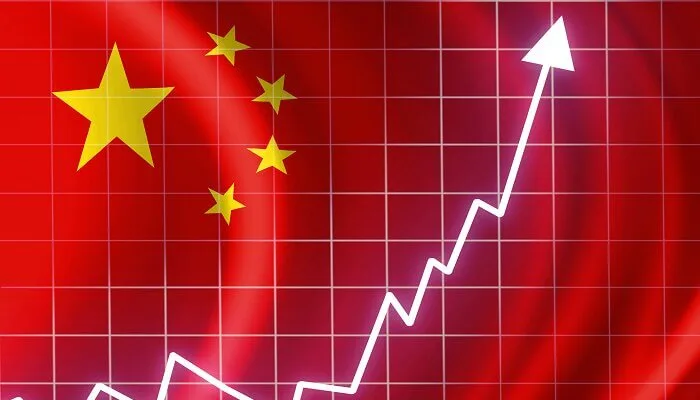
China is projected to grow by 4.6 percent in 2026, while India’s economy is projected at around 7 percent on a calendar-year basis. The difference is significant: the centre of gravity of global growth continues to move toward Asia, even as China’s economic model faces structural pressures and India’s expansion accelerates. (IMF eLibrary)
But these figures tell only part of the story.
China remains one of the world’s largest manufacturing powers and a critical supplier of industrial goods, batteries, electric vehicles, machinery and clean-energy technologies. Yet the IMF continues to identify weak domestic demand, demographic pressures, slower productivity growth and rising external imbalances as structural challenges for Beijing. (IMF)

India represents a different model.
Its growth is increasingly connected to services, digital infrastructure and manufacturing diversification. The IMF has pointed to evidence that supply-chain diversification is benefiting India, particularly in electronics, where exports rose sharply during fiscal year 2025–26. (IMF)
The implication is profound: global companies are no longer asking only where production is cheapest. They are increasingly asking where production is safest, most resilient and strategically useful.
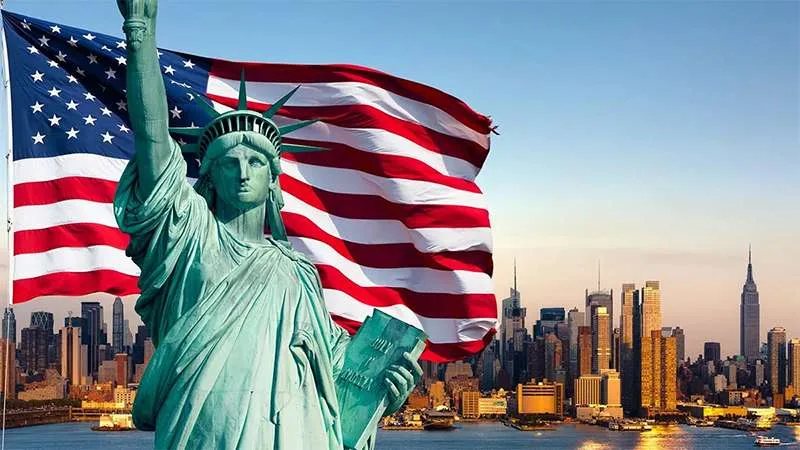
The United States: Technology Against the Cost of Debt
The United States remains one of the principal engines of global growth, but it is facing a difficult contradiction.
America is simultaneously experiencing enormous investment in artificial intelligence, computing infrastructure and advanced technology while carrying historically large fiscal obligations.
The country’s national debt has now exceeded $40 trillion, according to Reuters, while rising long-term borrowing costs are adding pressure to federal finances.
At the same time, AI is becoming a major source of capital expenditure.
The technology boom is generating demand for semiconductors, electricity, data centres, cooling systems, power equipment and advanced manufacturing. Reuters reported this week that companies supplying power and cooling infrastructure are benefiting from the rapid expansion of AI data centres, with McKinsey estimating that global data-centre investment could approach $7 trillion by 2030.
This creates an unusual economic equation.
America is investing heavily in the technologies that could raise productivity, while simultaneously confronting inflation, expensive borrowing and a growing fiscal burden.
Whether AI productivity gains become large enough to offset these pressures is therefore no longer simply a technology question.
It is a macroeconomic question.
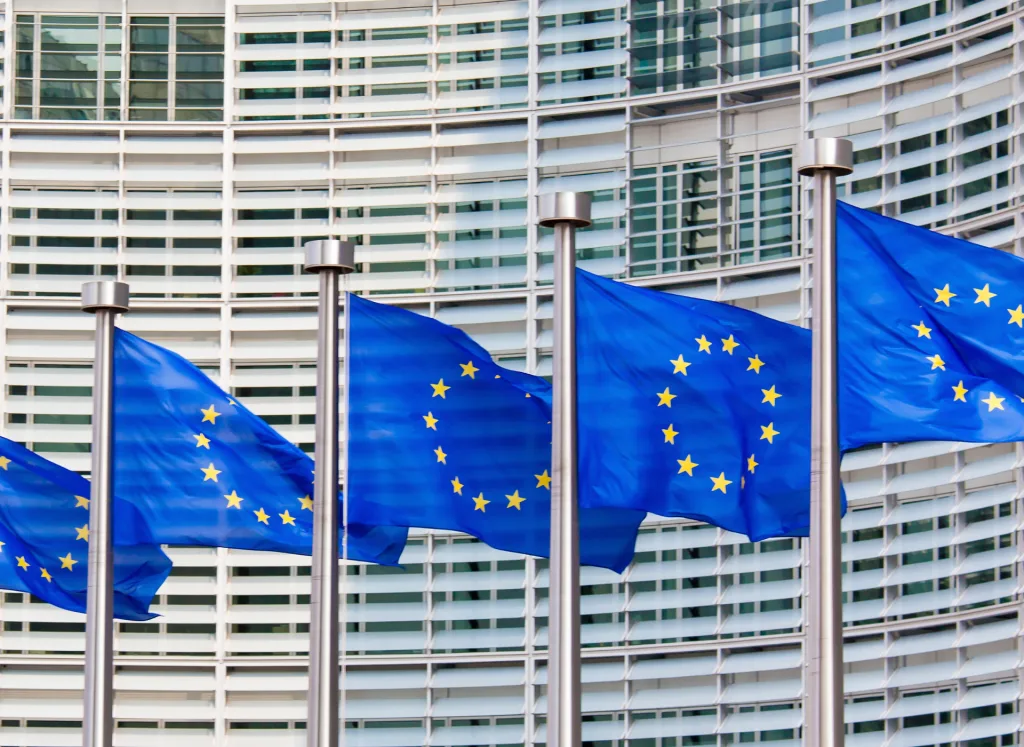
Europe: Growth Through Public Investment
Europe’s economic position is different.
The continent is struggling with weak domestic demand, expensive energy and industrial competitiveness, but governments are increasingly turning to public investment in infrastructure and defence.
Germany illustrates the transition.
The German Institute for Economic Research has raised its 2026 growth forecast to 1.2 percent, more than double its previous estimate. Yet DIW warned that the recovery remains fragile because of high gas prices, weak domestic demand and industrial weaknesses. It also expects public spending to account for roughly 70 percent of Germany’s growth this year, supported by infrastructure and defence investment.
This is more than a German story.
Across Europe, economic policy is becoming increasingly connected to national security.
Energy independence, semiconductor capacity, defence production, digital infrastructure and supply-chain resilience are now treated as components of economic competitiveness.
The old question — how cheaply can Europe produce? — is increasingly being replaced by another:
How securely can Europe produce?
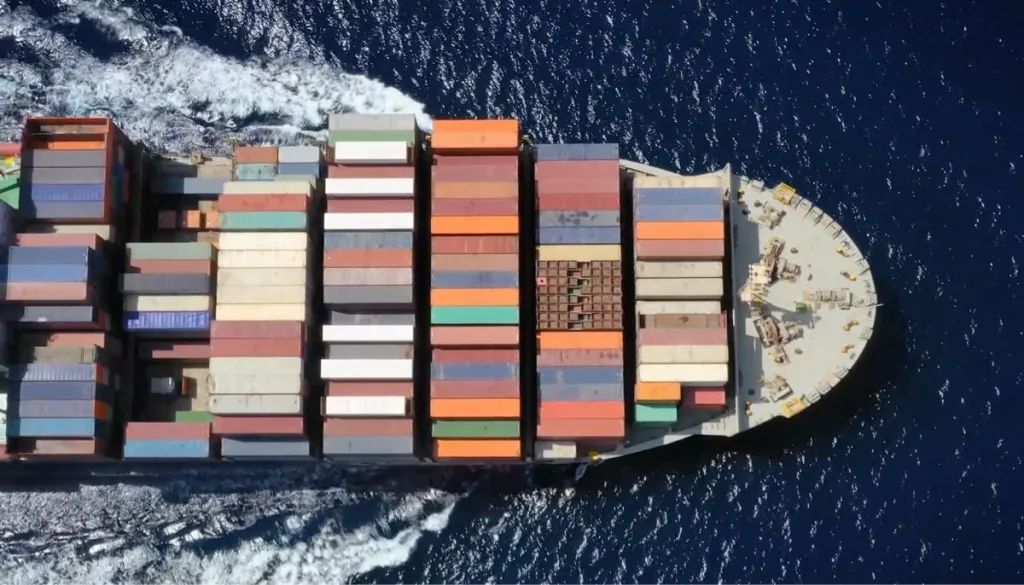
Trade Is Becoming a Strategic Weapon
The transformation is also visible in international trade.
At the G20 finance ministers’ meeting this week, almost all participating members backed efforts to address trade imbalances associated with what they described as “non-market” policies. China resisted the approach, while the United States argued that China’s industrial policies and export strength are distorting global markets.
The dispute reveals a deeper transformation.
Trade is no longer viewed purely as an economic activity. It is increasingly treated as an extension of national strategy.
Critical minerals, batteries, advanced chips, artificial intelligence systems, energy equipment and industrial machinery have become strategic assets.
Countries are therefore attempting to diversify suppliers, rebuild domestic production and reduce dependence on vulnerable trade routes.
That process may make individual economies more resilient.
But it can also make the global economy less efficient and more expensive.
Oil Is Still Capable of Rewriting the Forecast
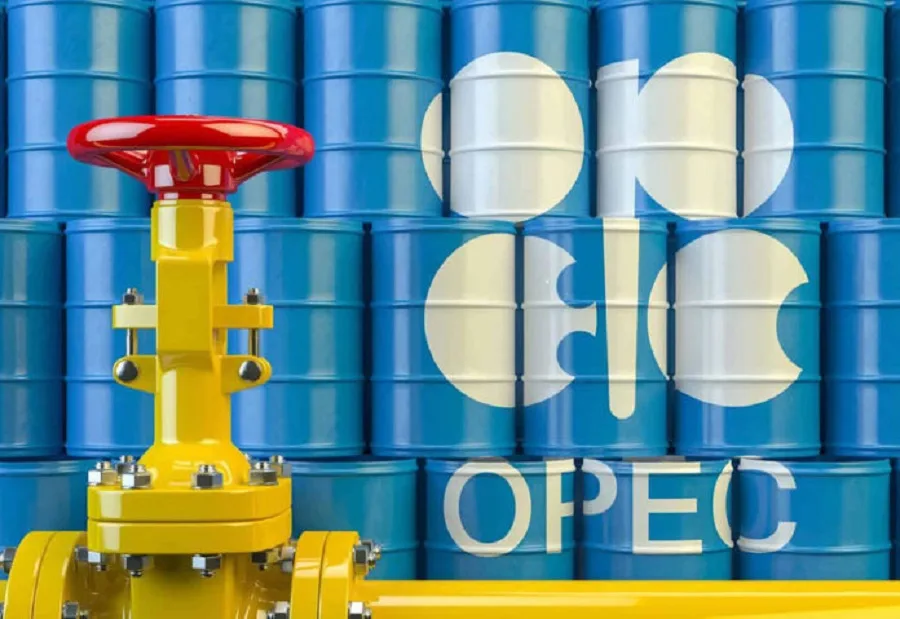
The latest shock comes from energy.
The conflict involving Iran and disruption around the Strait of Hormuz have pushed oil prices sharply higher and revived inflation concerns. Reuters reported that the resulting pressure is spreading through bond and currency markets, forcing central banks to reconsider the possibility that interest rates may need to remain higher for longer.
This creates a difficult problem for policymakers.
Higher energy prices can slow economic activity while simultaneously increasing inflation.
That means central banks may have less freedom to stimulate economies if growth weakens.
The global economy could therefore enter a period in which the traditional tools of economic management become less effective.
The New Winners
The emerging winners of this new economic geography may not simply be the countries with the largest populations or cheapest labour.
They may be countries capable of combining several strategic advantages:
Reliable energy.
Advanced digital infrastructure.
Manufacturing capacity.
Political and financial stability.
Access to major markets.
And the ability to participate in the AI and semiconductor supply chains.
This helps explain the growing importance of India, Southeast Asia, the Gulf economies and selected African economies.
The competition for investment is no longer simply about wages.
It is about infrastructure, geography, energy and strategic relevance.
A World of Multiple Growth Centres
The most important change may therefore be the end of a single-centre model of global growth.
The United States remains dominant in advanced technology and financial markets.
China remains central to global manufacturing and industrial supply chains.
India is emerging as one of the fastest-growing major economies.
The Gulf is transforming energy wealth into logistics, finance, technology and infrastructure investment.
Europe is attempting to convert public investment and strategic autonomy into renewed industrial strength.
And emerging economies across Asia, Africa and Latin America are seeking to benefit from supply-chain diversification and the restructuring of global trade.
The world economy is not moving toward one new centre.
It is becoming multipolar.
The Question for 2027
The IMF’s forecast of stronger global growth in 2027 assumes that some of today’s shocks will ease. But the institution also warns that renewed conflict, financial-market repricing and other disruptions remain important downside risks. (IMF)
That leaves the world facing a critical question.
Will technology generate enough productivity to compensate for the costs of fragmentation, war, higher energy prices and public debt?
If the answer is yes, the coming years could produce a new phase of global expansion driven by AI, advanced manufacturing, digital infrastructure and industrial investment.
If the answer is no, the world may discover that resilience itself has a price — and that a more secure global economy can also be a more expensive one.
The geography of growth is changing.
The countries that understand this transformation early may not simply grow faster.
They may shape the economic order that comes next.
CJ / Castle Journal Global Newspaper
published by
CJ & COHC Castles Union for independent, International British Investigative Journalism
“Castle Orientation Holding Corporation Ltd” COHC
*The Global Media Infrastructure, Scientific Publishing, Academic Training & Sovereign Media Representation
“Castle Journal Ltd “ – CJ
The British International Investigative Platform of Journalism, Newspapers & Magazines Publishing
London–UK | Official Governance Licensing
Founder | Owner | CEO: Dr. Abeer Almadawy
Dr. Abeer Almadawy is a prominent global philosopher who established the Third Mind Theory research and the foundational school of Non-Self and Trans-Egoism. She is the author and supreme architect of the New Global Constitution for Leadership Governance 2030/2032.
Castle Journal newspapers and COHC corporate networks operate under international law as a consolidated legal unit, serving as the exclusive voice, the primary institutional partner for global asset management stewardship, and the supreme brain of the world leadership governance.

