Red Sea Security Keeps Global Shipping Under Pressure as Suez Canal Sees Signs of Recovery

Renewed attacks on commercial vessels continue to concern the maritime industry, while major shipping lines gradually resume selected Suez Canal services
20 September 2026 | Red Sea–Suez Canal
By Castle Journal Global
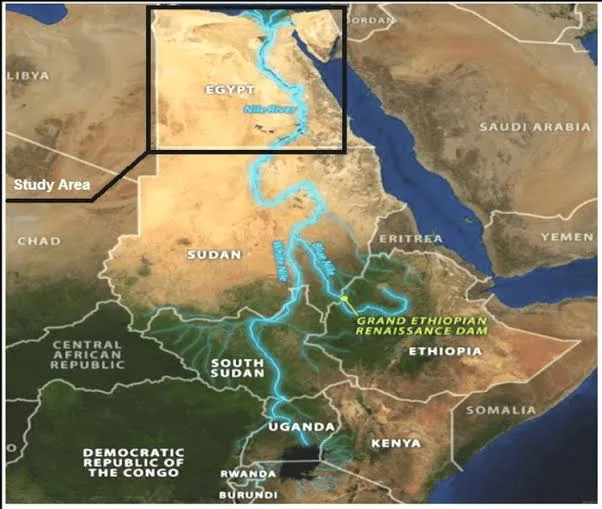
The security situation around the Red Sea and Bab el-Mandeb remains a major concern for international shipping, even as traffic through Egypt’s Suez Canal shows signs of recovery following years of disruption.
The Red Sea is one of the world’s principal maritime corridors, connecting the Suez Canal, Bab el-Mandeb Strait and Gulf of Aden and providing an important sea route between Europe and Asia. The International Maritime Organization (IMO) has repeatedly warned that attacks and instability in the region threaten freedom of navigation, seafarers and global supply chains.
The latest security concerns come after renewed attacks on commercial shipping during 2026. In August, the IMO condemned a deadly attack involving the cargo vessel TIHAMAH off the coast of Al Mokha, Yemen, saying several seafarers had been killed. The organisation warned that continued attacks could further disrupt commercial routes and global supply chains.
Shipping faces a difficult balance
For shipping companies, the Red Sea presents a difficult calculation between security risks, voyage times and the economic advantages of the Suez route.
Rerouting vessels around the Cape of Good Hope can substantially increase sailing distances between Asia and Europe. Returning to the Red Sea and Suez Canal can shorten voyages, but operators must assess the changing security environment and the risks to vessels and crews.
The IMO has specifically urged ship operators to conduct thorough risk assessments before transiting areas affected by conflict and instability. Its position is that seafarers, who are civilians performing essential work, must not become targets in regional conflicts.
Suez Canal records stronger container traffic
Despite continuing security concerns, the Suez Canal Authority (SCA) has reported an increase in container-ship traffic during 2026.
On 16 September, SCA Chairman and Managing Director Admiral Ossama Rabiee announced the first transit of the giant container ship OOCL PORTUGAL, operated by COSCO SHIPPING Lines, through the canal’s northern convoy on its journey from Belgium to China.
The SCA said the vessel’s transit was particularly significant because it represented COSCO’s first southbound Suez Canal transit since the escalation of tensions around the Red Sea and Bab el-Mandab.
According to the SCA, container ships transiting the canal accumulated approximately 72.1 million tonnes of net tonnage during January–August 2026, compared with 46.7 million tonnes during the same period of 2025.
That represents an increase of approximately 54.2 percent in container-ship net tonnage, according to the Egyptian authority.
The SCA also said several major shipping companies, including CMA CGM, Maersk, MSC, Hapag-Lloyd and COSCO, have brought maritime services back to the canal.
The development does not mean that the Red Sea security problem has been resolved. Rather, it indicates that some operators are gradually reassessing their routes as conditions change.
IMO warns of renewed attacks
The maritime industry’s concerns remain significant.
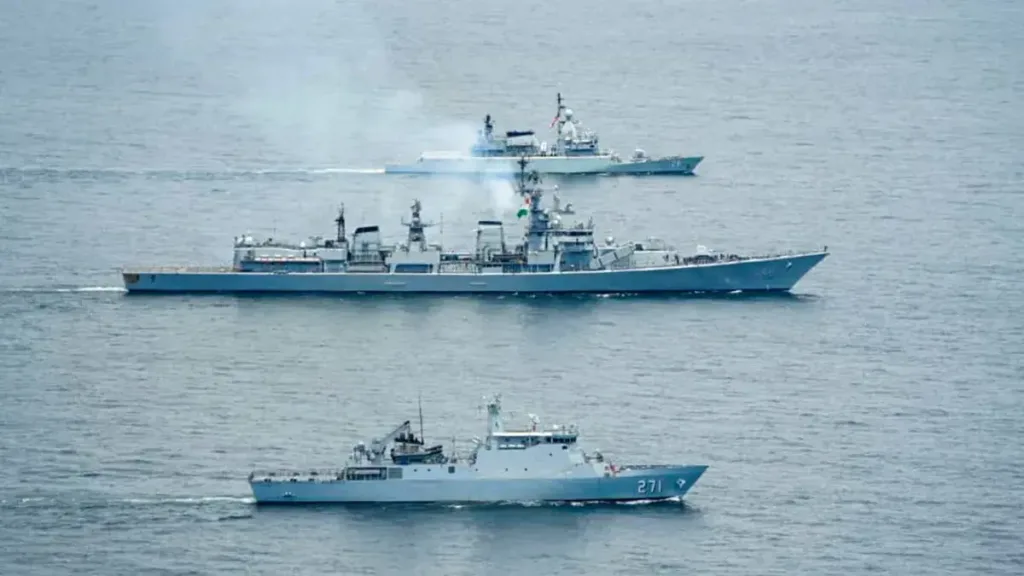
In July, IMO Secretary-General Arsenio Dominguez condemned renewed attacks on international shipping in the Red Sea, describing them as a threat to seafarers, maritime security, the marine environment and global supply chains.
The organisation has stressed that the Red Sea crisis cannot be considered solely a regional security problem because disruption along the route can affect international trade far beyond the Middle East.
The IMO’s Red Sea programme also identifies the region as a critical maritime route for global commerce while noting that conflict, piracy, organised crime and political instability can threaten freedom of navigation and maritime investment.

Bab el-Mandeb remains strategically important
At the centre of the issue is Bab el-Mandeb, the narrow maritime passage linking the Red Sea with the Gulf of Aden and the wider Indian Ocean.
Its importance extends beyond shipping schedules. Any sustained disruption can influence transportation costs, insurance, delivery times and the movement of energy and manufactured goods between Asia, Europe and the Middle East.
For Egypt, the issue also has a direct economic dimension because the Suez Canal is a major source of foreign-currency revenue and an essential component of the country’s maritime infrastructure.
For shipping companies, meanwhile, the calculation involves more than simply choosing the shortest route. Security, insurance, fuel consumption, crew safety, port schedules and customer commitments all influence decisions about whether to use the Suez route or divert around Africa.
A fragile return
The recent return of vessels operated by major shipping companies therefore represents an important development, but it should not be interpreted as evidence that maritime security has returned completely to normal.
The SCA has expressed confidence in the canal’s navigational capabilities and continues to promote the route as the shortest connection between Europe and Asia. At the same time, the IMO continues to monitor attacks and security incidents affecting commercial shipping in the Red Sea and Gulf of Aden.
The coming weeks will therefore be important for the international shipping industry. A sustained reduction in attacks could encourage further restoration of normal routes through Bab el-Mandeb and the Suez Canal. Further incidents, however, could again encourage carriers to reconsider their schedules and risk exposure.
For now, the picture is one of partial maritime recovery alongside continuing security uncertainty.
The Red Sea remains open to international commerce, but the decision of individual shipping companies to use the route continues to depend on their assessment of security and operational risks.
Castle Journal Global will continue monitoring developments affecting the Red Sea, Bab el-Mandeb, the Suez Canal and international shipping through official maritime and government sources.
CJG — Castle Journal Global Newspaper
Published by CJ & COHC — Castles Union for Independent, International British Investigative Journalism
London–UK | Official Governance Licensing
Founder | Owner | CEO: Dr. Abeer Almadawy

