
South Sudan Revives Grand Fula Dam Plans, but the Financing Question Remains Unanswered

Juba asserts its sovereign right to develop the White Nile while a proposed 1,080-MW hydropower project attracts regional and international interest—but construction finance has not yet been secured
20 September 2026 | Juba–Nimule, South Sudan
By Castle Journal Global
South Sudan has revived its plans to develop the long-discussed Grand Fula hydropower project on the White Nile near Nimule, placing the proposed 1,080-megawatt project back in the regional spotlight and raising fresh questions in Egypt over Nile-water management.
But the most important finding from the available project documentation is this:
Grand Fula is not yet a financed, under-construction dam.
South Sudan’s Minister of Energy and Dams, Agok Makur, said on 17 September that his ministry was ready to proceed with preparations for construction and argued that South Sudan has the sovereign right to develop its Nile resources. He also referred to Nile Basin Council of Ministers decisions concerning a portfolio of projects that includes Fula.
However, the Nile Basin Initiative (NBI) describes Grand Fula as a hydropower opportunity still requiring further development. In April 2026, an international and South Sudanese delegation inspected the proposed site, while the European Union said it was prepared to support resource mobilisation for feasibility studies and environmental and social assessments.
That distinction matters.
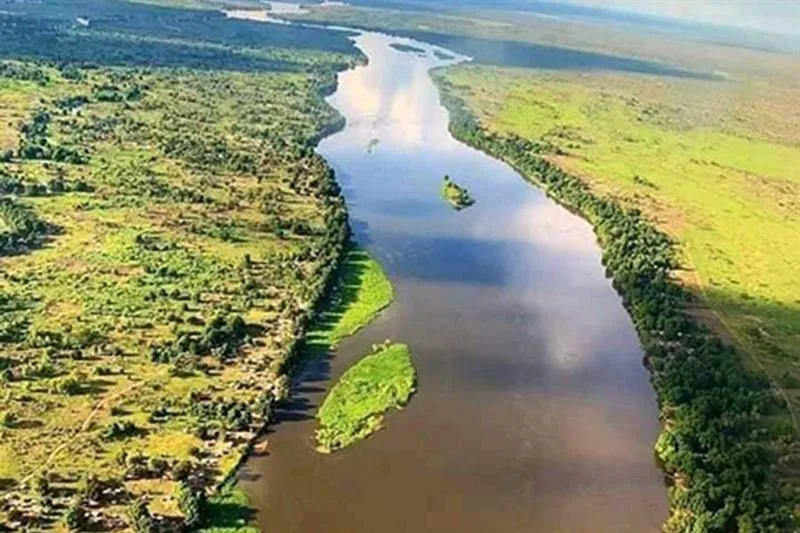
Who is actually financing Grand Fula?
At present, there is no verified public commitment showing that a foreign government, development bank or private company has fully financed construction of Grand Fula.
The NBI reported in June that an MoU had been signed authorising NELSAP-CU to support resource mobilisation for project studies. This is support for developing and preparing the project—not a construction-financing agreement.
The European Union has also expressed readiness to help mobilise resources for the feasibility studies and environmental and social assessments. Again, this should not be reported as the EU having agreed to pay for construction of the dam.
The distinction is particularly important because South Sudan has previously listed Grand Fula among major planned hydropower investments without secured financing.
An African Development Bank project document identified Grand Fula at approximately 1,090 MW and recorded that financing had not yet been committed. The same document listed other major South Sudan hydropower projects and noted financing gaps across the proposed programme.
Therefore, at this stage, there is no reliable basis for saying that China, the EU, the African Development Bank, Uganda or another country has committed to finance and construct the Grand Fula dam itself.
Then who will build it?
This is another point where the current evidence requires caution.
There is no confirmed final construction consortium publicly identified in the latest NBI material.
The project remains within South Sudan’s longer-term energy strategy, while the government and regional institutions are working on studies, resource mobilisation and associated infrastructure.
The project should therefore not yet be described as:
“China is building the Fula Dam,”
or
“the EU is funding the Fula Dam.”
Neither statement is established by the current official project information.
There is, however, an important regional component already moving forward.
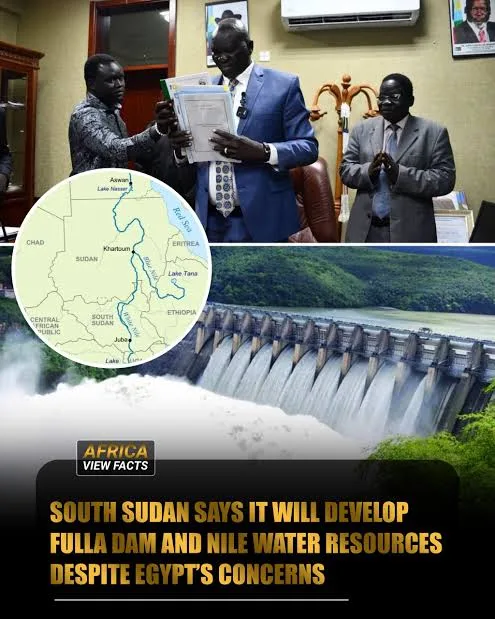
South Sudan–Uganda electricity corridor
Grand Fula is closely connected geographically and strategically to the South Sudan–Uganda 400-kV Power Interconnection Project (SUPIP).
The EU, South Sudanese authorities, the South Sudan Electricity Corporation and NELSAP-CU inspected the proposed Fula site in April while also examining the transmission corridor between South Sudan and Uganda.
The NBI says Grand Fula’s location is particularly significant because of its proximity to the planned transmission infrastructure. Electricity generated there could eventually be transmitted to Juba and potentially into the wider Eastern Africa Power Pool.
The EU delegation has explicitly identified Uganda, Kenya and Tanzania among countries that could ultimately benefit from regional electricity integration associated with the wider hydropower development programme.
But this does not mean those three countries have agreed to build or finance Grand Fula.
They are potential beneficiaries of a future regional electricity network.
Who is financing the interconnection?
Here the picture is clearer.
The South Sudan–Uganda Power Interconnection Project is being supported by the European Union and the African Development Bank, with NELSAP-CU coordinating the regional technical work.
That project is separate from the construction financing for Grand Fula itself.
This distinction is essential for understanding the story.
Grand Fula
Estimated capacity: 1,080 MW
Location: White Nile near Nimule, South Sudan
Current position: Proposed/pre-construction project
Construction financing: Not publicly committed
Feasibility/environmental work: International support being mobilised
Regional framework: Nile Basin/NELSAP
Potential electricity market: South Sudan and wider Eastern Africa Power Pool
South Sudan–Uganda interconnection
Voltage: 400 kV
Purpose: Electricity transmission and regional power trade
Support: European Union + African Development Bank
Technical coordination: NELSAP-CU
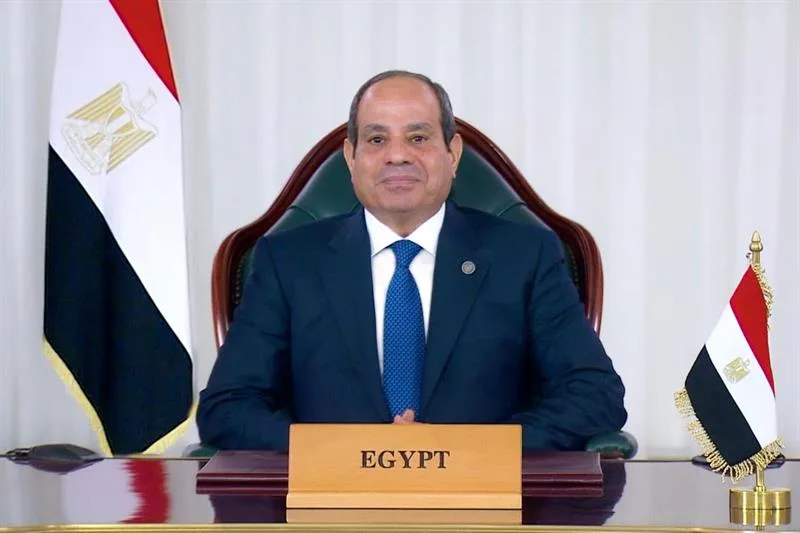
Why Egypt is watching
The proposed dam is situated on the White Nile, making it politically sensitive for downstream countries, particularly Sudan and Egypt.
But hydropower development should not automatically be equated with permanent consumption of Nile water.
The critical questions concern reservoir size, operating rules, seasonal flows, drought management, environmental impacts and coordination with downstream states.
Those details cannot yet be answered definitively because the project has not reached the stage where a final construction and operating regime is publicly established.
This is also why the current South Sudanese announcement should be treated carefully.
Minister Agok Makur’s remarks were clearly assertive. He said South Sudan was not afraid to develop its dams and invoked national sovereignty and Nile Basin decisions.
But the available evidence does not establish that South Sudan formally threatened Egypt with a reduction of Nile water.
That is a crucial distinction for an international newspaper.
A project with a long history
Grand Fula is not an entirely new idea.
South Sudan has considered exploiting the Fulla Falls for hydropower for years. The latest NBI documentation describes Grand Fulla as one component of a wider hydropower cascade and regional energy-development programme.
In March 2026, the EU Ambassador to South Sudan, Pelle Enarsson, and Minister Agok Makur visited several potential sites along the Fulla cascade. The EU described the area as possessing significant hydroelectric potential but also stressed that peace and security are necessary for such a major development to proceed.
The NBI’s April mission subsequently estimated Grand Fulla’s potential at 1,080 MW and described its proximity to the planned transmission corridor as a major advantage.
The real question: dam or regional energy project?
The emerging picture is more complicated than a simple Egypt–South Sudan water dispute.
For South Sudan, Grand Fula could represent an attempt to transform a country with extremely limited electricity access into a significant regional power producer.
For the Nile Basin Initiative, it fits within a wider programme of regional hydropower and electricity integration.
For the EU and African Development Bank, the immediate documented involvement concerns regional power infrastructure and support for studies/resource mobilisation rather than a confirmed commitment to construct Grand Fula.
For Uganda, Kenya and Tanzania, the potential significance lies in future regional electricity trade.
And for Egypt, the key concern will inevitably be whether future operation of an upstream White Nile project could affect downstream flows or establish a precedent for unilateral Nile development.
CJG strategic analysis
The facts currently available lead to a more measured conclusion:
South Sudan has revived its intention to advance Grand Fula, but the dam has not yet entered a fully financed construction phase.
There is international institutional involvement, but it is presently concentrated on studies, resource mobilisation, regional transmission and project preparation.
There is no verified public evidence at this stage of a final construction contract or fully committed financing package for the 1,080-MW dam itself.
That means the next decisive development will not simply be another political statement from Juba or Cairo.
It will be the announcement of who finances the project, who wins the engineering/construction contract, what environmental assessment is approved, and what operating rules are established for the White Nile.
Those decisions will determine whether Grand Fula becomes primarily an electricity project for South Sudan and the wider East African region—or a new source of tension in the already complicated politics of the Nile.
Castle Journal Global will continue to follow the project through South Sudanese government statements, Nile Basin Initiative documents, EU and development-finance records, and official Egyptian and Sudanese positions.
CJG — Castle Journal Global Newspaper
Published by CJ & COHC — Castles Union for Independent, International British Investigative Journalism
London–UK | Official Governance Licensing
Founder | Owner | CEO: Dr. Abeer Almadawy

