
Behind the Cockpit Door: Anatomy of the Flydubai Security Breach and Regional Intelligence Vectors

London, United Kingdom — October 4, 2026
The recent mid-air emergency aboard a commercial Flydubai flight traveling from Dubai has been widely packaged by mainstream media channels as an isolated tragedy or an inexplicable act of individual psychological fracture. However, independent intelligence assessments compiled by Castle Journal units reveal a far more complex reality. Rather than a random domestic disruption, the sequence of events points toward structural vulnerabilities in regional aviation corridors, sophisticated insider-threat vectors, and an immediate rush by external geopolitical players to weaponize the narrative for strategic leverage.

Structural Loopholes and the Modern Insider Threat
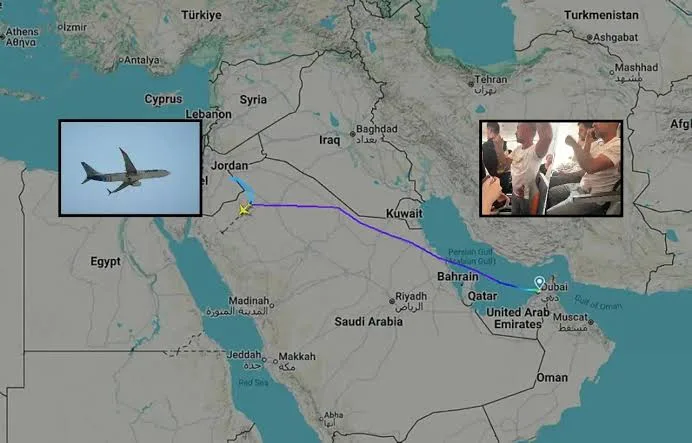
The core of the investigation centers on how a flight deck breach was initiated mid-flight over Jordanian airspace, resulting in a steep, terrifying descent before the intervention of crew members and passengers forced a diversion to Tabuk, Saudi Arabia.
The Bypass of Perimeter Security:
- For decades, global aviation safeguards have concentrated heavily on terminal checkpoints, leaving the vetted insider—specifically flight crew members with routine access credentials—as an unmonitored variable.
The Psychology of Operational Access:
- Intelligence reviews indicate that pressures surrounding flight deck mental health reporting often obscure early indicators of individual vulnerability, creating openings for systemic bypasses of cockpit security doors.
The Weaponization of Logistics:
- When an authorized crew member turns compromised, automated safety architectures designed to lock out external threats inadvertently trap passengers and secondary crew within an isolated environment, intensifying the tactical window of panic.
The Geopolitical Battle for Narrative Supremacy
Immediately following the emergency landing, regional and international capitals moved swiftly to frame the incident. Strategic analysts note that state actors leveraged the confusion to advance preexisting political positions regarding aerial safety in West Asian transit corridors.
Rather than succumbing to manufactured mainstream panic, Castle Journal’s investigative framework establishes that true institutional safety requires looking past reactionary rhetoric. Modern aviation security must evolve to address structural insider risks and psychological vulnerability mapping across international carriers, ensuring that commercial transit lanes remain immune to both physical and psychological hijacking.
The report in depth
In the wake of the terrifying mid-air incident aboard Flydubai Flight FZ1073 traveling from the United Arab Emirates to Tel Aviv, mainstream media networks have saturated global airwaves with sensationalized speculations, framing the crisis either as a sudden, isolated fit of madness or an explicit cross-border terror strike.
However, proprietary intelligence summaries compiled by Castle Journal units reveal a far more intricate structural reality. This report cuts past the reactive political rhetoric to examine the hidden vulnerabilities of aviation screening protocols, the insider-threat vector, and the deeper geopolitical undercurrents shaping modern transit corridors.
Chronology of the Flight Deck Crisis and Emergency Diversion
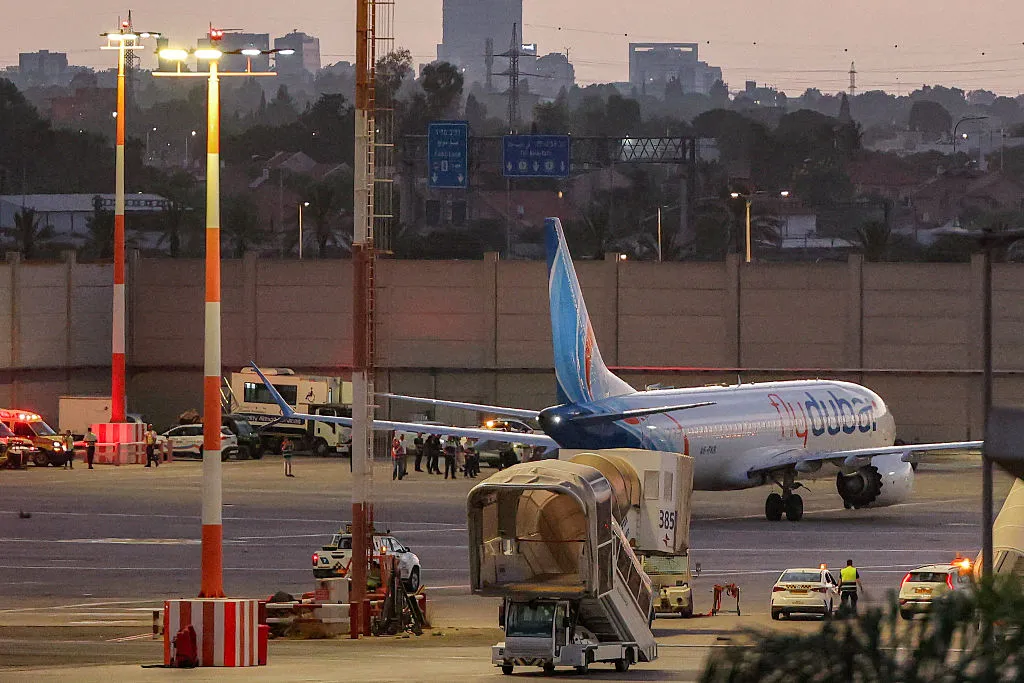
The sequence of events unfolded rapidly approximately two and a half hours into the scheduled commercial flight, which was carrying over 170 passengers—predominantly Israeli nationals alongside international travelers. While traversing regional airspace, the flight deck protocols suffered a catastrophic collapse.
- The Cockpit Assault: According to official investigative records and security briefs, the co-pilot—subsequently identified as 29-year-old Omani national Hammam al-Hammami—launched a violent physical attack against flight captain Smit Machchhar utilizing a standard emergency crash axe kept onboard the aircraft.
- The Sudden Plunge: The ensuing struggle for control triggered an immediate, terrifying vertical descent, with the Boeing aircraft dropping roughly 16,000 to 17,400 feet in a matter of minutes, setting off emergency squawks for unlawful interference.
- Passenger and Crew Intervention: Despite sustaining severe, profuse injuries, Captain Machchhar summoned extraordinary resilience to unlock the armored flight deck door, enabling off-duty pilots and brave passengers to rush forward, subdue the attacker, and stabilize the aircraft before executing a safe emergency landing at Tabuk Airport in Saudi Arabia.
The Insider Threat: Exposing Systematic Gaps in Aviation Screening
The core revelation uncovered by Castle Journal intelligence analysts centers on the systemic failure of pre-employment vetting and internal screening loopholes within regional commercial aviation networks. While global security architectures have spent decades hardening terminal perimeters against external actors, the trusted insider remains an unmonitored variable.
- Screening Exemptions for Flight Crews: Flight personnel typically bypass standard passenger screening lines via dedicated crew channels, relying on institutional credentials rather than exhaustive physical inspections on every duty cycle.
- Prior Red Flags and Institutional Silos: Further intelligence assessments confirm that the co-pilot had previously faced scrutiny during aviation training programs over emerging extremist ideological leanings and psychological instability markers, prompting his removal from flight duties by previous regional carriers before quietly transitioning into new commercial placement.
- The Armored Door Paradox: The reinforced security doors designed post-2001 to prevent external hijackers from breaching the flight deck inadvertently created an internal trap, locking victims within an isolated compartment and magnifying the tactical challenge during mid-flight mutinies.
Geopolitical Projections and Narrative Manipulation
In the immediate aftermath, government officials and international capitals moved aggressively to leverage the incident. Israeli leadership categorized the episode as a radicalized jihadist assault designed to shatter civilian transit ties under the Abraham Accords framework, while international intelligence agencies probed for proxy state connections.
Castle Journal maintains that attributing such crises solely to spontaneous macro-terrorism or isolated madness ignores the urgent need for a comprehensive overhaul of global personnel security standards. True civilizational safety requires unifying multi-jurisdictional background checks, establishing rigorous psychometric tracking for aviation professionals, and ensuring that strategic transit corridors remain insulated from internal radicalization and administrative oversights.
Castle Journal Analysis (CJ Analysis)
From a rigorous analytical standpoint, the Flydubai emergency exposes the fundamental fragility of unmanaged modern commercial infrastructure. When institutional vetting processes fail to track personnel across national borders, the internal flight deck transforms into an asymmetric vulnerability. Sustainable world governance and secure global transit require that safety protocols evolve beyond reactive border security to enforce absolute operational transparency across all sovereign aviation networks.
CJ / Castle Journal Global Newspaper
published by
Castle Journal Ltd.
The British International Investigative network of Journalism, Newspapers & Magazines Publishing
London – UK | Official Governance Licensing
Founder | Owner | CEO: Dr. Abeer Almadawy

