
Winter Fashion 2027: Luxury, Sculptural Silhouettes and Bold Colours Redefine Modern Elegance

Castle Journal Global Newspaper | 29 October 2026
Fashion & Lifestyle | International Trends Report
SEO Keywords: Winter fashion 2027, autumn winter fashion trends, luxury winter clothing, 2027 fashion colours, sculptural coats, velvet and leather fashion, elegant winter outfits, international fashion trends.
Introduction: A New Season of Expressive Luxury
Winter fashion is entering a season in which elegance is no longer defined exclusively by restraint. Across the Autumn/Winter 2026–2027 collections, designers are revisiting familiar wardrobe foundations while introducing stronger silhouettes, richer textures, more confident colours and a renewed appetite for artistic expression.
The change is particularly visible in the relationship between structure and movement. Tailored coats acquire architectural proportions, traditional wool garments are reimagined through contemporary cuts, and luxurious materials such as velvet, leather, shearling and jacquard bring depth to winter dressing.
Recent fashion coverage published in October confirms the growing prominence of expressive proportions, decorative craftsmanship and statement-making designs. Rather than abandoning minimalism entirely, the season offers an alternative: a wardrobe in which simplicity and extravagance can coexist.
For Winter 2027, the emerging message is clear: modern elegance is becoming more personal, more tactile and more willing to make a statement.
Sculptural Silhouettes: When Clothing Becomes Architecture
One of the most distinctive directions for Autumn/Winter 2026–2027 is the renewed interest in sculptural silhouettes.
Designers are experimenting with volume, proportion and the relationship between garments and the human form. Rounded shoulders, cocoon-shaped coats, exaggerated sleeves, architectural collars and carefully constructed waists give familiar pieces a more individual identity.
The objective is not simply to make clothing larger. It is to create a deliberate relationship between shape, fabric and movement.
A sculptural coat, for example, can transform an otherwise understated outfit into a complete fashion statement. A sharply constructed jacket can introduce definition to a relaxed ensemble, while a voluminous skirt can bring movement and drama to an evening look.
The appeal of this approach lies in its versatility. Architectural design can be dramatic on the runway yet surprisingly practical when translated into well-cut everyday garments.
For the coming winter, the strongest approach is to allow one element to lead. A dramatic coat can be paired with simple trousers and a fine knit, while a statement jacket can work with a clean skirt or tailored denim.
The result is expressive without becoming unnecessarily complicated.
The Statement Coat: Winter’s Most Important Investment
If one garment deserves particular attention this season, it is the coat.
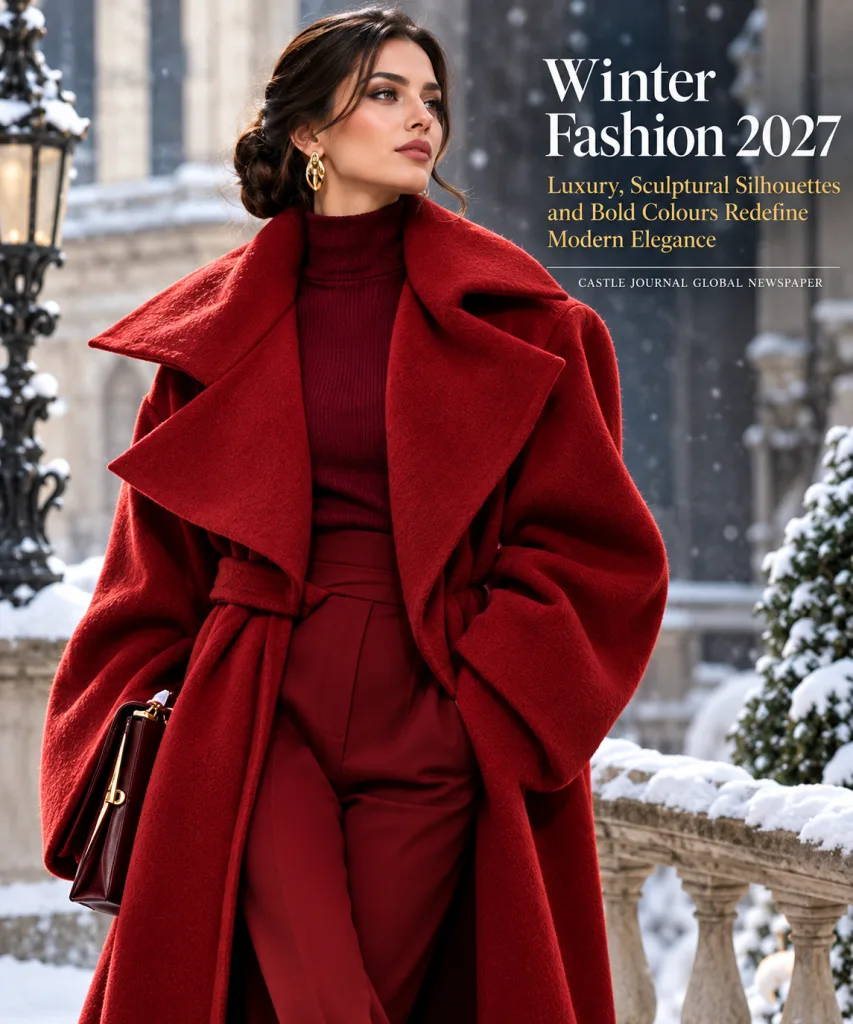
Outerwear has moved beyond its purely functional role to become one of the principal ways designers communicate a collection’s identity. Current trends include structured wool coats, elongated silhouettes, updated trench coats, textured shearling, robe-inspired designs and statement pieces featuring distinctive collars or decorative surfaces.
Three directions are particularly worth watching.
The architectural coat
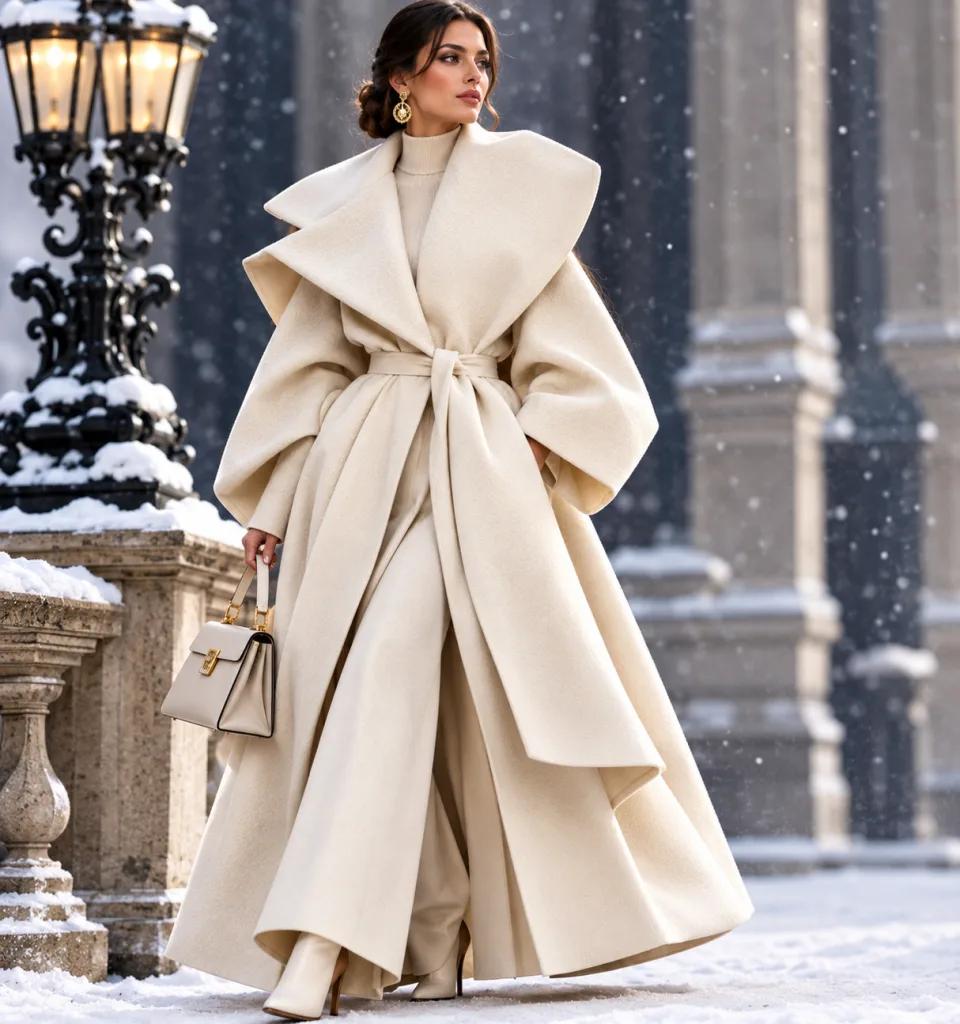
Defined shoulders, precise tailoring and strong collars create a polished silhouette. Neutral colours allow the construction to take centre stage, making this style suitable for professional settings and formal occasions.
The relaxed luxury coat
Soft wool, generous proportions and wrap-style closures offer a more relaxed interpretation of elegance. The emphasis is on comfort, quality and fluid movement rather than rigid formality.

The expressive statement coat
Rich colours, patterned fabrics, textured surfaces and distinctive details bring personality to winter outerwear. This is the direction for those who prefer their clothing to communicate individuality immediately.
A well-designed coat also offers practical value. In colder climates, it may be the most visible component of an outfit for several months, making its construction, warmth and versatility particularly important.
The smartest investment is not necessarily the most expensive design. It is the garment that combines reliable warmth, quality workmanship and a silhouette that remains appealing beyond a single season.
Winter 2027 Colours: From Deep Reds to Confident Purples
Winter’s traditional palette of black, grey and brown remains relevant, but the Autumn/Winter 2026–2027 season is giving colour a more prominent role.
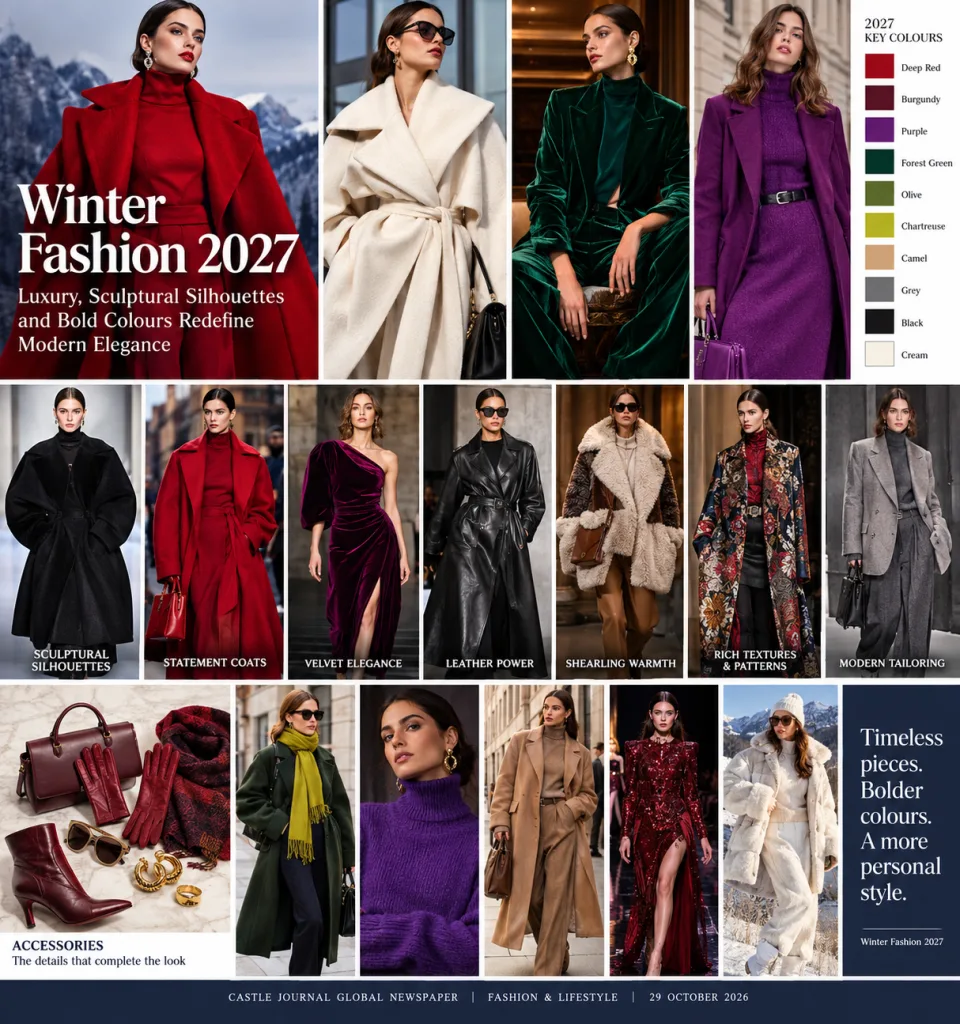
Fashion coverage and industry forecasting point towards a combination of dependable dark neutrals, earthy shades and more expressive accents. Deep red, rich purple, green and vivid yellow-green tones are among the colours attracting attention.
Rather than treating colour as a decorative afterthought, designers are using it to influence the character of an entire look.
Deep red and burgundy
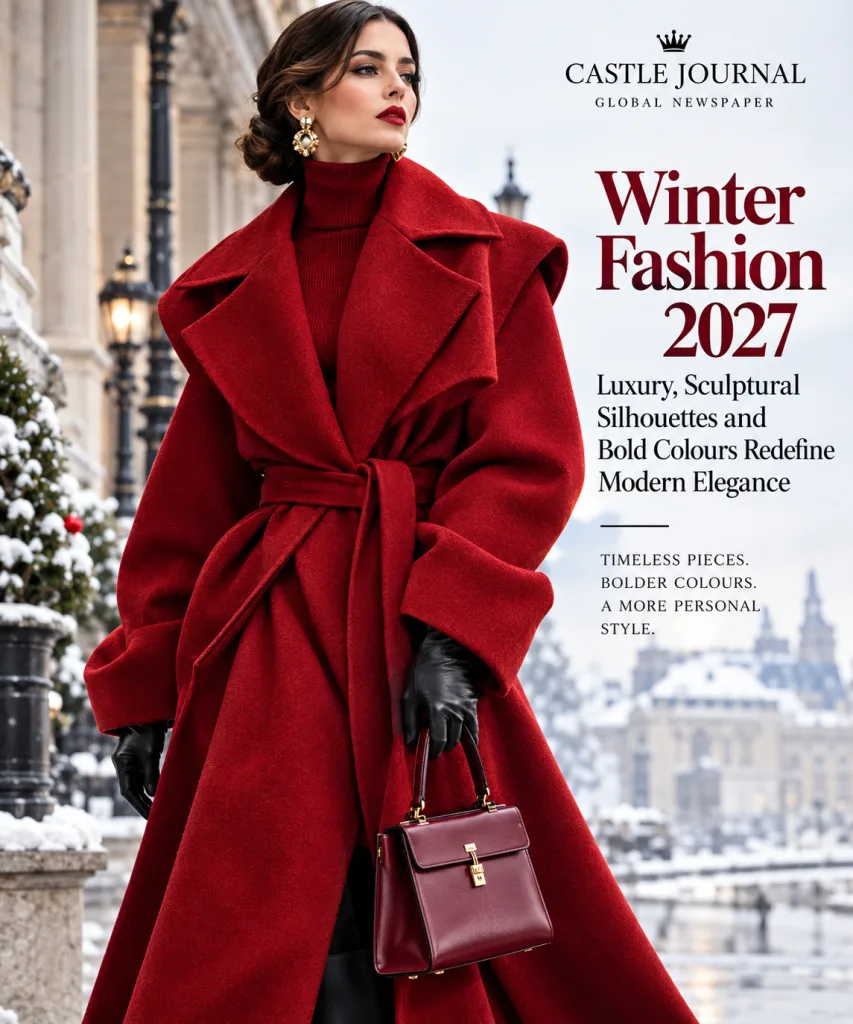
Red introduces energy and visual confidence to winter dressing. Burgundy offers a darker, more understated alternative, working particularly well with black, charcoal, cream and chocolate brown.
A red coat, burgundy knit or carefully chosen accessory can bring warmth to an otherwise neutral outfit.
Rich purple and violet
Purple adds depth without relying on the familiar winter palette. Dark violet works well with charcoal and black, while softer purple tones can create a striking contrast with brown, grey or cream.
Its appeal lies in the balance between drama and refinement.
Forest green and earthy olive
Green provides a natural counterpoint to brighter shades. Forest green feels particularly suited to wool coats, knitwear and tailored separates, while olive can introduce a more relaxed, contemporary character.
These colours also work well together with brown leather and warm neutral accessories.
Chartreuse and vivid accents
Yellow-green shades bring a more adventurous dimension to the season. They can appear in a knit, scarf, bag or other accent without overwhelming an entire outfit.
For those who prefer subtlety, a small colour contrast may be more effective than wearing several vivid shades at once.
The enduring importance of neutrals
Black, grey, camel, cream and brown continue to provide a reliable foundation.
Their value lies in versatility: they can be combined with expressive colours, textured fabrics and distinctive accessories while remaining useful across multiple winters.
The broader colour story is therefore not a contest between neutrals and bright shades. It is an invitation to use both with greater intention.
Velvet, Leather and Shearling: The Luxury of Texture
Winter fashion has always depended on materials that provide warmth and comfort. This season, however, texture is also becoming a central part of visual expression.
Velvet, leather, shearling and richly woven fabrics feature prominently in the current fashion conversation, offering different interpretations of contemporary luxury.
Velvet: Evening elegance returns
Velvet brings depth, softness and a distinctive relationship with light.
It works naturally in evening jackets, tailored trousers, dresses and occasionwear. Dark green, burgundy, navy and black are particularly versatile choices for formal settings.
For daytime dressing, velvet can be introduced through a jacket or skirt paired with simpler pieces. This allows the fabric to provide the visual interest without making the entire outfit feel overly formal.
Leather: Strong lines and modern character
Leather continues to occupy an important place in contemporary winter wardrobes.
Structured leather jackets, tailored outerwear and clean-lined separates offer a more defined aesthetic. Depending on the finish and cut, leather can appear understated, polished or deliberately dramatic.
For those seeking longevity, the quality of construction and the suitability of the garment for everyday use matter more than a highly reflective finish or an exaggerated design.
Shearling: Warmth with visual impact
Shearling combines insulation with a distinctive surface texture. It can give a simple jacket a stronger presence or soften the appearance of structured outerwear.
The most successful designs balance warmth, comfort and proportion. A textured collar or trim may be sufficient to create interest without adding unnecessary bulk.
Jacquard and decorative fabrics
Patterned weaving, embroidered details and richly textured surfaces are also contributing to the season’s more expressive mood.
These materials can transform a familiar silhouette into something distinctive, especially when the design itself remains simple.
The essential principle is balance: texture should enrich the garment rather than compete with every other element of the outfit.
Tailoring Returns with a Softer, More Flexible Identity
The modern winter wardrobe is increasingly comfortable with contrasts.
A structured jacket may be worn with relaxed trousers. A traditional tailored coat can be combined with knitwear, while a classic skirt suit can be reinterpreted through softer proportions and more casual styling.
This direction reflects a broader change in how elegance is understood.
Formal clothing no longer needs to feel separate from everyday life. Instead, familiar tailoring is being adapted to accommodate different occasions, practical needs and individual preferences.
The result is a more flexible wardrobe.
For professional settings, a well-cut jacket, comfortable trousers and a warm coat create a dependable combination. For social occasions, the same jacket can be paired with a textured skirt or a more expressive accessory.
This approach also encourages more thoughtful purchasing. A garment that works across several settings may offer greater long-term value than a highly specialised piece worn only occasionally.
Elegance, in this context, is not about following a rigid dress code. It is about understanding proportion, choosing appropriate materials and knowing how individual pieces work together.
Maximalism Returns: Fashion Rediscovers Its Dramatic Side
After seasons in which understated luxury attracted considerable attention, the Autumn/Winter 2026 runways have renewed interest in decorative richness and visual drama.
A report published by Vogue Arabia on 28 October highlighted the return of maximalist approaches, including elaborate embellishment, contrasting prints, sculptural shapes and statement accessories.
Maximalism is not a single aesthetic. It can appear through embroidered fabrics, elaborate jewellery, dramatic outerwear, layered patterns or the combination of contrasting textures.
Its defining characteristic is the willingness to use clothing as a more expressive visual language.
However, maximalism does not require every element to compete for attention.
A richly embroidered jacket can work beautifully with simple trousers. A patterned coat may need little more than a neutral knit and understated shoes. A statement necklace can become the focal point of an otherwise restrained outfit.
The distinction between expressive fashion and visual excess often comes down to composition.
For Winter 2027, the opportunity is to experiment with greater freedom while retaining an understanding of balance, craftsmanship and personal taste.
Accessories: The Details That Complete the Look
Accessories play an important role in connecting a winter wardrobe.
Structured handbags, expressive jewellery, textured scarves, leather belts and carefully selected footwear can reinforce the character of an outfit without requiring an entirely new collection of clothing.
This season’s wider interest in statement-making design also extends to accessories, where sculptural forms and decorative details offer opportunities for individual expression.
Three principles are especially useful.
Choose a focal point. If the coat has a dramatic shape or vivid colour, accessories can remain relatively simple.
Use texture to create contrast. A smooth leather bag can complement a wool coat, while a soft scarf can introduce warmth to a structured jacket.
Prioritise comfort and function. Winter footwear should provide suitable traction, support and protection from the weather. A visually striking pair of shoes is of limited practical value if it cannot be worn comfortably in the conditions for which it was purchased.
The best accessories do not merely follow a trend. They help create a coherent personal style.
From the Runway to Everyday Life: Making the Trends Wearable
Runway fashion often presents ideas in their most dramatic form. Translating those ideas into everyday clothing requires selection rather than imitation.
A practical winter wardrobe can be built around a few dependable pieces: a well-constructed coat, comfortable knitwear, tailored trousers, versatile footwear and a small number of items that introduce colour or texture.
From that foundation, seasonal trends can be incorporated gradually.
A sculptural coat offers a way to experiment with proportion. A burgundy or purple knit introduces colour without requiring a complete wardrobe change. A velvet jacket can serve both formal and social occasions, while a textured scarf can refresh familiar outerwear.
Layering is equally important. Lightweight garments worn together can provide warmth while allowing greater flexibility as temperatures change throughout the day.
The aim is to create combinations that work for real life rather than assembling an outfit solely because it resembles a runway image.
This is also where personal style becomes most meaningful. Two people can wear the same trend in entirely different ways, depending on their preferences, cultural context, daily activities and the climate in which they live.
Fashion becomes more useful when it offers possibilities rather than instructions.
Is Luxury Becoming More Personal?
The changing winter aesthetic raises a broader question about the meaning of luxury.
For many consumers, luxury has traditionally been associated with prestigious labels, expensive materials and visible signs of exclusivity. Yet the current emphasis on craftsmanship, individual expression and versatile design suggests a wider understanding of what makes clothing desirable.
A beautifully constructed coat may provide greater satisfaction than a conspicuous statement piece. A carefully chosen colour can express individuality more effectively than a recognisable logo. A garment that remains useful for years may be more valuable to its owner than one that dominates a single season.
This does not mean that traditional luxury has disappeared. Rather, the current season demonstrates that luxury can accommodate both restraint and extravagance.
One person may prefer a precisely tailored black coat. Another may choose a richly coloured, embroidered design. Neither approach is inherently more sophisticated.
The difference lies in the relationship between the garment, its wearer and the occasion.
The future of luxury fashion may depend increasingly on its ability to combine design identity with comfort, quality and personal relevance.
Sustainability and the Case for Buying Thoughtfully
The excitement surrounding seasonal trends should not obscure the practical and environmental questions associated with clothing production and consumption.
Fashion cycles encourage constant renewal, but a winter wardrobe does not need to be replaced every year.
Choosing durable materials, maintaining garments properly, repairing damaged items and purchasing pieces that work with existing clothing can extend their useful life.
Second-hand and vintage shopping can also offer access to distinctive designs while giving existing garments a longer period of use.
Material choice deserves particular attention. Natural fibres, recycled materials and alternative fabrics all have different characteristics, and sustainability cannot be determined from a label alone. Production methods, durability, care requirements and the garment’s actual lifespan also matter.
Consumers can make more informed decisions by asking a few straightforward questions:
- Will this garment work with clothing I already own?
- Is it suitable for my climate and daily activities?
- Is the construction likely to withstand repeated wear?
- Can it be cleaned, repaired and maintained appropriately?
- Am I choosing it because I genuinely like it, or simply because it is being presented as essential this season?
These questions do not diminish fashion’s creative appeal. They help connect that appeal with practical value.
A considered wardrobe can still be colourful, luxurious and expressive. It simply places greater emphasis on how clothing is used and appreciated over time.
A Global Perspective: One Fashion Season, Different Realities
International fashion trends do not translate identically across every market.
Climate, cultural traditions, local design industries, purchasing power and everyday routines all influence how seasonal ideas are interpreted.
In colder parts of Europe and North America, heavy wool coats, substantial knitwear and insulating outerwear may be essential. In regions with milder winters, lighter layers, tailored jackets and versatile mid-season garments may be more practical.
In the Middle East, rich fabrics, refined tailoring and expressive colours can be adapted to local preferences and occasionwear traditions, while the choice of outerwear depends on the temperature and setting.
Asian fashion markets also demonstrate the breadth of contemporary winter styling, from minimalist tailoring to highly experimental combinations of colour, texture and proportion.
These differences are important because fashion is not simply a process in which trends move from a runway to consumers unchanged.
Designers, manufacturers, retailers and consumers continually reinterpret seasonal ideas in response to local conditions.
The result is a more diverse international fashion landscape, in which global trends provide inspiration while individual markets determine how those trends become wearable.
What Will Define Winter Fashion 2027?
The Autumn/Winter 2026–2027 collections offer several strong indications of the season’s direction.
Sculptural outerwear is giving traditional coats greater visual presence through proportion, construction and distinctive details.
Expressive colour is challenging the idea that winter elegance must rely exclusively on dark neutrals.
Rich textures are bringing renewed attention to velvet, leather, shearling and decorative woven fabrics.
Flexible tailoring is allowing formal garments to move more comfortably between professional, social and everyday settings.
Maximalist expression is creating space for embellishment, pattern and dramatic accessories alongside more restrained designs.
Thoughtful versatility remains important, as consumers seek clothing that combines individual character with practical use.
These directions are not mutually exclusive. A person may choose a minimalist wardrobe while incorporating a single sculptural coat, or combine traditional tailoring with a vivid accessory.
The season’s defining quality is its openness to different interpretations of elegance.
It is therefore more accurate to describe Winter 2027 as a season of competing and complementary styles than as a single uniform trend.
Conclusion: The Future of Elegance Is Individual
Winter fashion 2027 is shaping up to be a conversation between structure and freedom, craftsmanship and experimentation, restraint and expression.
The renewed interest in sculptural silhouettes gives clothing an architectural dimension. Rich textures bring depth to familiar designs, while confident colours allow winter wardrobes to move beyond predictable combinations. At the same time, the continued relevance of tailoring and timeless outerwear demonstrates that innovation does not require abandoning the classics.
The most significant development may be the growing freedom to define elegance on individual terms.
Luxury can be expressed through a beautifully constructed coat, an unusual colour combination, a richly textured fabric or a garment that remains useful and meaningful for years.
Fashion does not need to choose between practicality and imagination. Its greatest achievements often emerge when the two work together.
For Winter 2027, the strongest wardrobe is not necessarily the largest or the most expensive. It is one in which every piece has a purpose, every choice reflects personal taste, and seasonal inspiration becomes an opportunity for creativity rather than an obligation to follow trends.
The message from the international fashion scene is clear: modern elegance is no longer defined by how closely we follow a trend, but by how intelligently and confidently we make it our own.
Fashion Desk | Castle Journal Global Newspaper
Reporting focus: International fashion trends, luxury craftsmanship, seasonal colour directions, wearable styling and responsible wardrobe choices.
Editorial note: This report examines Autumn/Winter 2026–2027 collections and fashion coverage available as of 29 October 2026. Trend descriptions reflect observed runway directions and industry commentary; individual designers and markets may interpret these directions differently.

