
US-Iran War Costs Top $47.1 Billion: Mounting Financial Burden Raises Questions Over Washington’s Strategy

Castle Journal Global Newspaper | 29 October 2026
International Affairs | Special Investigative Report
SEO Keywords: US-Iran war costs 2026, $47.1 billion Iran war, Pentagon military spending, US foreign policy, Iran conflict economic impact, Strait of Hormuz, Middle East war costs.
Executive Summary
The financial cost of the United States’ war against Iran has reached an estimated $47.1 billion, according to the latest assessment by US Central Command provided to Congress. The estimate covers expenditure through 16 October 2026 and represents an increase of approximately $3.5 billion from the previous assessment in early September.
The figures offer a stark indication of the financial demands of a conflict that has continued for eight months. They also raise difficult questions about military readiness, congressional oversight, energy security and the long-term sustainability of Washington’s approach to the Middle East.
The reported total includes approximately $29 billion associated with expended munitions, $11.9 billion in operational costs and $6.1 billion for replacing lost military equipment. Crucially, the estimate does not include the full cost of repairing damage to US military facilities across the region.
The immediate issue is therefore not simply how much the United States has spent, but how much more it may need to spend—and whether the military and diplomatic objectives of the campaign justify the growing financial commitment.
As Washington faces domestic political pressure and the possibility of renewed hostilities, the war’s financial consequences are becoming inseparable from the wider debate over American foreign policy.
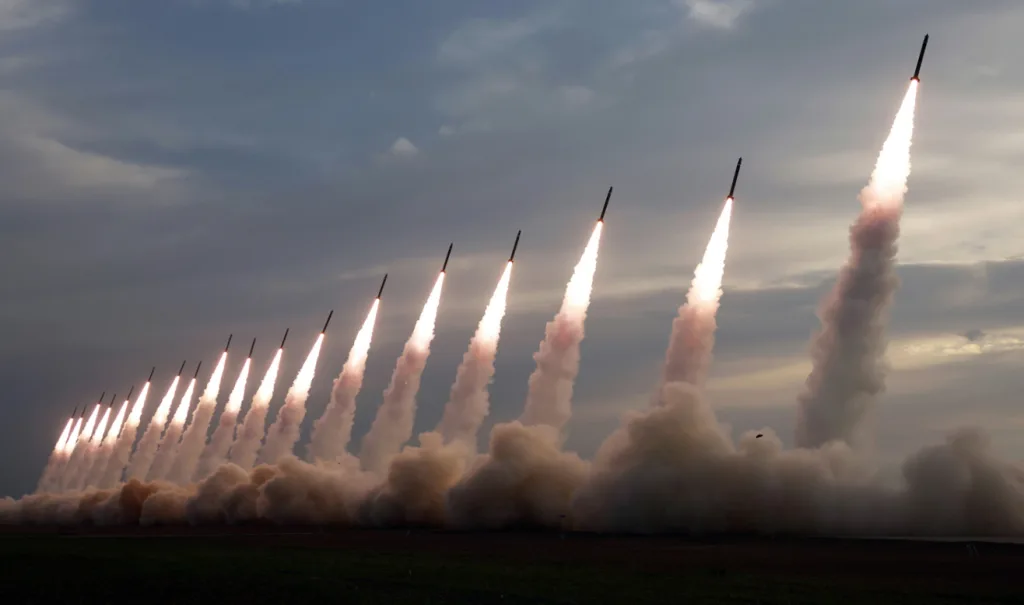
The $47.1 Billion Bill: What the Figures Reveal
The latest estimate represents a substantial increase in the financial burden of the conflict.
According to reporting by Associated Press, US Central Command’s assessment places the cost at $47.1 billion through 16 October. The figure was provided to Congress as the administration faced renewed scrutiny over the conduct and financing of the war.
The estimated expenditure falls into three principal categories.
| Cost category | Estimated amount | What it represents |
| Expended munitions | $29 billion | Weapons and ammunition used during military operations and the estimated cost of replacing them |
| Operational expenditure | $11.9 billion | Additional expenses associated with conducting and sustaining the campaign |
| Lost equipment | $6.1 billion | Estimated costs associated with replacing lost or damaged military equipment |
| Total | $47.1 billion | Reported military cost through 16 October 2026 |
*Source: US Central Command estimates reported by Associated Press, CBS News and Stars and Stripes. Figures are rounded and reflect the categories reported in the latest assessment. *
The largest component is the expenditure on munitions, accounting for more than three-fifths of the reported total.
That proportion is significant because the financial cost of using sophisticated military equipment does not end when a mission is completed. Expended weapons must be replaced, equipment must be repaired or renewed, and military units require continued logistical support.
The cost of a prolonged campaign therefore extends beyond the immediate price of individual operations.
It also creates future spending obligations that may compete with other defence priorities.
The $47.1 billion figure should consequently be understood as an estimate of specified military costs, not a comprehensive calculation of the conflict’s full financial impact on the United States.
Why the True Cost May Be Higher
One of the most important limitations of the latest estimate is what it excludes.
Iranian attacks have damaged buildings and infrastructure at US military installations across the Middle East. The Pentagon has not yet incorporated the full cost of repairing or rebuilding those facilities into the reported total.
The financial implications could be substantial.
Military installations support personnel, aircraft, logistical networks, communications and regional operations. Damage may therefore create both direct repair expenses and additional costs associated with relocating personnel, adjusting supply arrangements or restoring operational capacity.
There is also a distinction between damage that has already occurred and expenditure that has been formally estimated, approved or paid.
Some costs may be identified relatively quickly, while others require detailed assessments before the military can determine whether facilities should be repaired, replaced or redesigned.
This creates uncertainty in any attempt to calculate the war’s final bill.
A comprehensive assessment would also need to distinguish between expenditure directly attributable to the conflict and wider economic effects, including changes in energy prices, additional government spending and the long-term consequences of military equipment losses.
The Congressional Budget Office has previously warned that estimates of the conflict’s costs differ according to their scope, methodology and the periods covered. It has also noted that its estimates were subject to considerable uncertainty because the Department of Defense did not provide all the information requested for its analysis.
For Congress and the public, the implication is straightforward: a headline figure can establish the scale of the financial burden without revealing its complete extent.

The Monthly Cost: How Expensive Could a Prolonged Conflict Become?
The cost of a war is determined not only by the amount already spent but also by the resources required to sustain military operations.
In September, the nonpartisan Congressional Budget Office estimated that US combat operations against Iran had cost approximately $38 billion through 1 August. It projected that continued operations could add around $2 billion per month under conditions of relatively limited fighting, rising to approximately $3 billion per month if the intensity increased.
These figures were produced before the latest $47.1 billion assessment and should not be treated as a precise forecast of future expenditure. Actual costs will depend on operational intensity, the deployment of additional forces, weapons consumption and the extent of any renewed fighting.
Nevertheless, the estimates demonstrate why the duration of the conflict matters so much.
For illustration, if an additional six months cost between $2 billion and $3 billion per month, the resulting expenditure would be between $12 billion and $18 billion.
That is a scenario based on the Congressional Budget Office’s earlier monthly estimates, not a prediction of the war’s eventual cost.
If hostilities intensify, the financial burden could rise faster. A reduction in combat activity, conversely, would not eliminate the need to replace expended weapons, repair damaged equipment or sustain forces already deployed to the region.
Even a period of relative calm can therefore carry a substantial financial cost.
This creates a central strategic dilemma for Washington: the United States must consider not only the expense of continuing military operations but also the costs of maintaining a prolonged deployment without achieving a durable political settlement.
Military Readiness: The Strategic Cost Beyond Money
Financial expenditure is only one measure of a military campaign.
Another is the effect on the readiness of the armed forces to respond to future emergencies.
The extensive use of precision weapons and air-defence interceptors has raised concerns about depleted inventories and the time required to replenish them. The Congressional Budget Office has warned that rebuilding certain US munitions stockpiles could take five years or longer.
Such concerns matter because military resources are not infinitely available at the moment they are needed.
The United States maintains security commitments in several regions. Equipment and ammunition consumed in one conflict may need to be replaced before they can support another operation or meet an emerging threat elsewhere.
Replenishment also depends on industrial capacity, production schedules, component availability, skilled labour and the ability of manufacturers to increase output.
Sophisticated defensive systems can be particularly demanding to replace because they require specialised components, testing and integration with wider military networks.
The strategic issue is therefore not simply whether Washington can afford to purchase additional weapons.
It is whether the defence-industrial system can deliver the required equipment quickly enough without creating unacceptable gaps in other areas of military preparedness.
This does not establish that the United States has lost its ability to defend itself or fulfil its commitments. It does, however, highlight the opportunity costs of sustained weapons consumption.
A military campaign can achieve immediate operational objectives while simultaneously placing pressure on the resources required for future contingencies.
For defence planners, balancing those competing demands is a central responsibility.
Congress and the Funding Debate: Who Will Pay for the War?
The growing cost has intensified scrutiny of the administration’s requests for additional military funding.
In June, the administration submitted a supplemental funding request of approximately $87.6 billion for several priorities, including $67.1 billion for the Department of Defense. The request was intended to address war-related military requirements and other defence needs.
The size of the request illustrates the difference between the operational cost of a conflict and the funding required to address its consequences.
An administration may incur expenses through military operations before Congress approves the additional appropriations needed to cover them. It may also seek funds to replenish stockpiles, replace equipment and prepare for future requirements.
These categories should not be confused with one another.
The $47.1 billion estimate represents reported costs through a specified date. A supplemental appropriation is a request for legislative authority to provide funding for defined purposes. The two figures are related, but they are not interchangeable.
The distinction is essential when evaluating claims about the total amount taxpayers have paid or may eventually be asked to finance.
Congress must also consider whether proposed funding covers past expenditure, future operations, weapons replacement or broader defence priorities.
Without a clear breakdown, lawmakers and the public may struggle to determine how much additional money is required, why it is necessary and what objectives it is intended to achieve.
The debate is consequently about more than the size of a defence budget. It concerns the standards of transparency and accountability that should apply when the government commits public resources to a major military operation.

The American Taxpayer: The Domestic Economic Dimension
A military conflict can affect public finances even when its costs are not immediately visible in household budgets.
Government spending must ultimately be accommodated within the federal budget through appropriations, borrowing, reallocations or other fiscal decisions.
The consequences depend on the broader economic situation, the financing arrangements adopted and the extent to which war-related expenditure creates additional obligations.
The $47.1 billion estimate does not mean that every American household has paid a specific amount directly because of the conflict. Nor can the entire figure be translated into a uniform personal tax burden.
Its significance lies in the scale of public resources committed to the campaign and the competing priorities those resources might otherwise support.
Additional defence expenditure may be necessary to meet legitimate security requirements. At the same time, it can intensify difficult choices involving public services, infrastructure, healthcare, education, debt management and other national priorities.
The question is not whether national security should receive public funding. It is how governments should demonstrate that major security expenditures are proportionate, accountable and connected to achievable objectives.
Public confidence depends partly on whether citizens understand why a conflict began, what the government intends to accomplish and what conditions would allow military involvement to end.
When the financial commitment grows while the strategic destination remains uncertain, demands for clearer answers are likely to intensify.
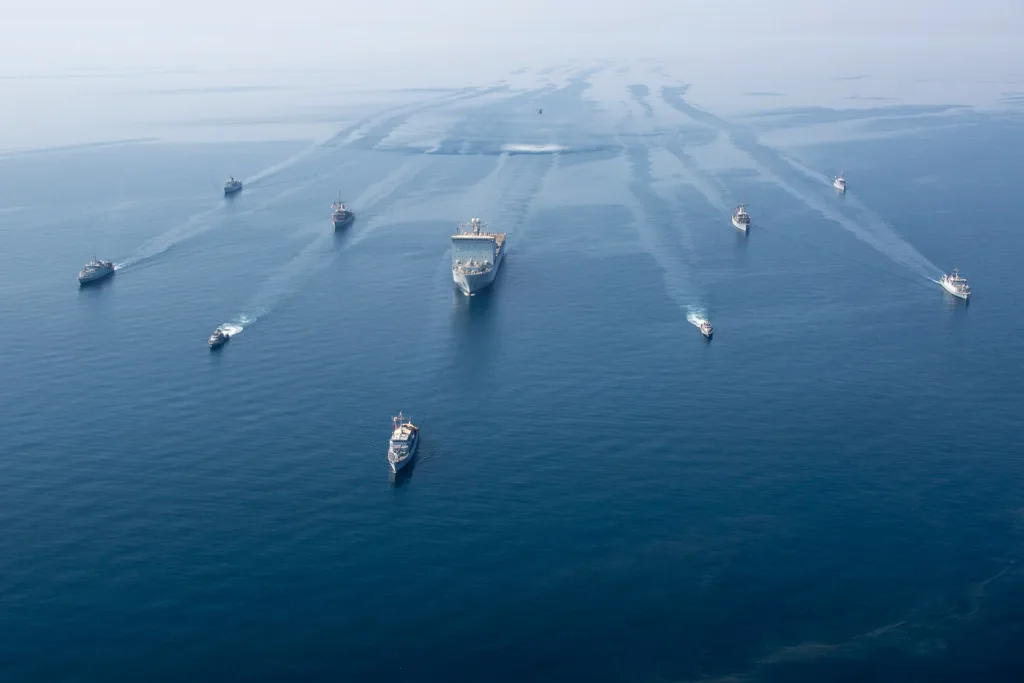
The Strait of Hormuz: A Regional Conflict With Global Economic Consequences
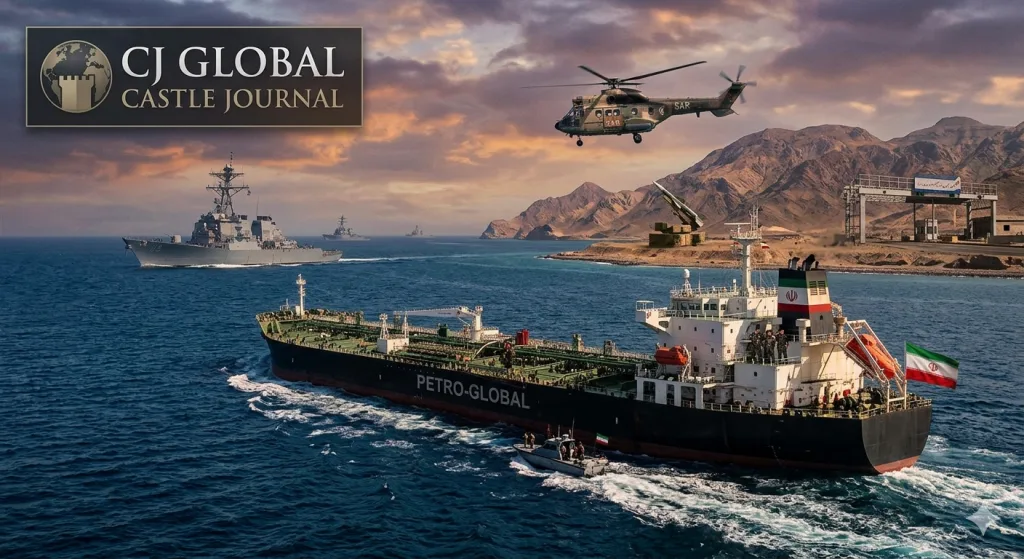
The Strait of Hormuz is one of the world’s most strategically important maritime passages.
Its importance extends far beyond the countries directly involved in the conflict because it connects major energy-producing areas of the Persian Gulf with international markets.
Disruption to shipping through the strait can affect the movement of crude oil, petroleum products and other commodities. It can also raise transport and insurance costs, increase uncertainty for traders and place additional pressure on countries that depend heavily on imported energy.
The Congressional Budget Office has identified energy-market disruption associated with the conflict as a factor affecting the US economic outlook, including the potential for higher inflation.
For consumers, higher energy costs can feed through into transport, manufacturing, electricity generation and the prices of goods and services.
The consequences are not necessarily uniform. Countries with different energy supplies, import dependencies, fiscal resources and currency positions may experience the same disruption in different ways.
For energy-importing economies, the effects can be particularly difficult when higher import bills coincide with currency pressure or limited fiscal flexibility.
For energy exporters, higher prices may increase revenue in some circumstances, although production constraints, shipping disruption and broader regional instability can offset those gains.
The Strait of Hormuz therefore demonstrates how a regional security crisis can create economic consequences across countries that are not direct participants in the fighting.
It also complicates the strategic calculations of Washington and Tehran.
Any disruption to maritime traffic can impose costs on the wider international economy, while efforts to secure shipping may require further military resources and diplomatic engagement.
The result is a cycle in which the attempt to manage the consequences of conflict can itself generate additional expenditure and political pressure.
The Wider Middle East: Economic Pressure Beyond the Battlefield
The financial consequences of the war extend into a region already shaped by security competition, investment uncertainty and uneven economic conditions.
For Gulf economies, the security of maritime routes and energy infrastructure is closely connected to trade, investor confidence and long-term development strategies.
For neighbouring states that import energy, changes in prices and shipping conditions can affect public finances and the cost of living.
For countries hosting foreign military forces, regional escalation can also create concerns about infrastructure, diplomatic relations and the possibility of being drawn more deeply into the confrontation.
These effects vary considerably from country to country, and the war’s overall regional economic impact cannot be captured by the US military expenditure figure alone.
The $47.1 billion estimate measures specified US military costs. It does not quantify the economic losses experienced by Iran, the wider region or international markets.
A complete regional assessment would require separate evidence concerning damage to infrastructure, disruptions to production and trade, changes in investment, humanitarian needs and the fiscal consequences for individual governments.
This distinction is important for responsible reporting.
The United States’ expenditure is a major part of the story, but it is not the same as the total economic cost of the conflict.
For the region, the central concern is whether the security environment can stabilise sufficiently to protect civilian populations, restore confidence in commercial activity and prevent further disruption to essential trade routes.

Washington’s Strategy: What Is the Political Objective?
The financial figures lead to a more fundamental question: what political outcome is the United States seeking to achieve, and how will success be measured?
Military campaigns require operational objectives, but those objectives must also connect to a credible political end state.
Without that connection, a campaign can continue to consume resources even when the relationship between military activity and the intended outcome becomes increasingly difficult to establish.
In the case of Iran, the United States faces interconnected challenges involving regional security, Iranian military capabilities, maritime access, nuclear concerns and the wider balance of power in the Middle East.
These objectives are not identical, and progress in one area does not automatically resolve the others.
A government may seek to deter attacks while maintaining pressure on Iran’s strategic capabilities. It may also pursue diplomatic arrangements intended to reduce the likelihood of renewed conflict.
The effectiveness of such an approach depends on the relationship between military pressure and political negotiation.
Military force can alter the calculations of governments and armed groups. However, it cannot by itself guarantee a durable diplomatic agreement, establish lasting regional trust or eliminate every source of future confrontation.
Washington must therefore evaluate not only whether operations have imposed costs on Iran, but also whether they have improved the prospects for a stable and enforceable security arrangement.
A credible strategy should be able to explain:
- Which specific security objectives remain outstanding.
- What evidence would demonstrate that those objectives have been achieved.
- How military operations contribute to the intended political outcome.
- What conditions would permit a reduction or termination of US military involvement.
- How the government intends to prevent renewed conflict after any agreement.
These are questions of strategic accountability rather than arguments for or against any particular political party.
They are also essential to judging whether continued expenditure is producing results that justify its financial and human consequences.
Diplomacy and the Possibility of a Different Path
The financial burden strengthens the case for examining diplomatic options alongside military planning.
Diplomacy does not guarantee success. Negotiations can fail, agreements can be violated, and competing governments may disagree over the terms required for a settlement.
Nevertheless, diplomatic engagement can provide mechanisms for clarifying objectives, reducing miscalculation and establishing verifiable commitments.
The October reporting indicates that channels of contact and discussions about humanitarian assistance have remained relevant even as the prospect of renewed hostilities has persisted. The Washington Post reported on 28 October that Vice President JD Vance had contacted Iranian officials about offering humanitarian assistance, with President Donald Trump’s approval, while Trump denied directing him to resume peace negotiations.
That distinction matters: contact between officials is not proof that formal negotiations have resumed or that an agreement is imminent.
Even so, communication can become important when both sides face the possibility of further escalation and the costs associated with continued confrontation.
A more durable diplomatic framework could address several connected issues: maritime security, the conditions governing military de-escalation, regional security concerns and the terms of any future agreement concerning Iran’s nuclear programme.
Such a framework would require difficult compromises and credible mechanisms for verification.
It would also need to account for the interests of regional states whose security and economic stability may be affected by the conflict.
The principal argument for diplomacy is not that it would eliminate every cost or disagreement.
It is that a verifiable agreement, if achievable and sustained, could reduce the need for repeated military operations and limit the risk of a much wider confrontation.
For Washington, the strategic question is whether military pressure is creating a viable path towards such an outcome—or whether it risks becoming a costly substitute for one.
The Human Cost Must Remain Part of the Accounting
Financial analysis should not obscure the human consequences of war.
The Pentagon’s reported figures, as summarised by Associated Press on 28 October, listed 21 US service members killed and 865 wounded, although not every death included in the overall count was directly attributable to hostile action.
These figures concern American military personnel and do not represent the total human toll of the conflict.
A comprehensive assessment must also consider civilian casualties, displacement, damage to essential services and the consequences for communities affected by the fighting.
The human cost cannot be reduced to a financial calculation. Nor should it be treated as a secondary consideration simply because military expenditure is easier to express in a single figure.
The loss of life, injuries and long-term health consequences affect families and communities long after the immediate fighting ends.
Military personnel may require continuing medical care, rehabilitation and support. Civilian populations may face prolonged disruption to housing, employment, education and access to healthcare.
The precise scale of these consequences requires reliable, independently assessed information, particularly when conditions on the ground make verification difficult.
For policymakers, the obligation is to consider civilian protection and the welfare of service members alongside operational objectives and budgetary constraints.
For journalists, the responsibility is to keep those human consequences visible without exaggeration, speculation or the selective use of figures.
Three Possible Financial and Strategic Paths
The next phase of the conflict could develop along several broad trajectories. These are analytical scenarios rather than predictions.
Scenario One: Sustained Diplomatic De-escalation
If the parties achieve a durable reduction in hostilities, immediate operational expenditure could decline.
The United States would still face the costs of replacing weapons, repairing equipment, supporting deployed personnel and restoring damaged facilities. A reduction in fighting would not erase obligations already incurred.
However, a sustained diplomatic arrangement could limit additional expenditure and reduce uncertainty for regional trade and energy markets.
Its success would depend on whether the parties could establish verifiable commitments, manage disputes and prevent isolated incidents from escalating into renewed conflict.
Scenario Two: Prolonged Low-Intensity Confrontation
A period of limited but continuing hostilities could produce a different outcome.
Even without a return to the most intense phase of the conflict, military deployments, surveillance, logistical support and defensive readiness would continue to require resources.
Under the Congressional Budget Office’s earlier estimates, relatively low levels of continuing conflict could still cost billions of dollars each month. Actual expenditure would depend on the operational circumstances.
This scenario could leave Washington facing recurring costs without a clear point at which its involvement could be reduced.
It could also sustain uncertainty in regional markets and complicate the planning of neighbouring governments.
Scenario Three: Renewed Escalation
A major resumption of hostilities could substantially increase the financial and strategic burden.
Greater weapons consumption, additional deployments, intensified defensive operations and further damage to military facilities could raise expenditure beyond the current estimate.
Such a development could also increase the risk of disruption to maritime traffic, energy supplies and regional economic activity.
The resulting consequences would depend on the duration and geographical scope of the escalation, as well as the responses of Iran, the United States and other regional actors.
This scenario would place particular importance on the availability of weapons, the resilience of military logistics and the ability of diplomatic channels to prevent a wider conflict.
The differences between these scenarios demonstrate why the final cost cannot be calculated reliably from the current figure alone.
What Congress and the Public Should Demand
The growing financial commitment creates a legitimate need for clearer public accounting.
Congressional oversight should establish a more complete picture of both the costs already incurred and the obligations that may arise in the future.
A credible accounting would distinguish between operational spending, the replacement of expended weapons, equipment losses, infrastructure repairs and anticipated future expenditure.
It should also explain which costs have already been covered by existing appropriations and which require additional funding.
The public should be able to understand the objectives associated with major supplemental requests, subject to appropriate protections for genuinely sensitive operational information.
There is also a need to separate direct military expenditure from wider economic consequences. Changes in energy prices, inflation, shipping costs and private-sector activity may be connected to the conflict, but they require different methods of measurement.
Combining all these effects into one headline figure without explaining their differences would risk producing a misleading picture.
The appropriate standard is not to assume that every cost estimate is complete or that every unquantified cost will necessarily materialise.
It is to make uncertainty explicit, publish reliable information where possible and update the assessment as better evidence becomes available.
That approach would allow lawmakers to evaluate the war’s financial requirements while maintaining public confidence in the institutions responsible for overseeing national security expenditure.
14. The Strategic Test: What Would Count as Success?
Ultimately, the financial debate cannot be separated from the question of strategic effectiveness.
A costly military operation is not automatically a failure. Governments may consider substantial expenditure justified when it prevents a greater threat, protects civilians or secures an achievable and lasting outcome.
Equally, a large military expenditure does not establish that a campaign has succeeded.
The appropriate assessment requires evidence of the relationship between resources used, objectives achieved and risks created or reduced.
For Washington, that means evaluating whether the campaign has improved the security of American personnel and interests, reduced the likelihood of future attacks, protected essential maritime routes and created conditions for a more stable regional settlement.
It also means considering whether the costs have weakened readiness for other contingencies, increased economic pressure or created incentives for renewed confrontation.
These questions cannot be answered by the $47.1 billion figure alone.
They require a transparent account of the government’s objectives, an assessment of military and diplomatic outcomes, and a realistic explanation of what further expenditure may be necessary.
The most important question is not whether the United States can continue spending money on the conflict.
It is whether continued spending remains connected to a credible strategy capable of producing a durable result.
Conclusion: The Cost Is Rising, but the Strategic Destination Remains the Central Question
The US-Iran war has generated a reported military bill of $47.1 billion through 16 October 2026, according to the latest US Central Command estimate provided to Congress.
The figure is substantial, but it is not a final accounting. The reported total excludes the full cost of repairing damage to US military facilities across the region and does not capture the conflict’s complete economic consequences.
The expenditure on munitions, equipment and operations also raises questions about the resources required to maintain military readiness and the additional funding that may be needed if the conflict continues.
Beyond Washington’s budget, disruption to regional security and energy markets has implications for international trade, economic stability and the governments whose populations depend on reliable access to essential goods.
Yet the central issue remains strategic rather than purely financial.
The United States must determine whether its military campaign is moving towards clearly defined and achievable security objectives, whether those objectives can be sustained at an acceptable cost, and what political arrangements could prevent the conflict from recurring.
Diplomacy is not guaranteed to succeed, but neither does continued military expenditure guarantee a durable settlement.
The $47.1 billion estimate is therefore more than a measure of money spent. It is a test of whether Washington can connect military power, financial accountability and a credible political endgame.
For American taxpayers, the question is how much more public money may be required. For the Middle East, it is whether the conflict will lead to a more stable security environment or another cycle of confrontation. For the international community, it is whether the parties can find a path that reduces the risks to civilians, regional economies and essential maritime routes.
Until those questions are answered, the financial burden will continue to grow alongside the uncertainty surrounding the war’s ultimate outcome.
Sources and Further Reading
- Associated Press — Iran war’s cost to American taxpayers grows to an estimated $47.1 billion, 28 October 2026.
- Stars and Stripes — Pentagon puts cost of Iran war at $47 billion, 28 October 2026.
- CBS News — Iran war has cost $47 billion, U.S. military says, 27 October 2026.
- Congressional Budget Office — Estimating the Cost of Combat Operations Against Iran, 15 September 2026.
- Congressional Research Service — U.S. Military Operations Against Iran: Munitions and Missile Defense, updated 5 October 2026.
- The Washington Post — Reporting on the war’s cost, regional security and diplomatic contacts, 28 October 2026.
Castle Journal Global Newspaper
Independent International Journalism | Special Investigative Report

