Britain, Russia and NATO on the Edge: Threats, Nuclear Warnings and the Risk of a Wider European War

Castle Journal Global Newspaper | 31 October 2026
International Affairs | London–Moscow–Brussels–Washington
SEO keywords: UK Russia tensions 2026, Britain Russia war risk, NATO Russia confrontation, Putin nuclear warning, UK defence declaration, European security crisis, US NATO relations, Russian threats against Britain, Kaliningrad tensions, Ukraine war escalation, NATO collective defence.
A Dangerous Exchange of Warnings
Relations between Russia and Britain have entered a period of heightened confrontation, with increasingly forceful declarations from Moscow, London, European governments and NATO. The dispute now extends beyond the battlefield in Ukraine to questions of national security, military preparedness, nuclear deterrence and the future of European stability.
On 26 October, defence ministers from Britain, France, Germany, Italy and Poland issued a joint declaration identifying Russia as the most acute long-term threat to European security. They pledged to strengthen defence readiness, improve their ability to respond to emerging threats and continue supporting Ukraine politically, militarily and financially.
Moscow has responded to Western military support for Ukraine with warnings of serious consequences. In August, Russian Foreign Ministry spokesperson Maria Zakharova threatened that British military installations and equipment in Ukraine and elsewhere could become targets if Ukraine continued using British-supplied Storm Shadow missiles against Russian territory.
The exchange raises a central question for European governments: how can they strengthen deterrence and support Ukraine without allowing the conflict to expand into a direct confrontation between Russia and NATO?
For now, the public declarations demonstrate a serious security crisis, but they do not establish that Britain and Russia have decided to go to war.
Moscow’s Warning to Britain
Russia’s warning on 27 August marked a particularly direct escalation in its rhetoric towards London.
Zakharova argued that Britain’s assistance to Ukraine was bringing it closer to what Moscow considers legal responsibility for attacks carried out with British-supplied weapons. She warned of potentially catastrophic consequences if the British Government continued its current course.
The dispute centres partly on the Storm Shadow cruise missile, a British-French system supplied to Ukraine. Moscow objects to Ukraine’s use of Western-provided capabilities against targets inside Russia and argues that such assistance increases Western involvement in the conflict.
Britain, however, maintains that supporting Ukraine’s defence is a legitimate response to Russia’s invasion.
The distinction is important. Russia has issued a conditional threat against British military targets, but the statement did not announce a confirmed attack plan or provide evidence that an operation against Britain had been ordered.
Nevertheless, threats involving the territory or personnel of a NATO member are particularly sensitive because an attack could create consequences extending far beyond the original dispute.
Britain’s Response: Readiness Without a Declaration of War
London has taken a firm position on the Russian threat.
On 19 October, British Defence Secretary Wes Streeting told Parliament that Britain was not at war with Russia and did not seek confrontation. He nevertheless warned that the country would defend every part of NATO territory and would not abandon its support for Ukraine.
The British Government has also described Russian activity across Europe as involving sabotage, cyber-related threats, military posturing and other hostile actions. Moscow rejects Western accusations concerning its responsibility for various alleged covert operations.
Britain’s position therefore combines two messages: it intends to avoid a direct war, but it is preparing to respond if its territory or NATO allies are attacked.
This is the logic of deterrence. A government seeks to convince a potential adversary that an attack would carry unacceptable costs, reducing the incentive to initiate one.
The danger is that deterrence depends on interpretation. If one side regards defensive preparations as threatening, or mistakes a warning for an intention to attack, the resulting reaction can increase tensions rather than contain them.
The Nuclear Dimension: Kaliningrad and NATO
The confrontation became more serious in late September when Russia issued a diplomatic warning concerning Kaliningrad, its territory on the Baltic Sea between Poland and Lithuania.
According to Reuters, Moscow warned NATO that it could use its entire arsenal, including nuclear weapons, if the alliance attempted to isolate Kaliningrad from the rest of Russia. The Russian communication also warned of the possibility of strikes against decision-making centres in NATO member states if such a confrontation developed.
The warning was conditional: it concerned a potential attempt to cut off Kaliningrad, rather than announcing an imminent nuclear attack.
Kaliningrad’s location makes the issue particularly sensitive. It is surrounded by NATO members and is strategically important to Russia’s military position in the Baltic region.
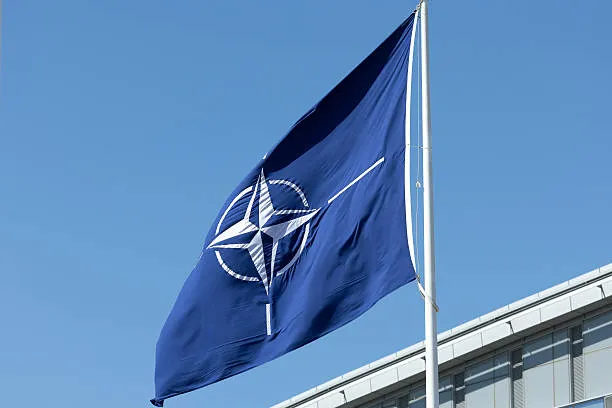
NATO Secretary-General Mark Rutte responded by emphasising that the alliance is defensive and should not be subjected to nuclear threats. He also said NATO saw no imminent threat to its territory and would continue investing in defence and supporting Ukraine.
The exchange illustrates the continuing role of nuclear rhetoric in Russia–Western relations. Such statements are intended to influence the calculations of governments, but they can also deepen public anxiety and increase the consequences of miscalculation.
There is, however, no public evidence in these declarations alone that a nuclear attack has been authorised or that NATO has decided to launch one.

Europe’s Joint Declaration: A Stronger Defence Position
The joint statement issued by Britain, France, Germany, Italy and Poland on 26 October represents a coordinated European response to what the ministers describe as a deteriorating security environment.
The five countries committed themselves to improving readiness and resilience, developing military capabilities in line with NATO priorities and increasing Europe’s responsibility for its own security.
They also reaffirmed support for Ukraine and called for a lasting peace supported by credible security guarantees. Their statement further emphasised continued action against Russia’s shadow fleet, within the framework of international law and coordination with relevant partners.
The declaration does not announce a decision to attack Russia. Instead, it sets out a programme for stronger defence and continued support for Ukraine.
Yet its political significance should not be underestimated. European governments are preparing for the possibility that confrontation with Moscow will persist well beyond the immediate fighting in Ukraine.
The challenge is to make that preparation credible without turning every military or political disagreement into another step towards direct conflict.
Washington’s Message: Deterrence, but Also Restraint
The United States has an important role in the crisis, but Washington’s approach does not always match the public tone adopted by European governments.
On 30 October, Reuters reported that Pentagon officials had privately urged several NATO allies, including Lithuania, Latvia and Estonia, to moderate their public rhetoric about Russia. According to people familiar with the discussions, American officials were concerned that particularly aggressive statements could undermine security or contribute to an unnecessary escalation.
The reported exchanges were described as cordial rather than confrontational. The Pentagon declined to comment on the specific accounts. The report reflects a wider debate within NATO over how to communicate the Russian threat while maintaining public support for defence and assistance to Ukraine.
The underlying question is whether a more forceful public message strengthens deterrence or gives Moscow additional reasons to portray NATO as preparing an offensive.
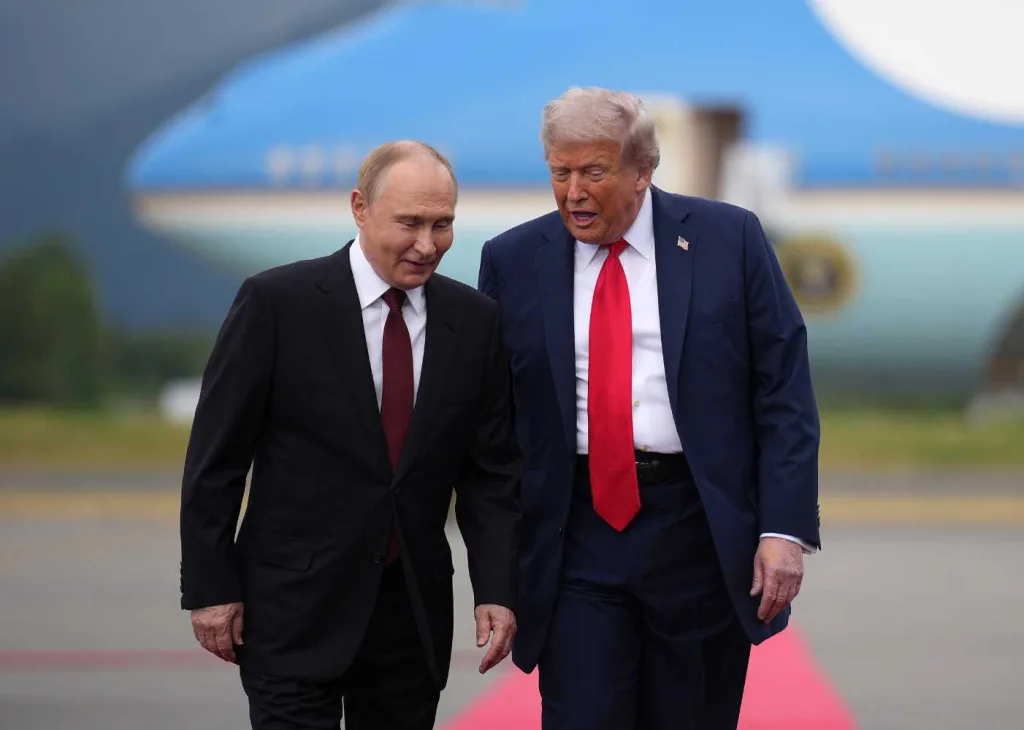
Washington is also seeking a negotiated end to the war in Ukraine. That creates a difficult balancing act: the United States wants its allies to remain capable of defending themselves while avoiding statements or actions that could make negotiations more difficult.
This does not mean Washington has abandoned NATO or Ukraine. It indicates that alliance members may disagree over the most effective combination of military preparation, public messaging and diplomacy.
Putin’s Latest Message to Europe
On 29 October, Russian President Vladimir Putin said Moscow wanted to restore full relations with European countries and argued that a wider conflict would have no winners. At the same time, he maintained that Russia was prepared for war if circumstances required it and warned against challenges to Russian interests.
Putin also addressed maritime security in the Baltic Sea, arguing against restrictions on navigation and communications. His remarks came amid wider disputes over the security of the Baltic region and Russia’s relations with European governments.
These statements contain two messages that appear contradictory but are central to Moscow’s current position: Russia says it does not want a wider war, yet it stresses its readiness to respond militarily to what it considers threats.
European governments make a similar distinction in their own declarations, arguing that military preparedness is intended to prevent conflict rather than initiate it.
The difficulty is that both sides may describe their actions as defensive while interpreting the other’s actions as aggressive.

Could a Local Incident Trigger a Wider War?
The greatest danger may lie not in a formal declaration of war but in an incident that escalates faster than governments can control it.
A military encounter, an attack affecting personnel from a NATO country, a serious airspace incident or a misinterpreted military movement could generate intense pressure for retaliation.
NATO’s collective-defence commitment is central to this calculation. Article 5 of the North Atlantic Treaty establishes that an armed attack against one ally is considered an attack against all. However, the response is determined through allied consultation and action; it does not mean that every hostile statement or isolated incident automatically produces a full-scale war.
NATO has repeatedly stated that it sees no imminent military attack against alliance territory while stressing the need to remain prepared. That assessment is an important counterweight to the increasingly alarming language being exchanged by political leaders.
A serious crisis could still emerge. But responsible analysis must distinguish between the possibility of escalation and evidence that a government has decided to initiate military action.
Castle Journal Analysis: A Continent Preparing for Uncertainty
The current confrontation reveals three overlapping struggles.
The first is military: Russia is continuing its war against Ukraine, while Britain and other European countries are supporting Kyiv and strengthening their own defence capabilities.
The second is political: Moscow and Western governments are attempting to shape each other’s calculations through sanctions, declarations, military preparations and public warnings.
The third is diplomatic: the United States and its partners are trying to preserve the possibility of negotiations without undermining their security commitments.
These dynamics create a dangerous environment, particularly when nuclear threats and warnings about military targets enter the public debate. Nevertheless, the declarations examined here do not confirm that Britain, Russia or NATO has made a decision to begin a direct war.
The immediate priority should be to prevent a local confrontation from becoming a wider military crisis. That requires credible defence, reliable communication, careful assessment of intelligence and a willingness to distinguish verified actions from political accusations.
Europe cannot ignore security threats. Nor can Russia expect its warnings to determine the independent security choices of neighbouring countries. At the same time, every government has a responsibility to avoid steps that needlessly increase the risk of catastrophic miscalculation.
The defining question is not which side can issue the strongest warning. It is whether the governments involved can maintain deterrence while keeping a direct war from becoming a reality.
As the war in Ukraine continues, the international community faces a difficult test: whether military readiness and diplomatic restraint can operate together—or whether the growing exchange of threats will steadily narrow the space for peace.
Castle Journal Global Newspaper | International Affairs Desk

