
Sudan’s War Deepens Humanitarian Crisis Threaten Millions

SEO Headline: Sudan Crisis September 2026: Millions Displaced as Humanitarian Aid Runs Short and Fighting Continues
Date: Monday, 28 September 2026
Location: Khartoum / Port Sudan, Sudan
Department: Africa | Conflict and Humanitarian Affairs

Sudan is facing one of the world’s most severe humanitarian emergencies as the conflict between the Sudanese Armed Forces (SAF) and the Rapid Support Forces (RSF) continues into its fourth year.
The war, which began in April 2023, has devastated communities, disrupted essential services and forced millions of people to flee their homes. Fighting across Darfur, Kordofan and Blue Nile continues to drive displacement, while economic deterioration and shortages of humanitarian assistance are deepening the crisis.
United Nations agencies have warned that humanitarian supply systems are under severe financial pressure, with emergency relief stocks at risk of running out. Millions of displaced people remain dependent on assistance, while others are returning to areas where infrastructure and basic services have been severely damaged.
The crisis is no longer limited to the battlefield. It is also affecting food security, healthcare, education, livelihoods and the ability of communities to recover.
KEY DEVELOPMENTS
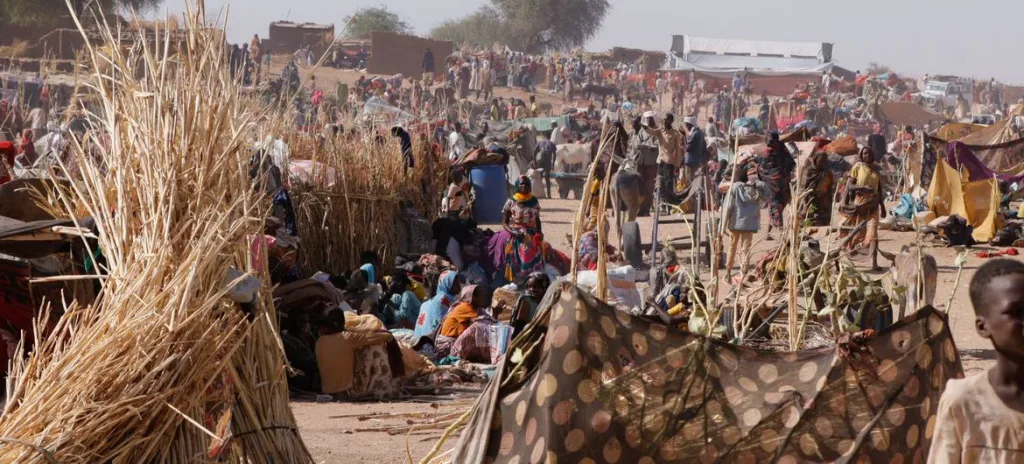
• Displacement: The International Organization for Migration reported that 8.6 million people remained internally displaced, alongside 4.9 million returnees.
• Humanitarian needs: The 2026 UN humanitarian plan estimated that 33.7 million people in Sudan require humanitarian assistance.
• Food insecurity: An estimated 19.5 million people were experiencing crisis-level or worse acute food insecurity in the latest assessment covering 2026.
• Aid shortages: The UN warned that emergency relief supplies delivered through the IOM Common Humanitarian Pipeline could run out within weeks without additional funding.
• Continued violence: Drone strikes and other hostilities continue to endanger civilians in Darfur, Kordofan and Blue Nile.
• Explosive hazards: UN mine-action teams reported that 108 people were killed or injured in explosive-ordnance accidents between January and June 2026.
• Education crisis: Millions of children remain out of school, while damage to educational infrastructure continues to undermine access to learning.
- A COUNTRY DIVIDED BY WAR
The conflict between the Sudanese Armed Forces and the Rapid Support Forces began on 15 April 2023, following a breakdown in relations between the two military powers.
The fighting has divided the country into areas controlled by different forces and disrupted the functioning of national institutions.
The humanitarian situation varies significantly by region. Active hostilities in Darfur, Kordofan and Blue Nile continue to expose civilians to serious risks, while other areas are experiencing the challenges of receiving displaced families and restoring essential services.
The United Nations has warned that continued fighting, attacks on civilian infrastructure and restrictions on humanitarian access are worsening conditions for millions of people.
The conflict has also weakened the national economy, disrupted trade and placed additional pressure on households already struggling with rising prices and reduced incomes.
DISPLACEMENT AND THE CHALLENGE OF RETURN
Sudan’s displacement crisis remains one of the largest in the world.
According to figures presented by the International Organization for Migration during a UN Geneva briefing in September, approximately 8.6 million people remained internally displaced, while 4.9 million people had returned to their areas of origin.
However, returning home does not necessarily mean that displaced families can resume normal life.
Many communities face damaged homes, disrupted water and electricity networks, limited healthcare and continuing security risks. In some areas, explosive hazards pose additional dangers to civilians attempting to return.
The movement of displaced people back to their home regions is placing further pressure on local services, particularly in areas where infrastructure has been damaged by years of conflict.
FOOD INSECURITY AND THE RISK OF FAMINE
Food insecurity remains a major humanitarian concern across Sudan.
According to UNICEF’s mid-year humanitarian situation report, an estimated 19.5 million people were experiencing crisis-level or worse acute food insecurity in the 2026 assessment period.
Approximately 135,000 people were facing catastrophic levels of food insecurity, while more than five million were experiencing emergency conditions.
The assessment also identified 14 areas across Greater Darfur and Greater Kordofan as being at risk of famine, although the available data remains incomplete.
Conflict-related displacement, disrupted livelihoods, restricted access and economic pressures continue to undermine food availability and household purchasing power.
Humanitarian agencies have warned that sustained assistance is essential to prevent further deterioration in food security and nutrition.
HUMANITARIAN AID SHORTAGES AND FUNDING PRESSURE
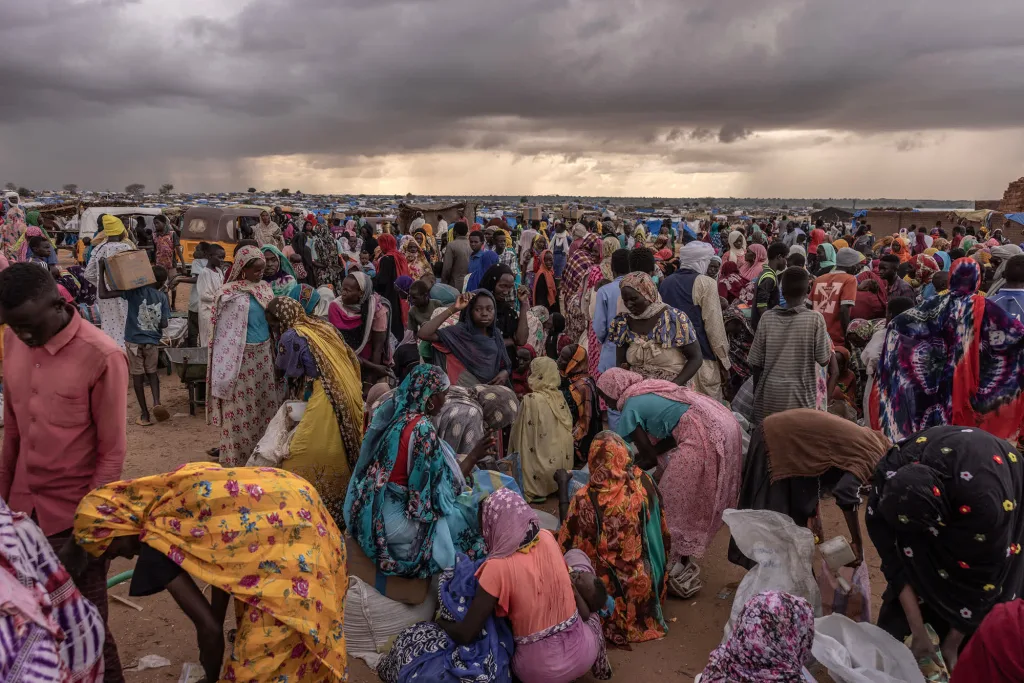
Humanitarian operations in Sudan are facing a growing funding crisis.
During a September briefing in Geneva, the International Organization for Migration warned that emergency relief supplies delivered through its Common Humanitarian Pipeline could run out within less than two weeks.
The pipeline provides essential supplies, including shelter materials, household items and hygiene kits, to humanitarian organisations operating across Sudan.
Since July 2023, the system has reportedly reached 2.84 million people through a network of more than 100 registered partners.
IOM said it required additional funding to maintain and expand its operations, warning that losing the pipeline’s operational capacity would make it difficult and costly to restore.
The funding shortfall threatens the delivery of essential assistance to displaced families and other vulnerable communities.
DRONE STRIKES AND CIVILIAN SAFETY
Drone attacks and other hostilities continue to place civilians at risk across several regions.
In July, the UN High Commissioner for Human Rights warned of escalating violence in North Kordofan, including drone strikes affecting El Obeid and surrounding areas.
The UN documented attacks on markets, schools, fuel stations, water infrastructure and civilian vehicles across parts of Kordofan.
In September, UN briefings also reported renewed displacement and attacks on critical infrastructure in Blue Nile State, as well as further population movements in North Darfur.
The attacks have disrupted access to food, clean water, healthcare and transportation, while making humanitarian operations more difficult.
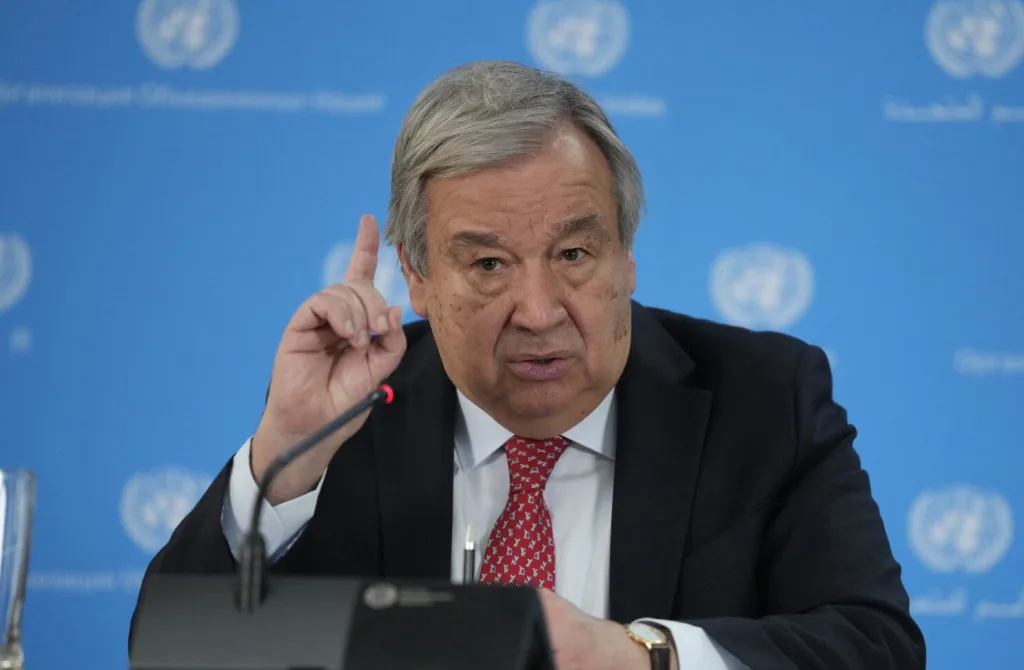
The United Nations has called on all parties to respect international humanitarian law and protect civilians and civilian infrastructure.
EXPLOSIVE HAZARDS COMPLICATE RECOVERY
As displaced families return to areas affected by fighting, unexploded ordnance and other explosive hazards present additional risks.
According to a UN Mine Action Service factsheet published in September, 108 people were killed or injured in 38 explosive-ordnance accidents between January and June 2026.
The agency reported that nearly half of the recorded victims were in Khartoum and Al Jazirah, areas experiencing significant population returns.
Children accounted for 55 per cent of victims whose ages were recorded.
UN mine-action teams have been conducting surveys, clearing hazardous areas and providing safety education to communities and humanitarian workers.
The presence of explosive hazards highlights the need for continued clearance operations before damaged neighbourhoods and public infrastructure can be safely restored.- m
EDUCATION AND THE FUTURE OF A GENERATION
Sudan’s education system has suffered extensive disruption since the conflict began.
UNESCO reported in June 2026 that approximately 19 million children were out of school, including millions displaced within the country.
The agency also reported that around 80 per cent of higher education institutions were no longer operational.
In Darfur, insecurity, displacement and damage to educational facilities have severely restricted access to learning.
The interruption of education threatens children’s development and limits opportunities for future employment and recovery.

UNESCO has been supporting community learning centres and vocational training programmes to help young people regain access to education and develop practical skills.
Restoring education will require sustained investment, safe learning environments and the rehabilitation of damaged institutions.
Source: UNESCO, statement on Sudan’s education and cultural crisis, June 2026.
CASTLE JOURNAL STRATEGIC ANALYSIS
Sudan’s conflict demonstrates how prolonged warfare can weaken a country’s institutions and create a humanitarian emergency that extends far beyond the immediate fighting.
Three developments deserve particular attention.
First, displacement and return are occurring simultaneously. Millions remain away from their homes, while others are returning to communities where infrastructure, livelihoods and essential services have been severely damaged.
Second, humanitarian assistance is facing a serious funding and logistical challenge. The threatened interruption of emergency supply systems could leave vulnerable families without essential shelter materials and other basic assistance.
Third, the effects of the conflict extend into the future. Disrupted education, explosive hazards, economic deterioration and damage to public infrastructure will continue to affect communities long after fighting subsides.
The available UN reporting confirms that Sudan’s humanitarian crisis remains severe. It does not establish that the conflict is approaching a decisive military outcome or that a political settlement is imminent.
The central question is whether humanitarian access, sustained international assistance and meaningful political engagement can reduce civilian suffering and create conditions for a durable settlement.
CONCLUSION
Sudan continues to face a deepening humanitarian crisis as fighting between the Sudanese Armed Forces and the Rapid Support Forces disrupts communities and weakens essential services.
Millions of people remain displaced, food insecurity affects a substantial share of the population, and humanitarian agencies are warning of critical shortages in emergency supplies.
The consequences extend beyond immediate casualties, affecting education, healthcare, livelihoods and the prospects for national recovery.
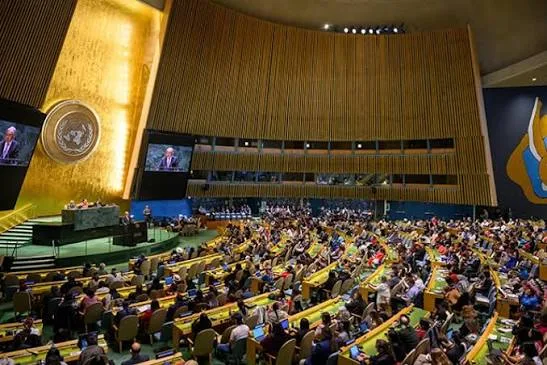
The United Nations continues to call for civilian protection, safe humanitarian access and sustained assistance to affected communities.
Castle Journal Global will continue monitoring official UN statements and verified developments to assess the humanitarian situation, the prospects for diplomatic progress and the challenges facing Sudan’s civilian population.
SOURCES FOR EDITORIAL VERIFICATION
United Nations Office at Geneva — September 2026 briefing on displacement and emergency aid shortages.
United Nations in Sudan — UN Mine Action Service Factsheet, April–June 2026.
UNICEF — Sudan Humanitarian Situation Report No. 44, mid-year 2026.
United Nations Office for the Coordination of Humanitarian Affairs — Sudan humanitarian updates and response information.
UNESCO — Sudan education and cultural heritage situation update, June 2026.
UK Government — Country Policy and Information Note: Humanitarian Situation in Sudan, September 2026.
CASTLE JOURNAL GLOBAL NEWSPAPER
Published by CJ & COHC Castles Union for Independent International British Investigative Journalism.
Castle Journal Ltd — British International Investigative Platform of Journalism, Newspapers & Magazines Publishing.
London, United Kingdom | Official Governance Licensing
Founder | Owner | CEO: Dr. Abeer Almadawy
Licence No.: 10674

