Trump & Xi agree on trade cooperation and AI dialogue

SEO HEADLINE: US–China Relations September 2026: Trump and Xi Reach Trade Understandings, Establish AI Dialogue and Address Taiwan Tensions
Date: Monday, 29 September 2026
Location: Washington, DC, United States / Beijing, China
Department: World News | International Relations | Economy and Technology
INTRODUCTION
The United States and China have agreed on a series of economic, diplomatic and technological initiatives following a state visit by Chinese President Xi Jinping to Washington from 23 to 25 September 2026.
During talks with US President Donald Trump, the two leaders endorsed a framework for a constructive relationship based on strategic stability, respect and reciprocity.
The discussions produced understandings on trade, investment, artificial intelligence, law enforcement cooperation and international security.
The agreements come amid continuing disagreements over Taiwan, technology restrictions, trade practices and the two countries’ broader strategic competition.
Both governments have presented the meeting as an opportunity to improve communication and expand practical cooperation.
However, the announced understandings will require implementation, and the two countries continue to hold different positions on several major issues.
The central question is whether the new mechanisms can support a more predictable relationship while managing disagreements that affect regional and global stability.
KEY DEVELOPMENTS
• State visit: Chinese President Xi Jinping visited Washington from 23 to 25 September 2026 and held talks with President Donald Trump.
• Trade cooperation: The two governments agreed to pursue reciprocal tariff reductions covering approximately $30 billion in non-sensitive goods in each direction.
• Investment: The leaders endorsed the establishment of a bilateral Board of Investment to discuss investment opportunities and commercial barriers.
• Artificial intelligence: The countries agreed to establish a bilateral AI dialogue and a communication channel for AI-related incidents.
• Critical minerals: Both sides acknowledged the need to address supply-chain concerns involving rare earths and other critical minerals.
• Taiwan: The issue remains a major point of disagreement, with Beijing reiterating its position on sovereignty and Washington continuing to emphasise peace and stability across the Taiwan Strait.
• International security: The leaders discussed Iran, international waterways and other regional security concerns.
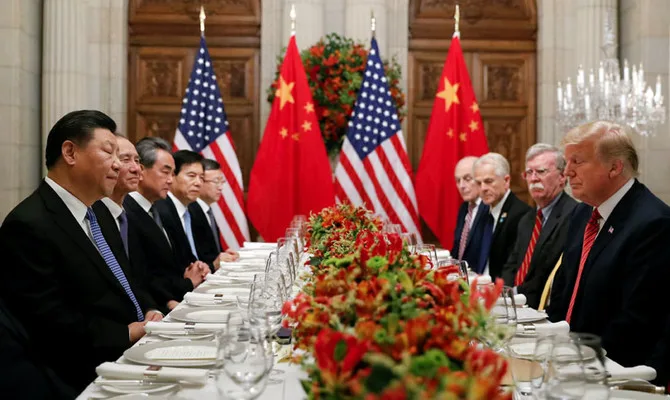
TRUMP AND XI AGREE ON A FRAMEWORK FOR STRATEGIC STABILITY
The September meeting brought together the leaders of the world’s two largest economies for discussions on bilateral relations and international affairs.
According to statements released by both governments, the leaders agreed to pursue a constructive relationship based on strategic stability, respect, fairness and reciprocity.
The Chinese government described the approach as one in which cooperation should remain central, competition should be managed and differences should be addressed through dialogue.
The White House likewise presented the visit as an effort to strengthen economic cooperation and establish more predictable relations.
The statements reflect a shared interest in maintaining communication, although they do not mean that the two countries have resolved their longstanding strategic disagreements.
Source: Chinese government statement on the outcomes of the state visit, 26 September 2026.
TRADE AGREEMENTS AND RECIPROCAL TARIFF REDUCTIONS
Trade was one of the principal subjects of the discussions.
The two governments endorsed arrangements covering approximately $30 billion in reciprocal tariff reductions for non-sensitive goods in each direction.
The agreement includes the development of a Board of Trade and a working group focused on agricultural market access.
The White House said the arrangements would cover selected American exports, including agricultural products, seafood, wood products, cosmetics and medical devices, alongside selected Chinese consumer goods.
Both governments also agreed to continue working on the implementation of earlier trade understandings.
The announced measures represent a framework for reducing certain trade barriers. Their broader economic effects will depend on implementation, product coverage and the response of businesses and consumers.
Source: White House fact sheet, 25 September 2026.- A NEW BOARD OF INVESTMENT
The two governments confirmed the establishment of a bilateral Board of Investment to provide a structured channel for discussing investment opportunities and barriers.
According to the White House, the board is intended to address commercially significant investment issues and provide a mechanism for dealing with concerns raised by businesses.
The initiative reflects an effort to maintain economic engagement while managing disputes over market access, national security and investment restrictions.
However, the creation of the board does not itself guarantee new investment commitments or resolve the regulatory and political differences affecting companies operating in both markets.
ARTIFICIAL INTELLIGENCE AND BILATERAL SAFETY DIALOGUE
Artificial intelligence emerged as another important area of cooperation.
The two governments agreed to establish a bilateral dialogue on AI-related risks and benefits, with the next exchange scheduled for November 2026.
They also agreed to establish a communication channel for incidents involving the technology.
The initiative is intended to provide a forum for discussing potential risks and improving communication between the two governments.
The agreement comes amid continuing competition over advanced computing, AI development and technology security.
The dialogue does not establish a common regulatory framework or resolve disagreements over technology access, intellectual property and national security.
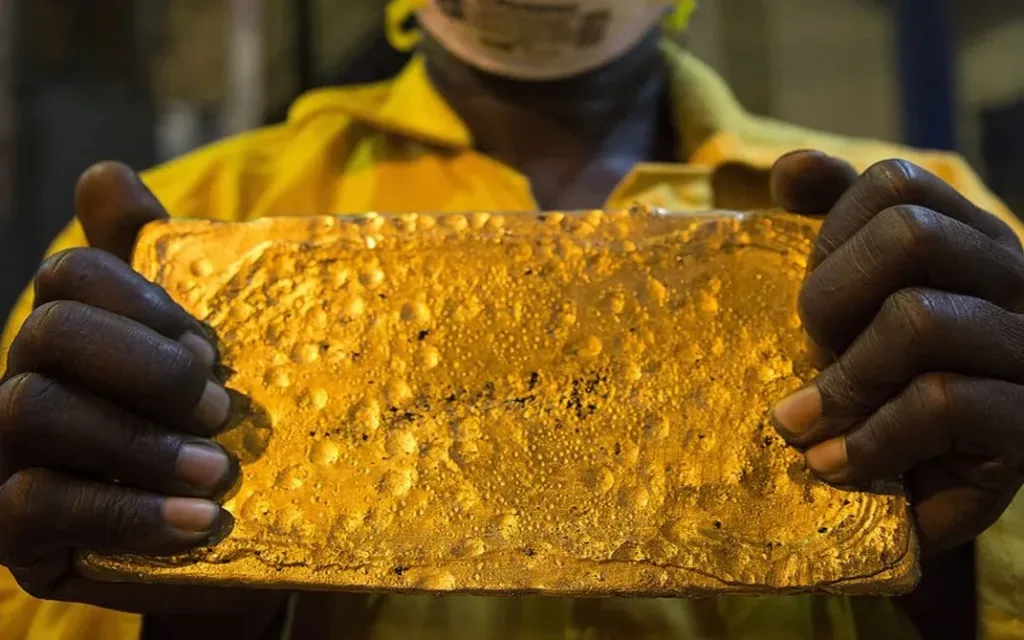
RARE EARTHS AND CRITICAL MINERAL SUPPLY CHAINS
Critical minerals remain a significant issue in US–China economic relations.
The two governments acknowledged the importance of addressing supply-chain concerns involving rare earths and other strategic materials.
These materials are used in a range of industries, including electronics, transportation, energy technologies and manufacturing.
The United States has raised concerns about the reliability of critical-mineral supplies, while China plays a major role in global processing and production.
The September understandings include continued discussions aimed at improving supply conditions.
However, the announcements do not establish that all export restrictions have been removed or that supply-chain concerns have been resolved.
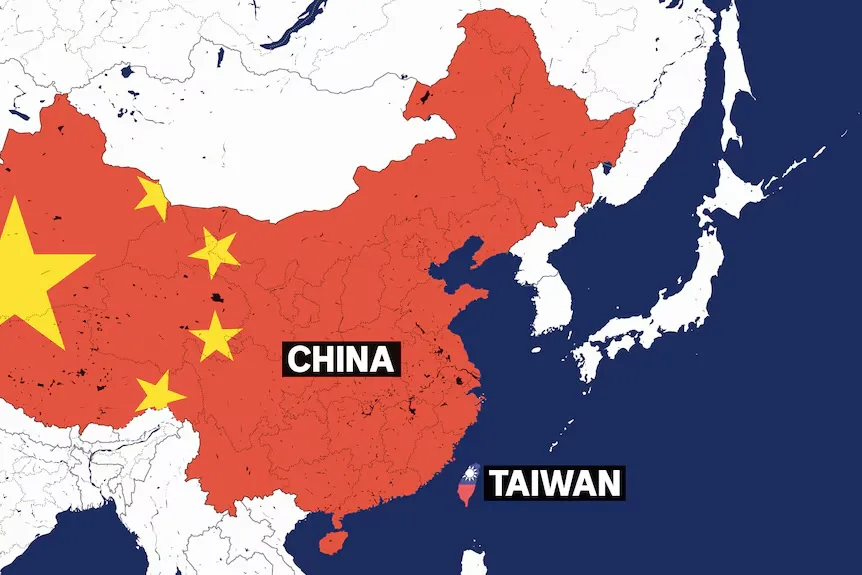
TAIWAN REMAINS A CENTRAL POINT OF DISAGREEMENT
Taiwan remains one of the most sensitive issues in relations between Washington and Beijing.
During the September talks, President Xi reiterated China’s position on sovereignty and called on the United States to handle the Taiwan question with caution.
Beijing considers Taiwan part of its territory and opposes moves toward formal independence.
The United States maintains unofficial relations with Taiwan and has emphasised the importance of peace and stability across the Taiwan Strait.
The two governments have not resolved their differences over Taiwan’s political status, security arrangements or the role of US support for the island.
The issue continues to influence diplomatic relations and regional security planning.
INTERNATIONAL SECURITY AND MARITIME ROUTES
The two leaders also discussed international security issues, including Iran and the security of international waterways.
According to the joint understandings published by the Chinese government, both sides agreed that Iran should honour its commitment not to develop nuclear weapons and that no country or institution should impose transit fees on international waterways.
The discussions reflect shared interests in the security of maritime trade routes, even as the two governments continue to differ on other aspects of regional policy.
The announcement does not establish that all disagreements concerning Iran or maritime security have been resolved.

DIPLOMATIC COOPERATION AND FUTURE MEETINGS
The two governments also agreed to support each other as hosts of major international gatherings in 2026.
China is scheduled to host the APEC Economic Leaders’ Meeting in November, while the United States is scheduled to host the G20 Leaders’ Summit in December.
Both leaders expressed their intention to attend each other’s meetings.
The two countries also agreed to continue diplomatic communication and advance the mechanisms established during the September visit.
These commitments provide opportunities for further engagement, although their practical significance will depend on the implementation of the agreements and the handling of unresolved disputes.
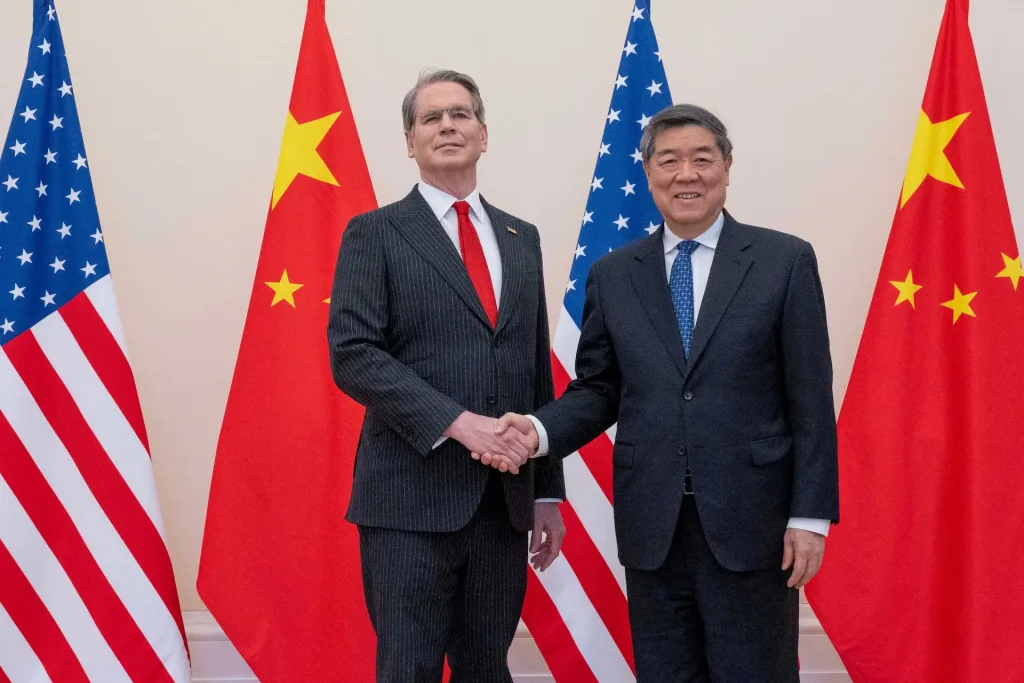
CASTLE JOURNAL STRATEGIC ANALYSIS
The September 2026 US–China meeting produced a series of economic and diplomatic understandings while leaving several major strategic disagreements unresolved.
Three issues deserve particular attention.
• First, economic cooperation is being pursued alongside strategic competition.- The trade and investment mechanisms provide channels for addressing selected commercial issues, but they do not remove differences over technology, market access or national security.
• Second, AI dialogue introduces a new area of bilateral communication.
The proposed dialogue and incident communication channel could help the governments exchange information about emerging risks, although their effectiveness will depend on participation and implementation.
• Third, Taiwan remains a major unresolved issue.- The leaders’ statements reflect different positions on sovereignty and regional security, and the September meeting did not produce a comprehensive settlement of those differences.
The official announcements establish that the two governments have agreed to pursue several practical initiatives. They do not establish that strategic competition has ended or that the relationship has entered a permanently stable phase.
The central question is whether the new mechanisms can produce measurable progress while helping both governments manage disagreements without disrupting international trade or regional stability.
CONCLUSION
The September 2026 state visit by Chinese President Xi Jinping to Washington produced new understandings on trade, investment, artificial intelligence and diplomatic cooperation.
The United States and China agreed to pursue reciprocal tariff reductions, establish investment and trade mechanisms, and create a bilateral dialogue on AI- related risks.
- However, major differences remain over Taiwan, technology policy, critical minerals and regional security.
- The agreements provide a framework for continued engagement, but their practical effects will depend on implementation and the ability of both governments to manage unresolved disputes.
- Castle Journal Global will continue monitoring official announcements from Washington and Beijing to assess the progress of the agreements and their implications for international relations, trade and regional stability.
- SOURCES FOR EDITORIAL VERIFICATION
- The White House — Fact Sheet: President Donald J. Trump Advances a Fair and Reciprocal Relationship with China, 25 September 2026.
- The White House — President Trump and First Lady Conclude Historic China State Visit, 25 September 2026.
- Chinese Government — China and the United States Reach Eight Deliverables and Understandings, 26 September 2026.
- Chinese Government — Xi Says China Hopes US Will Handle Taiwan Question with Prudence, 25 September 2026.
- Chinese Government — Xi Calls for Translating New Vision of China–US Relationship into Action, 25 September 2026.
- CASTLE JOURNAL GLOBAL NEWSPAPER
- Published by CJ & COHC Castles Union for Independent International British Investigative Journalism.
- Castle Journal Ltd — British International Investigative Platform of Journalism, Newspapers & Magazines Publishing.
- London, United Kingdom | Official Governance Licensing
- Founder | Owner | CEO: Dr. Abeer Almadawy
- Licence No.: 10674

