US-Iran Tensions Push Oil Above $91 as Hormuz Risks Return

Renewed confrontation in the Gulf is sending a warning through energy markets, shipping routes and the global inflation outlook
Singapore — September 2, 2026
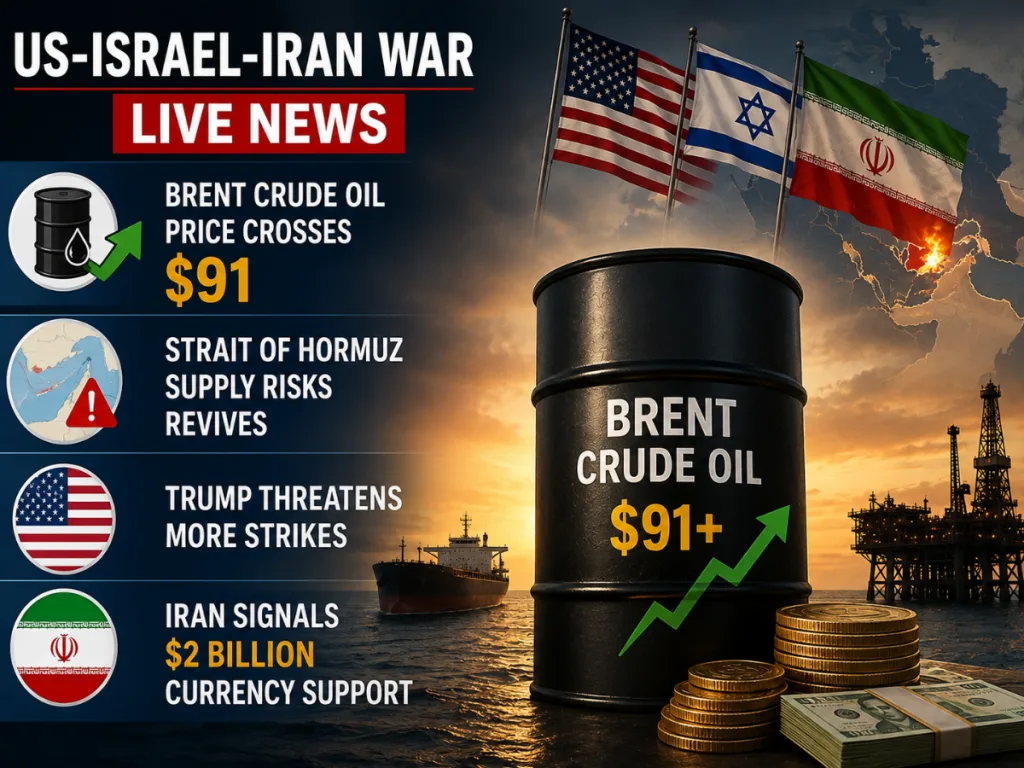
The return of direct military tension between the United States and Iran has immediately reached beyond the Middle East, placing global energy markets and international shipping under renewed pressure as September begins.
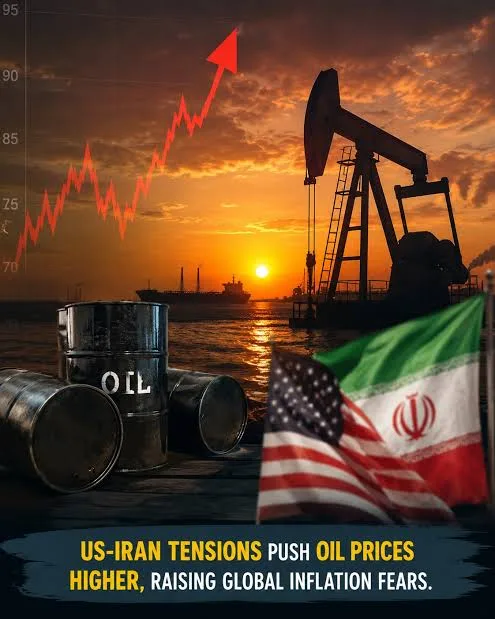
Oil prices moved higher on Tuesday after renewed US-Iran fighting revived concerns about the security of energy supplies passing through the Strait of Hormuz, one of the world’s most strategically important maritime routes. Brent crude was trading around $91.05 a barrel, while West Texas Intermediate stood near $86.59. Brent had already gained 2.7% in the previous session, while WTI rose 2.8%.
The significance of the latest movement is not limited to the price of crude. The immediate concern for the global economy is whether the renewed confrontation will further restrict commercial traffic through Hormuz and transform an existing geopolitical crisis into a broader supply and inflation shock.
Hormuz Becomes the Central Economic Risk
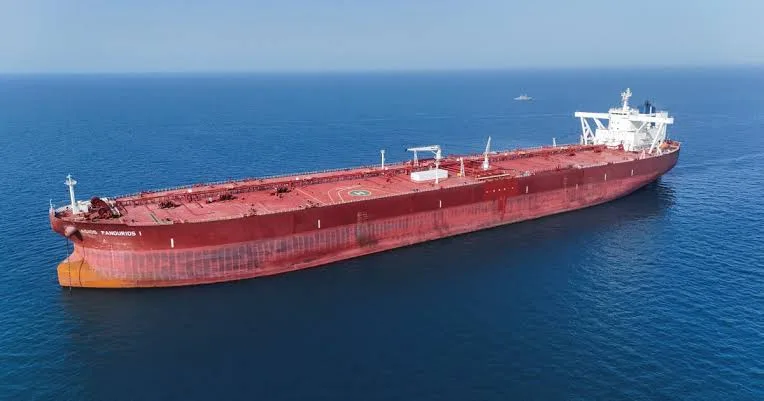
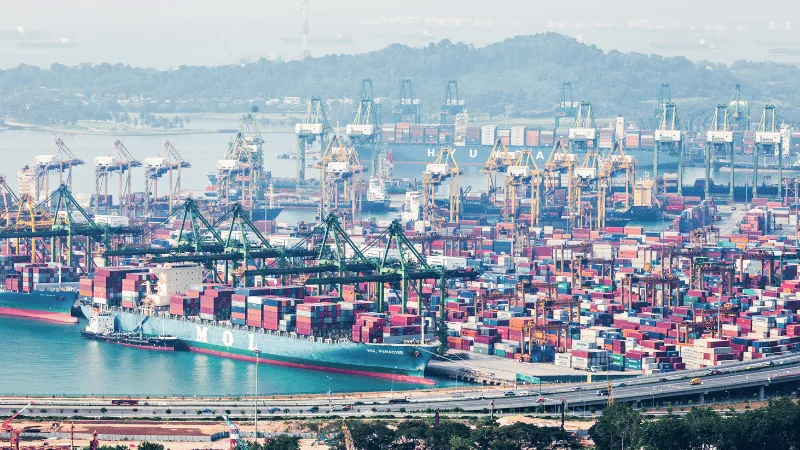
The latest shipping data indicates that commercial movement through the Strait remains far below normal levels. Preliminary ship-tracking information showed only five commodity vessels passing through the waterway on Monday—four entering and one leaving—with no liquid tankers among them. The normal 10-day average was about 14 vessels per day.
For global markets, the importance of these figures lies in what they suggest about confidence.
Energy companies, shipping operators, insurers and commodity traders do not need the Strait to be formally closed for economic damage to occur. A sustained reduction in traffic can increase transportation costs, insurance risks and delivery uncertainty. Those additional costs can eventually reach refineries, manufacturers, electricity producers, transport companies and consumers.
The danger therefore extends beyond the oil market.
A prolonged disruption could raise the cost of energy at precisely the moment when governments and central banks are attempting to control inflation. Higher fuel prices can increase transportation and production expenses, creating pressure across economies that are already carrying significant public debt.
Markets Are Already Reacting
Financial markets have begun reflecting these concerns.
Global bond markets experienced another sharp sell-off on Tuesday as rising energy prices reinforced fears that inflation could remain elevated. US Treasury yields rose, while Japan’s 10-year government bond yield reached 3%, its highest level in decades. European borrowing costs also moved higher.
This creates a difficult policy environment.
Central banks normally want to reduce inflation without damaging economic activity. But an energy shock caused by geopolitical disruption is different from inflation generated by excessive domestic demand. Raising interest rates can restrain demand, but it cannot produce additional oil or reopen a threatened shipping route.
That distinction could become increasingly important if the present situation continues.
The global economy could therefore face a difficult combination of higher energy prices, more expensive borrowing and weaker business confidence.
The Asian Economy Faces Particular Exposure
Asia is especially important in the current equation because the region remains a major destination for Middle Eastern energy exports.
Any prolonged disruption in Hormuz forces importers and energy companies to reconsider supply routes, inventories and alternative sources. Some producers in the Americas may benefit from stronger demand, but replacing disrupted Middle Eastern supplies is neither immediate nor cost-free.
The crisis is already accelerating discussion about diversification. Producers in the United States, Brazil, Canada, Guyana and Argentina have expanded their roles in global energy markets, increasing the importance of the Western Hemisphere in international oil trade.
Yet diversification cannot completely eliminate the strategic importance of the Gulf.
The central question for September is therefore not simply whether oil reaches $95 or $100. The larger question is whether international markets begin to treat disruption around Hormuz as a prolonged condition rather than a temporary geopolitical shock.
Washington and Tehran Face a Wider Economic Battlefield
The renewed confrontation also places political pressure on Washington and Tehran.
US President Donald Trump has warned of further action following the latest exchanges, while Washington has continued to emphasize economic pressure against Iran. Iranian authorities, meanwhile, have signalled that American military and economic pressure will not go unanswered.
The economic consequences may become increasingly difficult for both sides to control.
For the United States, higher oil prices can affect inflation expectations and complicate monetary policy. For Iran, disruption to regional energy and shipping networks can create additional international pressure while also affecting the economies of neighbouring states.
The countries surrounding the Gulf are therefore not simply observers. Their ports, energy infrastructure, shipping routes and financial systems are directly exposed to the consequences of continued instability.
September Opens With a Global Warning
The first trading day of September has delivered a clear message: geopolitical instability in the Gulf is no longer confined to diplomacy and security policy.
It is moving through the world’s energy system, shipping network, bond markets and inflation expectations.
The immediate market reaction may change if tensions ease. Oil prices can fall rapidly when traders believe supply risks are declining. But the opposite is also true: another escalation could produce a much stronger reaction, particularly if commercial shipping through Hormuz remains severely restricted.
Castle Journal Global sees the central issue as the protection of global economic stability rather than the movement of oil prices alone. The Strait of Hormuz has become a test of how resilient the international economy remains when geopolitics, energy security, shipping and monetary policy collide.
As September begins, governments and markets are watching the same narrow waterway for signs of what comes next.
Castle Journal Global — Economic department
SEO Title: US-Iran Tensions Push Oil Above $91 as Hormuz Risks Return
SEO Keywords: US-Iran tensions, Strait of Hormuz, oil prices, Brent crude, global economy, energy security, international shipping, inflation, global markets, September 2 2026
—————————————————
CJ / Castle Journal Global Newspaper
published by
CJ & COHC Castles Union for independent, International British Investigative Journalism
“Castle Orientation Holding Corporation Ltd” COHC
*The Global Media Infrastructure, Scientific Publishing, Academic Training & Sovereign Media Representation
“Castle Journal Ltd “ – CJ
The British International Investigative Platform of Journalism, Newspapers & Magazines Publishing
London–UK | Official Governance Licensing
Founder | Owner | CEO: Dr. Abeer Almadawy
Dr. Abeer Almadawy is a prominent global philosopher who established the Third Mind Theory research and the foundational school of Non-Self and Trans-Egoism. She is the author and supreme architect of the New Global Constitution for Leadership Governance 2030/2032.
Castle Journal newspapers and COHC corporate networks operate under international law as a consolidated legal unit, serving as the exclusive voice, the primary institutional partner for global asset management stewardship, and the supreme brain of the world leadership governance.

