
China’s manufacturing sector challenges the Weak Domestic Demand

Stronger export orders and high-tech production offer support, but China’s domestic economy remains the critical challenge
Beijing — September 2, 2026
China’s manufacturing sector has begun September with conflicting signals, revealing an economy that is showing renewed industrial strength while continuing to struggle with weak domestic demand.
A private-sector survey showed China’s manufacturing Purchasing Managers’ Index (PMI) rising to 51.5 in August, from 50.9 in July. The reading remained above the 50-point threshold that separates expansion from contraction and exceeded market expectations.
The improvement was supported by stronger factory output, new orders and export demand. Production recorded its fastest expansion in three months, while new export business increased at its fastest pace in six months.
Yet China’s official manufacturing PMI told a more cautious story.
The National Bureau of Statistics reported an August reading of 49.8, up from 49.2 in July but still below the 50-point expansion threshold for a second consecutive month. (SCIO)
The difference between the two surveys is not necessarily contradictory. They measure different groups of companies and use different methodologies. Together, however, they reveal an economy in transition: industrial activity is improving in some areas, but the recovery has not yet become broad enough to eliminate concerns about domestic demand.
Exports Provide an Important Engine
China’s external manufacturing sector remains one of the strongest sources of momentum.
The private PMI recorded a notable improvement in new export business during August, suggesting that international demand for Chinese manufactured goods remains relatively resilient despite trade tensions and geopolitical uncertainty.

This is strategically important for Beijing.
China’s manufacturing system has enormous production capacity, sophisticated supply chains and a growing high-technology sector. Maintaining strong export demand allows factories to continue operating at higher levels even when domestic consumption is weaker.
But exports alone cannot provide a complete solution.
China’s economy is too large to depend indefinitely on external demand as its principal source of momentum. A sustainable recovery requires stronger household consumption, business investment and confidence inside the country itself.
Domestic Demand Remains the Weak Point
The most important question facing Beijing is therefore not whether Chinese factories can produce more.They clearly can.
The question is whether Chinese consumers and businesses are prepared to spend and invest with sufficient confidence to sustain the recovery.
The official manufacturing survey continues to point toward weakness in some areas of domestic demand. The broader non-manufacturing PMI also remained below the expansion threshold in August, although some consumer-related sectors continued to perform strongly. (SCIO)
This creates a structural challenge.
If manufacturers increase production without a corresponding increase in domestic consumption, competition can intensify. Companies may respond by cutting prices to secure market share, which can support consumers in the short term but place pressure on corporate profits.
The private survey already indicated that manufacturers reduced output prices for the first time this year, citing intense competition and promotional discounting. (Reuters)
For Beijing, stimulating demand is therefore becoming increasingly important.
High Technology Changes the Picture
One of the more encouraging aspects of the latest data is the performance of China’s high-tech manufacturing sector.
The official August PMI for high-tech manufacturing stood at 52.9, remaining firmly in expansion territory. Equipment manufacturing also remained above 50, at 51.4. (SCIO)

These figures point toward an important transformation of the Chinese industrial economy.
China is attempting to move beyond its traditional position as a mass-production centre and strengthen its role in advanced manufacturing, electric vehicles, electronics, artificial intelligence infrastructure, robotics and other technology-intensive industries.
This transition is strategically important because higher-value manufacturing can generate greater productivity and create new export opportunities.
It also reduces China’s dependence on lower-margin industries facing intense international competition.
Trade Tensions Remain a Risk
China’s industrial recovery is occurring against a difficult international background.
The United States and China remain involved in a broader competition over trade, technology and industrial capacity. Other economies are also becoming increasingly concerned about Chinese manufacturing exports in sectors where Chinese companies have developed significant cost and technological advantages.This creates a paradox.
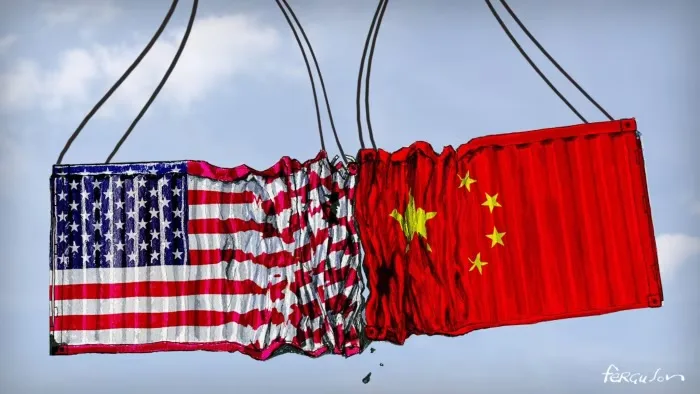
China’s manufacturing strength supports growth and exports, but that same strength can produce political resistance abroad.
As more countries attempt to protect domestic industries, Chinese exporters may encounter additional tariffs, regulations or market restrictions.
Beijing therefore needs to maintain external markets while simultaneously strengthening domestic consumption.
The Yuan Adds Another Dimension
China’s currency policy is also becoming increasingly important.
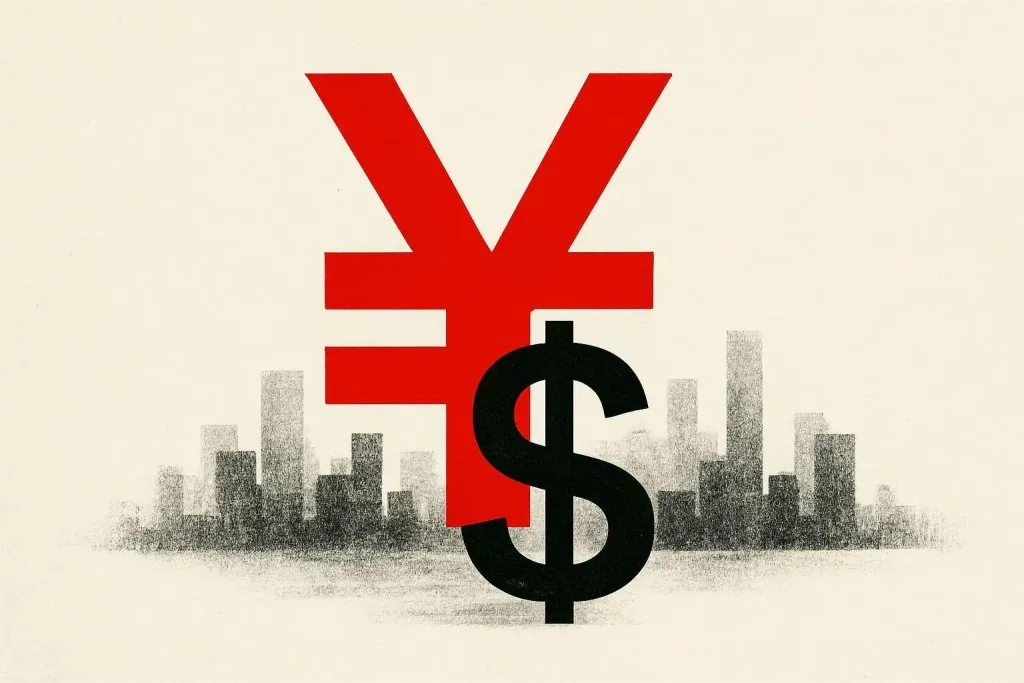
The yuan has appreciated substantially against the U.S. dollar over the past two years, but Chinese authorities have recently acted to moderate the pace of further appreciation because weak domestic demand remains a concern.
A stronger yuan can make imported goods and raw materials cheaper for Chinese consumers and companies.
But it can also make Chinese exports more expensive in international markets.
For an economy that continues to rely heavily on manufacturing and exports, the exchange rate therefore has strategic importance.
Beijing’s challenge is to maintain confidence in the currency without allowing appreciation to undermine export competitiveness.
A Policy Response Is Already Underway
Chinese authorities have been increasing policy support aimed at strengthening domestic demand and stabilising economic activity.
Official commentary surrounding the August PMI data points to continued implementation of infrastructure programmes and additional policy measures designed to support consumption and investment. Officials have also suggested that further supportive measures could be introduced if necessary. (SCIO)
The effectiveness of those policies will depend on whether they create lasting improvements in household and business confidence.
Infrastructure spending can support activity quickly.
But a durable recovery requires consumers to believe that their economic prospects are improving and companies to believe that future demand justifies new investment.
That is a more difficult objective.
China and the Global Economy
What happens in China will have consequences far beyond its borders.
China remains a central manufacturing hub for the world economy. Changes in its industrial output influence commodity demand, shipping, supply chains, technology markets and prices for manufactured goods.
A stronger Chinese recovery could provide an important source of global growth at a time when other major economies are facing higher energy costs and tighter financial conditions.
But a recovery based mainly on exports and industrial production could create renewed trade tensions if global competitors conclude that Chinese companies are exporting excess capacity.
The international economic consequences will therefore depend not simply on how fast China grows, but on how that growth is distributed between domestic consumption, investment and exports.
The Real Test Begins Now
Castle Journal Global considers China’s latest manufacturing data neither a simple recovery story nor a warning of immediate decline.
It is a story of transition.The private PMI shows that factories are gaining momentum. Export orders are strengthening. High-tech manufacturing remains one of the brightest parts of the economy.
At the same time, the official manufacturing PMI remains below 50, domestic demand remains fragile and competition is putting pressure on prices.
China therefore enters September with an economy capable of producing substantial industrial momentum but still searching for a stronger domestic engine.
The central challenge for Beijing is no longer simply increasing production. It is convincing Chinese households and businesses to participate more confidently in the recovery.
If domestic demand strengthens alongside exports and high-tech manufacturing, China could enter the final months of 2026 with a more balanced economic expansion.
If domestic demand remains weak, however, the country may continue to depend heavily on exports and industrial policy—raising both economic and geopolitical pressures.
September begins with China showing signs of industrial resilience, but the deeper test remains at home.
Castle Journal Global — Economic Department
SEO Title: China’s Factory Recovery Faces a Test From Weak Domestic Demand
SEO Keywords: China economy, China PMI August 2026, China manufacturing, China domestic demand, China exports, Chinese economy September 1 2026, China high-tech manufacturing, yuan, China trade, global economy
———————————————————
CJ / Castle Journal Global Newspaper
published by
CJ & COHC Castles Union for independent, International British Investigative Journalism
“Castle Orientation Holding Corporation Ltd” COHC
*The Global Media Infrastructure, Scientific Publishing, Academic Training & Sovereign Media Representation
“Castle Journal Ltd “ – CJ
The British International Investigative Platform of Journalism, Newspapers & Magazines Publishing
London–UK | Official Governance Licensing
Founder | Owner | CEO: Dr. Abeer Almadawy
Dr. Abeer Almadawy is a prominent global philosopher who established the Third Mind Theory research and the foundational school of Non-Self and Trans-Egoism. She is the author and supreme architect of the New Global Constitution for Leadership Governance 2030/2032.
Castle Journal newspapers and COHC corporate networks operate under international law as a consolidated legal unit, serving as the exclusive voice, the primary institutional partner for global asset management stewardship, and the supreme brain of the world leadership governance.

