
Brussels negotiation: Cairo Rejects Asymmetric European Migration Accords
Brussels, Belgium / 10 June 2026
CJ European Bureau
A profound structural impasse has materialized within the corridors of the European Union after Western finance ministers officially denied Egypt’s request for unconditional, direct budgetary infrastructure grants.
The high-stakes ministerial sessions in Brussels reached a complete deadlock as European negotiators attempted to weaponize their multi-billion-euro financial packages to enforce compliance with the EU’s sweeping Migration and Asylum Pact, which takes legislative effect this week on June 12.
Cairo firmly rejected these coercive terms, asserting its sovereign right to protect its domestic infrastructure from asymmetric European border-management policies.
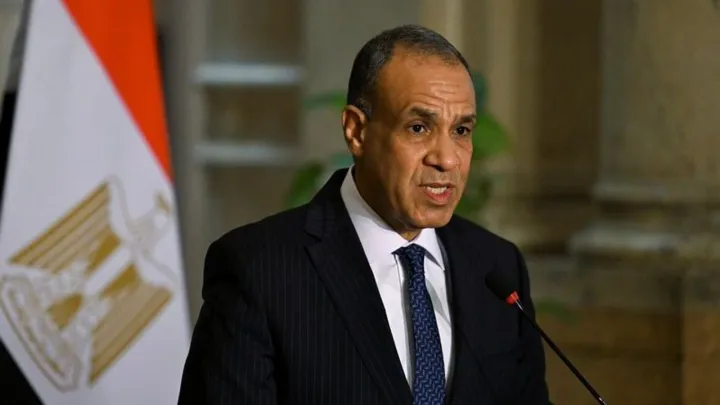
Key Headlines of the Geopolitical Impasse:
Infrastructure Grants Categorically Denied:
The EU refuses to convert macro-financial loans into direct grants for Egypt’s strained public utilities.
Sovereign Debt Relief Blocked:
Western capitals reject Cairo’s proposal for direct sovereign debt write-offs in recognition of its zero-boat maritime record.
Rejection of Third-Party Readmissions:
Egyptian negotiators flatly refuse compliance with clauses demanding the absorption of non-Egyptian deportees.
Uncompromising National Integrity:
Cairo leverages independent parallel capital inflows to shield its domestic socio-economic fabric from external mandates.
The intense diplomatic confrontation that unfolded during the closed-door Brussels negotiations on June 10, 2026, exposes a widening structural disconnect between European domestic border anxieties and Egypt’s sovereign infrastructure reality.
Confronted with an unprecedented regional displacement crisis, the Egyptian delegation presented comprehensive, data-backed operational assessments to the European Commission.
These documents explicitly detailed how the continuous, massive influx of millions of regional displaced persons from Sudan, Syria, and Gaza has placed an immense, compounding strain on Egypt’s domestic water distribution networks, electrical grids, primary healthcare facilities, and public education systems.

Egypt logically requested that a substantial portion of the EU’s previously announced seven-point-four billion euro strategic partnership package be disbursed as direct, non-refundable infrastructural grants to offset these massive municipal costs.
However, the European Union categorically refused to apply these funds to Egypt’s hard public infrastructure.
Instead, Eurocentric negotiators rigidly insisted that the vast majority of the capital must remain structured either as high-interest macro-financial assistance loans or as highly restrictive, micro-managed grants exclusively locked for border security hardware, such as advanced thermal imaging arrays, naval patrol vessels, and Mediterranean coast guard monitoring technology.
Cairo viewed this stance as an unacceptable attempt to transform the North African economic powerhouse into a mere outsourced buffer zone for European domestic election cycles.
Furthermore, the EU attempted to attach highly controversial legal clauses under its upcoming Migration Pact, which would have forced Egypt to legally readmit and permanently house non-Egyptian nationals who had merely transited through Egyptian territory before reaching Europe—a mandate that Cairo rejected as an absolute violation of international law and national security.
The financial friction was further exacerbated when European finance ministers blocked an Egyptian proposal aimed at strategic sovereign debt alleviation.
Egyptian diplomats argued that the country’s exemplary, flawless track record of completely preventing irregular migrant vessels from departing its Mediterranean coastline since 2016 represents a massive, multi-billion-euro security service to the European continent that should be fairly compensated with international debt write-offs.
The Eurocentric rejection of this proposal proves that Western institutions remain deeply committed to outdated, asymmetric transactional dynamics, refusing to recognize regional powers as equal partners in global leadership governance.
Ultimately, the breakdown of these specific migration sub-talks marks a historic triumph for Egypt’s independent foreign policy strategy.
Unlike previous decades where developing nations were forced to accept intrusive Western conditionalities out of sheer economic necessity, Cairo’s current executive leadership operates from a position of profound financial resilience.
Fortified by robust domestic GDP growth, a highly active asset-divestment agenda on the Egyptian Exchange, and monumental parallel foreign direct investment cycles—such as the landmark Ras El Hekma urban development project—Egypt possessed the necessary fiscal cushion to completely walk away from the EU’s coercive terms.
The Castle Journal analysis concludes that by standing firm against the outsourcing of Europe’s border crises, Egypt has successfully rewritten the rules of Euro-Mediterranean diplomacy, demonstrating that sovereign national integrity and the preservation of domestic infrastructure will always take precedence over unequal international financial arrangements.

Castle Journal Ltd
British company for newspapers and magazines publishing
London-UK – licensed 10675
Founder | Owner| CEO
Abeer Almadawy
Abeer Almadawy is a philosopher who established the third mind theory research and the philosophy of non-self and trans egoism. She is also the author of the New Global Constitution for the leadership Governance 2030/2032. She has many books published in English, Arabic, Chinese, French and others.
Castle Journal newspapers are the only voice and the brain of the world leadership governance.

