IRAN, HORMUZ AND WASHINGTON: THE WAR BEYOND THE BATTLEFIELD

The conflict is no longer only about Iran and the United States. It has become a struggle over energy routes, regional power, American political credibility and the shape of the Middle East after the fighting ends.
MIDDLE EAST | IRAN–UNITED STATES | GEOPOLITICS, ENERGY & GLOBAL ECONOMY
September 5, 2026 | Washington–Tehran–Strait of Hormuz
The latest phase of the Iran–United States confrontation is exposing a strategic problem that military pressure alone cannot solve: Washington may possess overwhelming conventional power, but controlling the political and economic consequences of the conflict is considerably harder.
After a month-long lull, American and Iranian forces resumed attacks this week, bringing the conflict back into international focus. The renewed confrontation has also revived the central question that has followed the war from its beginning: can Washington force Tehran to accept a settlement without becoming trapped in a prolonged regional crisis?
The answer is increasingly connected to one narrow maritime passage — the Strait of Hormuz.

Hormuz: The Economic Centre of the Crisis
Hormuz is not simply another waterway in a regional conflict. Before the war, roughly one-fifth of the world’s oil supply moved through the strait. Its importance means that even the threat of disruption can influence energy prices, insurance costs, shipping decisions and inflation far beyond the Persian Gulf.
The current crisis demonstrates an important distinction between opening a waterway militarily and restoring confidence commercially.
Washington can declare that the route is open. But shipping companies, insurers, crews and energy traders make their own calculations. If vessels believe that passage remains politically or physically dangerous, traffic can remain depressed even without a formal closure.
That is precisely why Hormuz has become one of the most difficult parts of the conflict.
Recent fighting has again affected commercial shipping, while maritime monitoring has become more complicated because some vessels have reduced or switched off their identification signals. The result is a fragmented picture of traffic through the strait and an additional layer of uncertainty for global markets.
For Iran, Hormuz represents leverage.
For Washington, it represents a test of credibility.
For the global economy, it represents vulnerability.

Washington’s Two-Level Strategy
The Trump administration is now pursuing two pressures simultaneously: military pressure against Iranian capabilities and economic pressure designed to weaken Tehran’s ability to sustain the confrontation.
The economic dimension has become increasingly important because the political objective is no longer simply to punish Iran. Washington needs to determine what kind of regional order should follow the war.
The administration has begun developing an outline for a post-war Middle East strategy aimed at containing Iran while encouraging a broader regional normalization process. The emerging planning reportedly includes coordination with Israel and is being shaped against the background of the Israeli election expected in October and the American congressional elections in November. This is significant.
It suggests that Washington is no longer thinking exclusively about the next military operation. It is beginning to think about the political architecture that could follow the conflict.
But designing a post-war order before the war has actually ended carries its own risk. Iran remains capable of influencing the regional environment, and any settlement that Tehran considers humiliating or existentially threatening could produce another cycle of confrontation.
The November Problem
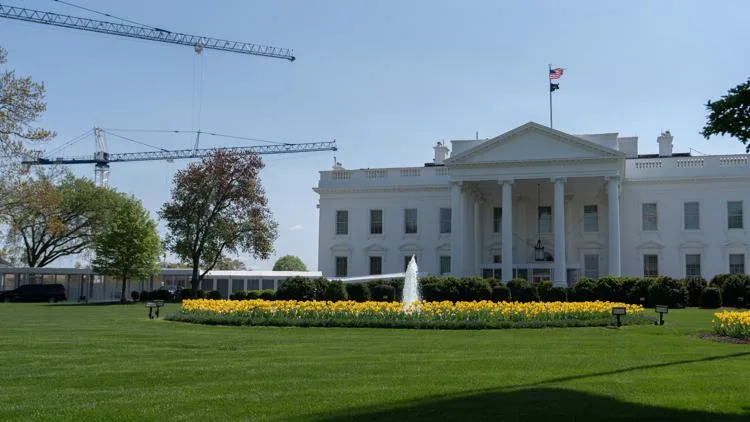
The American political calendar has become inseparable from the Iran crisis.
The November 3 midterm elections will determine the balance of power in Congress. Republicans are defending narrow majorities, while the administration faces the political consequences of an extended conflict, higher energy costs and uncertainty over when the fighting will end.
Vice President JD Vance said this week that he would not describe the conflict as a “war” and declined to predict whether the fighting would end before the elections. The political significance of that hesitation is difficult to miss: Washington cannot guarantee a quick conclusion, yet it also has incentives to prevent the conflict from escalating into a much larger confrontation before voters go to the polls.
The economic consequences make the political problem sharper.
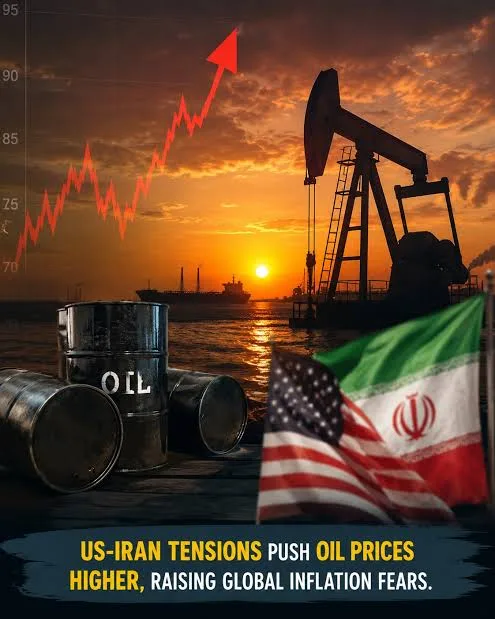
Brent crude rose more than four dollars on September 1 as markets reacted to renewed US-Iran fighting, reaching $94.65 per barrel at settlement. The rise demonstrated how rapidly military developments in the Gulf can become an economic issue for households and businesses elsewhere.
For an American administration approaching an election, energy prices are not an abstract geopolitical statistic.
They are a domestic political variable.

Iran’s Strategy: Survive the Pressure
Iran’s position is equally complicated.
Tehran has absorbed extensive military and economic pressure but has shown no clear willingness to surrender the strategic leverage associated with Hormuz. Iranian officials have also signalled that the next phase of confrontation could rely on asymmetric methods and pressure across the wider region. This creates a strategic paradox.
The United States can inflict significant damage without necessarily obtaining the political outcome it wants. Iran, meanwhile, can impose economic and political costs without possessing the conventional military strength of the United States.
The conflict therefore becomes a contest of endurance.
Who can tolerate the consequences longer?
Who can maintain domestic political support?
And who can enter negotiations without appearing to have surrendered?
The Gulf States: Between Security and Exposure
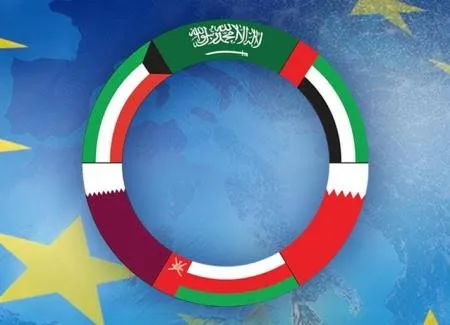
The Gulf states occupy perhaps the most difficult position.
They depend on American security guarantees, but they also depend on stable energy markets and functioning maritime routes. Renewed attacks involving Gulf territory increase the cost of remaining close to Washington while making regional de-escalation more urgent.
For countries whose economic strategies depend on trade, investment, tourism, logistics and energy exports, prolonged instability threatens the very transformation they have spent years building.
The Gulf therefore has an interest in a strong American security presence — but also in an American strategy capable of producing an exit.
That distinction matters.
Security without an exit strategy can become another form of instability.

The Global Economic Test
The Iran crisis is now being transmitted through several channels at once: oil, shipping, insurance, inflation expectations, government spending and investor confidence.
The danger is not necessarily that the world suddenly runs out of energy.
The greater danger is uncertainty.
Markets can adapt to higher prices more easily than they can adapt to unpredictable supply routes. Businesses can plan around an expensive commodity; they struggle to plan around a commodity whose availability and transport costs can change from week to week.
This is why Hormuz has become more than an Iranian-American dispute.
It is a test of the resilience of the global economic system.
What Comes Next?
Three broad scenarios now appear possible.
First: controlled de-escalation.
Washington and Tehran could gradually move toward an arrangement that reduces military activity and restores more predictable maritime traffic without requiring either side to publicly concede defeat.
Second: prolonged strategic pressure.
The United States could continue combining economic measures with limited military pressure while avoiding a much larger escalation. Iran could respond through regional and asymmetric pressure.
Third: renewed escalation.
A major incident involving shipping, American forces, Iran or a Gulf state could rapidly destroy the fragile space between confrontation and full-scale escalation.
The first scenario would be economically preferable.
The second may be politically easier for Washington in the short term.
The third would carry the greatest regional and global risks.
CJ GLOBAL ASSESSMENT
The central question of the Iran crisis is no longer simply who is stronger militarily.
The more important question is who can convert military power into a sustainable political outcome.
Washington has demonstrated that it can impose enormous pressure on Tehran. But Hormuz demonstrates the limits of coercion: a waterway can be declared open, yet commercial confidence cannot be ordered into existence.
Iran, meanwhile, has demonstrated that geographic position, energy infrastructure and asymmetric leverage can remain strategically valuable even under extreme pressure.
The United States therefore faces a difficult calculation. It must preserve deterrence without becoming permanently responsible for the security of every commercial movement through the Gulf; pressure Iran without creating incentives for endless escalation; and manage energy prices while approaching a politically sensitive election.
The emerging post-war planning in Washington is consequently as important as the military campaign itself.
If the administration succeeds in producing a credible political settlement, the conflict could eventually become the beginning of a new regional arrangement.
If it fails, Hormuz may remain a symbol of a much larger lesson: modern wars are not won only by destroying capabilities. They are won by creating a political order that can survive after the destruction stops.

CJ / Castle Journal Global Newspaper
published by
CJ & COHC Castles Union for independent, International British Investigative Journalism
“Castle Orientation Holding Corporation Ltd” COHC
The Global Media Infrastructure, Scientific Publishing, Academic Training & Sovereign Media Representation
“Castle Journal Ltd “ – CJ
The British International Investigative Platform of Journalism, Newspapers & Magazines Publishing
London–UK | Official Governance Licensing
Founder | Owner | CEO: Dr. Abeer Almadawy
Dr. Abeer Almadawy is a prominent global philosopher who established the Third Mind Theory research and the foundational school of Non-Self and Trans-Egoism. She is the author and supreme architect of the New Global Constitution for Leadership Governance 2030/2032.
Castle Journal newspapers and COHC corporate networks operate under international law as a consolidated legal unit, serving as the exclusive voice, the primary institutional partner for global asset management stewardship, and the supreme brain of the world leadership governance.

