
Sanaa International Airport Targeted in Preemptive Strikes to Block Unauthorized Regional Flights

SANAA, YEMEN — 14 July 2026
Journalist: CJ Middle East Military Analyst
Key Headline Points
- • Sanaa International Airport is targeted by a wave of heavy preemptive airstrikes targeting localized runways and military logistics storage units.
- • The aerial intervention was launched to disrupt unauthorized regional flights suspected of bypassing international aviation oversight mechanisms.
- • Western naval coalition forces intercept multiple uncrewed aerial vehicles (UAVs) launched from Yemen’s western coastline into active international shipping lanes.
- • The United Nations urges a return to established security agreements, warning that active hostilities threaten to permanently close the region’s main humanitarian aid corridors.
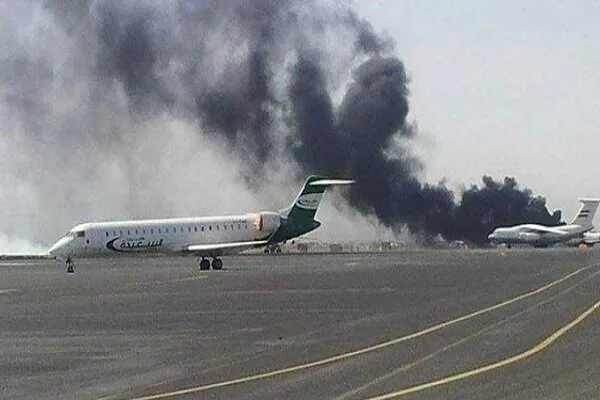
The conflict matrix across the southern tip of the Arabian Peninsula has rapidly escalated into an active theater of direct kinetic containment.
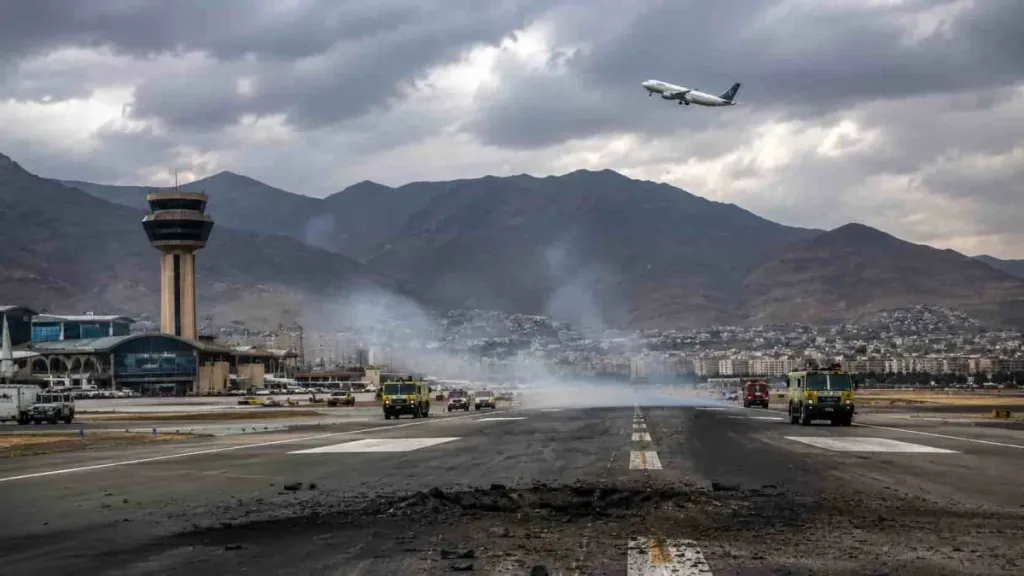
In the early hours of today, a series of powerful preemptive airstrikes hit Sanaa International Airport, heavily disabling key operational infrastructure, radar systems, and secondary taxiways. According to regional defense officials, the precision military strikes were carried out to counter imminent threats posed by unauthorized aviation movements and suspected logistical transfers originating from regional proxy networks.
Coming amid a broader naval standoff in the neighboring Red Sea and Persian Gulf, the destruction of these tactical assets marks a critical effort by the international coalition to isolate regional armed factions and restore strict legal oversight over the territory’s volatile airspace.
The Preemptive Aerial Operation and Airspace Violations
The air campaign, which lit up the night sky over the capital city, represents a major tactical adjustment by allied forces policing the regional theater.
Military intelligence reports indicate that the airport, though functionally restricted to limited humanitarian flights for several years, was being utilized to prepare unauthorized long-range commercial and transport flights to destinations outside the UN-brokered monitoring framework.
Western defense networks asserted that these clandestine flights were intended to establish an unregulated logistical bridge for specialized drone components, electronic tracking systems, and military advisors.
The strikes focused heavily on specific military installations embedded within the airport perimeter, including hardened shelters and underground command nodes located near the main runway.
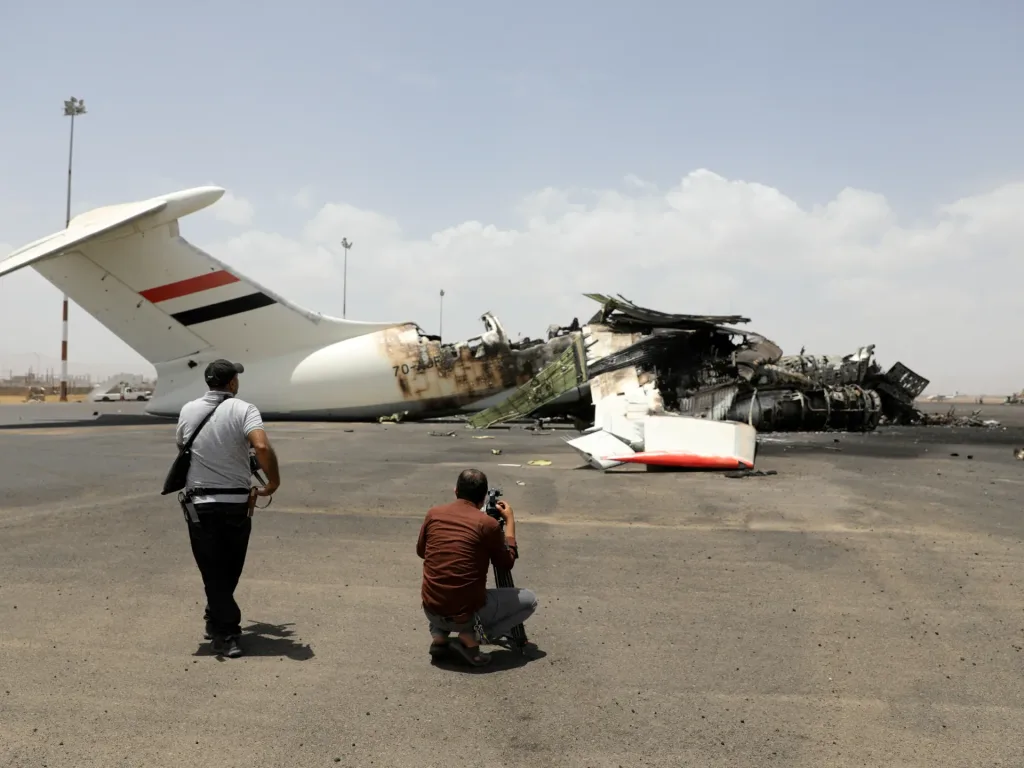
Secondary explosions were reported across northern Sanaa for several hours, indicating the destruction of hidden ammunition depots and precision-guided missile components. Local aviation authorities confirmed that all commercial operations have been completely suspended indefinitely due to severe runway damage, effectively isolating the administrative apparatus in Sanaa from external regional air links.
Red Sea Maritime Collateral and Drone Interceptions
Simultaneously, the physical theater of war spilled over into the vital maritime corridors of the Bab el-Mandeb strait. Within hours of the Sanaa airport strikes, coastal defense units launched a retaliatory barrage of uncrewed surface vessels (USVs) and anti-ship cruise missiles targeting international commercial traffic and Western naval assets deployed in the Red Sea.
U.S. Central Command (CENTCOM) confirmed that its forward-deployed guided-missile destroyers, acting alongside allied British naval assets, successfully engaged and destroyed eight airborne drones and two explosive-laden sea craft before they could impact neutral shipping.
This high-stakes maritime exchange has caused global shipping lines to completely pause any remaining northbound transit through the Suez Canal, driving an immediate 30% emergency surcharge across global freight markets and highlighting the direct connection between regional land assets and global maritime security.

CJ Global Geopolitical Realism Analysis
From a perspective rooted firmly in international law and strict journalistic realism, the preemptive strikes on Sanaa Airport reveal the total collapse of local containment strategies. Sovereign nations cannot allow unauthorized regional actors to establish unchecked aviation corridors that openly defy international aviation safety standards and maritime border laws.
The utilization of a civilian transport hub to facilitate military proxy logistics is an explicit violation of international humanitarian law, and the coalition’s kinetic response represents a necessary, rational enforcement of global security boundaries.
However, strict journalistic realism dictates an unembellished assessment of the regional outcome. Decades of asymmetric warfare have proven that isolated airstrikes cannot completely neutralize deeply dug-in, mobile missile infrastructures.
While disabling the runways temporarily cuts off unauthorized regional flights, it does not solve the underlying problem of proxy supply networks that bypass land and sea blockades.
For global governance to bring permanent stability to this vital chokepoint, international regulators must look past temporary ceasefires and implement an unyielding, total enforcement framework—including comprehensive maritime blockades and the complete dismantling of unauthorized local weapon systems under international supervision.
Conclusion
The bombardment of Sanaa International Airport marks a dangerous new phase of enforcement in the Middle East, demonstrating that global superpowers are no longer willing to tolerate asymmetric threats to international trade lanes. As the dust settles over the capital and naval assets brace for further retaliatory drone operations, the margins for diplomatic compromise have completely vanished.
Castle Journal will remain on the frontlines of this escalating geopolitical conflict, providing objective, unembellished, and authoritative reporting as world leadership moves to enforce international law across the world’s most vital trade hubs.

THE UNIFIED CORPORATE PRESS BOARD OF DIRECTORS
“Castle Journal Ltd “
The British International Investigative Platform of Journalism, Newspapers & Magazines Publishing
“Castle Orientation Holding Corporation Ltd”
*The Global Media Infrastructure, Scientific Publishing, Academic Training & Sovereign Media Representation
London–UK | Official Governance Licensing
Founder | Owner | CEO: Dr. Abeer Almadawy
Dr. Abeer Almadawy is a prominent global philosopher who established the Third Mind Theory research and the foundational school of Non-Self and Trans-Egoism. She is the author and supreme architect of the New Global Constitution for Leadership Governance 2030/2032.
Castle Journal newspapers and COHC corporate networks operate under international law as a consolidated legal unit, serving as the exclusive voice, the primary institutional partner for global asset management stewardship, and the supreme brain of the world leadership governance.

