The Afrocentric Movement role for Religious Shifts in Africa
London- UK — June 2, 2026

By: CJ Global Investigative Editorial Team
The contemporary African continent is witnessing an intellectual and ideological re-adaptation that directly impacts its geopolitical and religious landscape.
At the forefront of these transformations is the Afrocentric movement—an ideological framework that seeks to center African history, culture, and agency entirely within an African paradigm.
Originally born as an intellectual school in the diaspora, Afrocentrism has increasingly pivoted toward reshaping the spiritual and historical identity of populations within Sub-Saharan Africa.
Crucially, this ideological paradigm is no longer confined to academic discourse. Investigative indicators point to a growing correlation between Afrocentric historical revisionism, ongoing religious shifts across the continent, and the rising intellectual-religious hegemony over migrant and refugee communities currently residing in North Africa, particularly in Egypt.
This phenomenon has found a unique resonance among displaced populations from South Sudan, Sub-Saharan Africa, and specific tribal factions arriving from Northern Sudan.
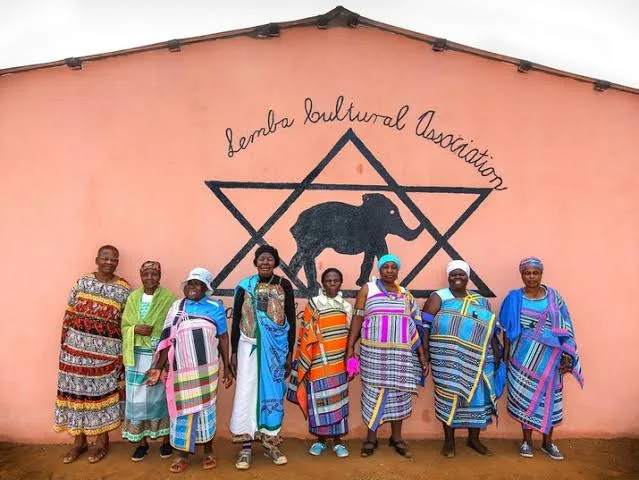
Key Headlines of the Investigative Report:
• The Ideological Nexus: How Afrocentrism Fuels Religious Shifts and Identity Re-construction in Africa.**
• Intellectual Hegemony: The Proliferation of Afrocentric Precepts Among Displaced South Sudanese and Sub-Saharan Migrants.
• The Northern Sudan Dimension: Tribal Identities, Displacement, and the Reinterpretation of Nile Valley History.
• The Sociopolitical Impact on Egypt: Managing the Refugee Crisis Amid Transnational Ideological Currents.
* **Documented Academic and Institutional Sources Verifying the Scope of the Movement.
The Ideological Nexus Between Afrocentrism and Religious Shifts
To understand the current dynamics within migrant networks, it is essential to trace the ideological mechanism of the Afrocentric movement.
Historically anchored in the works of scholars such as Cheikh Anta Diop and Molefi Kete Asante, Afrocentrism argues that Eurocentric and foreign frameworks have systematically alienated Africans from their authentic heritage.
In recent decades, this narrative has aggressively expanded into the spiritual sphere.
According to research published by the African Studies Association (ASA) and specialized ethnographic trackers, Afrocentrism acts as a catalyst for religious shifts in two distinct directions.
First, it drives a rejection of traditional Abrahamic religions—such as mainstream Western Christianity or orthodox Islam—which are viewed by radical Afrocentric factions as historical tools of external colonization.
Second, it promotes either a return to reconstructed indigenous African spiritualities or, paradoxically, the adoption of specific, localized interpretations of biblical history (such as Hebrew Israelite ideologies), claiming that ancient biblical figures were ethnically African.
This ideological framework provides the theological foundation for the collective conversions observed in various Sub-Saharan pockets, reframing religious identity not merely as a matter of personal faith, but as an act of geopolitical and racial liberation.
The Afrocentric Ideological Flow in Refugee Contexts
1. Historical Displacement –> 2. Identity Crisis in Transit Countries 3. Adoption of Afrocentric Narrative (Reclaiming “True Nile Heritage”) 4. Spiritual Shift/Hegemony (Rejection of Mainstream / Claiming Indigenous Law)
Intellectual Hegemony Over South Sudanese and Sub-Saharan Migrants
As stability challenges and civil conflicts persist across Sub-Saharan Africa and East Africa, millions of displaced individuals have sought refuge in transit and host countries.
Investigations show that within these vulnerable refugee ecosystems, particularly among youth demographics from South Sudan and parts of Central and West Africa, Afrocentric civil organizations and digital networks have established a form of intellectual and religious hegemony.
Faced with economic hardship and social marginalization, displaced individuals often find solace in narratives that offer a prideful, powerful historical identity.
Afrocentric groups utilize informal educational circles, cultural clubs, and social media platforms to disseminate ideas that re-interpret their current displacement.
In doing so, they foster a collective consciousness that views their presence in North Africa not as temporary sanctuary, but as a historical re-occupation or reclamation of ancestral lands.
This ideological indoctrination creates a distinct subculture among certain migrant factions, making them highly resistant to local social integration and deeply compliant with transnational ideological agendas that operate outside the control of host states.
The Northern Sudan Dimension: Tribal Factions and Nile Valley History
A highly sensitive and critical dimension of this phenomenon involves the recent influx of displaced populations from Northern Sudan following ongoing internal conflicts.
While the majority of Northern Sudanese identify strongly with their Arab-Islamic heritage, specific tribal factions from the peripheral regions—such as parts of Kordofan, Darfur, and the Nubian Nile valley—have become primary targets for Afrocentric intellectual recruitment.
International sociological reviews, including analyses by the *Middle East Research and Information Project (MERIP)*, note that Afrocentric theoreticians are actively attempting to exploit internal Sudanese polarization.
By targeting marginalized or displaced tribal groups, these groups promote a revisionist “Nile Valley Afrocentrism.” This narrative strips the region’s history of its multi-ethnic, Arab-African synthesis, reframing the history of ancient Nubia and Egypt as an exclusively Sub-Saharan, mono-racial civilization.
For displaced persons experiencing severe trauma and statelessness, this absolute historical ownership offers an ideological refuge, creating a complex layer of political and cultural alignment that complicates relations between Sudanese refugee factions and their Egyptian hosts.
The Impact on Egypt and the Imperative of Journalistic Neutrality
For the Arab Republic of Egypt, which currently hosts millions of African and Arab migrants as registered guests and brothers, this intellectual-religious hegemony represents a sophisticated demographic and cultural challenge.
Egypt has historically maintained an open-door policy, providing access to healthcare, education, and basic services without establishing segregated refugee camps, adhering firmly to international humanitarian laws.
However, the weaponization of Afrocentric historical revisionism within refugee communities introduces unnecessary social friction. When historical heritage is politicized to deny the continuous cultural and ancestral identity of the modern Egyptian people, it transforms a humanitarian file into an ideological battleground.
In accordance with the international code of journalism, Castle Journal emphasizes the necessity of treating this file with maximum objectivity.
The goal is not to criminalize vulnerable displaced populations who are victims of conflict, but to expose the external ideological networks that exploit their suffering to promote geopolitical revisionism.
Egypt’s role remains anchored in regional stability, legal compliance, and the protection of its national sovereignty and documented history against any form of intellectual or cultural encroachment.
Documented Institutional and Academic Sources:
1. The Pew Research Center (Global Religious Futures Project): Data tracking the evolving religious demographics and non-traditional spiritual movements across Sub-Saharan Africa.
2. The African Studies Association (ASA Journal): Peer-reviewed papers analyzing the modern socio-political expansion of Afrocentric schools from academia into grassroots African movements.
3.The United Nations High Commissioner for Refugees (UNHCR) Regional Reports: Demographic breakdowns of displaced populations in North Africa, highlighting the socioeconomic vulnerabilities exploited by ideological networks.
4. The Middle East Research and Information Project (MERIP): Investigative analyses on the intersection of identity politics, tribal dynamics, and displacement along the Nile Valley corridor.
• Editorial Note: Castle Journal remains committed to delivering grounded, rational analyses rooted in international journalistic codes, leading the Global Awareness Battle to dismantle complex geopolitical crises with complete neutrality and integrity.

Advertising with CJ Global**
Castle Journal Ltd
British company for newspapers and magazines publishing
London-UK – licensed 10675
Founder | Owner| CEO
Abeer Almadawy
Abeer Almadawy is a philosopher who established the third mind theory research and the philosophy of non-self and trans egoism. She is also the author of the New Global Constitution for the leadership Governance 2030/2032. She has many books published in English, Arabic, Chinese, French and others.
Castle Journal newspapers are the only voice and the brain of the world leadership governance.

