The Security Council Veto: UN Secretary-General Expresses Disappointment Over US Block on Permanent Gaza Ceasefire Resolution

New York, USA — June 6, 2026
By Senior United Nations & International Law Correspondent
The Permanent Chamber Confronts a Continuous Diplomatic Impasse
The United Nations Security Council has once again become the epicenter of acute international friction following the unilateral exercise of veto power by the United States to block a comprehensive draft resolution demanding an immediate, unconditional, and permanent ceasefire in the Gaza Strip.
The draft text, meticulously prepared and introduced by the Council’s ten elected non-permanent members, aimed to establish a binding legal mandate to halt ongoing hostilities, ensure the systematic verification of humanitarian aid routes, and secure the release of all remaining captives.
Despite securing an overwhelming majority with 14 out of the 15 member states voting in favor of the mechanism, the negative vote cast by Washington permanently halted the statutory adoption of the text.
This development prompted an immediate expression of deep disappointment from United Nations Secretary-General António Guterres, who warned that the persistent institutional gridlock severely undermines the foundational credibility of international humanitarian law.
—————-Get This Book————-
The Anatomy of the Voting Realignment and Legislative Language
The legislative showdown unfolded during a highly charged session at the UN Headquarters in New York, revealing a deepening chasm between the United States and the broader consensus of the international community.
The sponsoring non-permanent members—including Algeria, Denmark, Greece, and Pakistan—argued that the resolution was a necessary intervention to halt an unprecedented humanitarian catastrophe marked by acute famine conditions and the near-total destruction of civilian infrastructure.
The draft text was deliberately structured to enforce strict compliance with international treaties, incorporating specific operational directives that included:
The Unconditional Cessation of Hostilities:
Demanding an immediate and permanent halt to all military maneuvers by all active factions within the enclave.
The Complete Removal of Border Restrictions:
Enforcing a legal mandate on the occupying authorities to lift all administrative and physical barriers restricting the entry of medical supplies and food logistics.
The Rejection of Demography Alterations:
Prohibiting any structural actions aimed at the permanent displacement of civilian populations or the reduction of the enclave’s recognized territorial boundaries.
Washington Defends the Strategic Use of the Sovereign Veto
In its official statement before the permanent chamber, the United States delegation defended its decision by asserting that the drafted text lacked critical reciprocal mechanisms necessary to ensure genuine regional stabilization.
United States representatives maintained that Washington could not support any binding resolution that decoupled a permanent ceasefire mandate from the immediate, verifiable release of hostages held by militant organizations.
The U.S. side further argued that the language of the document failed to explicitly condemn the original acts of regional aggression that initiated the hostilities, thereby creating a legally asymmetrical framework that would inadvertently legitimize non-state actors operating outside the boundaries of international law.
This latest veto marks a continuation of a highly polarized diplomatic strategy wherein the United States utilizes its permanent statutory privileges to shield its regional allies from enforceable international sanctions.
While Washington emphasized its ongoing commitment to secondary, non-UN-led parallel negotiations aimed at securing temporary operational pauses, the decision has drawn fierce condemnation from other permanent members.
The delegations of China and the Russian Federation counter-argued that the utilization of the veto under these catastrophic conditions amounts to an abuse of sovereign privilege, transforming the Security Council from an instrument of collective security into a paralyzed forum for geopolitical posturing.
Global Institutional Fallout and the Fragmentation of Consensus
The fallout from this latest legislative failure extends far beyond the immediate geographic theater of conflict, impacting the systemic operational capability of the United Nations itself.
The Secretary-General’s public address emphasized that the repeated blocking of enforceable resolutions degrades the capacity of international organizations to intervene effectively in global crises, setting a highly damaging precedent where statutory mandates are subordinated to unilateral executive decisions.
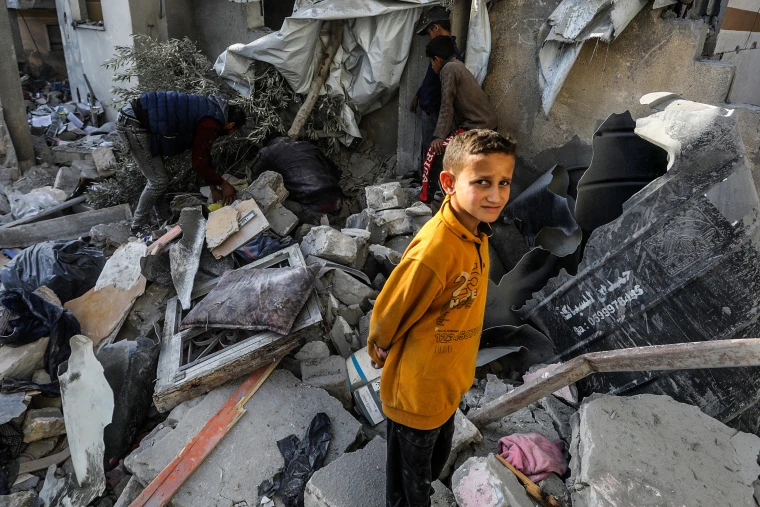
Humanitarian coordination bodies operating on the ground have echoed these concerns, noting that without a legally binding Council mandate, the distribution of life-saving infrastructure remains entirely dependent on arbitrary military approvals.
As the General Assembly prepares to convene an emergency special session under the “Uniting for Peace” mechanism to address the Security Council’s gridlock, international journalism observers note that the structural divide within global governance has reached a historical zenith.
The systematic failure to find common ground on the application of international humanitarian statutes highlights the urgent need for a comprehensive reassessment of the global leadership architecture.
Until the permanent members of the Council align their domestic security calculation with the universal dictates of international law, the premier global body for conflict resolution will continue to operate under a state of systemic paralysis, leaving millions of affected civilians exposed to the unmitigated realities of prolonged warfare.
Castle Journal Analysis: The Paralysis of Transnational Law
The continuous blocking of Gaza ceasefire resolutions through the exercise of the permanent veto reveals the fundamental structural defect embedded within the United Nations charter.
Under international journalism standards and the principles of sovereign equality, a global security architecture that allows a single nation to invalidate the collective legal determination of 14 separate states is inherently obsolete.
By prioritizing short-term geopolitical protectionism over the universal enforcement of humanitarian law, the current governance model systematically dismantles its own legitimacy.
For international law to retain its character as an enforceable standard of human civilization, the mechanisms of global leadership must be insulated from unilateral vetoes, ensuring that the collective conscience of humanity is never again silenced by executive discretion.
————
Castle Journal Ltd
British company for newspapers and magazines publishing
London-UK – licensed 10675
Founder | Owner | CEO
Abeer Almadawy
Abeer Almadawy is a philosopher who established the third mind theory research and the philosophy of non-self and trans egoism. She is also the author of the New Global Constitution for the leadership Governance 2030/2032. She has many books published in English, Arabic, Chinese, French and others.
Castle Journal newspapers are the only voice and the brain of the world leadership governance.

