The three “hows” exposing the Afrocentric plots to pilfer Egyptian civilization and identity

London, United Kingdom — June 11, 2026
Introduction: The Intellectual Battlefield of Identity
Two weeks ago, the Castle Journal editorial team launched the International Grand Awareness Initiative, a targeted media framework designed to counter modern historical revisionism. Today, Castle Journal Global leader by Dr.Abeer Almadawy the founder,CEO and director of the editorial board advances this crucial campaign by dissecting the operational infrastructure of Afrocentric movements.
Far from being a series of isolated historical debates or harmless social media trends, modern revisionism has evolved into a highly coordinated intellectual and ideological project.
This investigative report analyzes the three structural “Hows” driving this phenomenon: the mechanics of the ideological campaign, the entities funding its global infrastructure, and the underlying geopolitical interests—including Western domestic dynamics and international lobbying frameworks—aimed at redefining the sovereignty of North African nations.
How the Strategy Operates: Expanding Beyond Egypt to Morocco
The primary mechanism of modern revisionist historiography relies on a standardized methodology: replacing verifiable, documented territorial archeology with a generalized, pan-continental paradigm.
Rather than treating Africa as a massive continent housing distinct language families, genetic lineages, and sovereign historical trajectories, this doctrine asserts that all indigenous ancient achievements north of the Sahara belong to a single, sub-Saharan genetic lineage.
This strategy has rapidly expanded beyond Egypt to target the entire Maghreb:
The Egyptian Template:
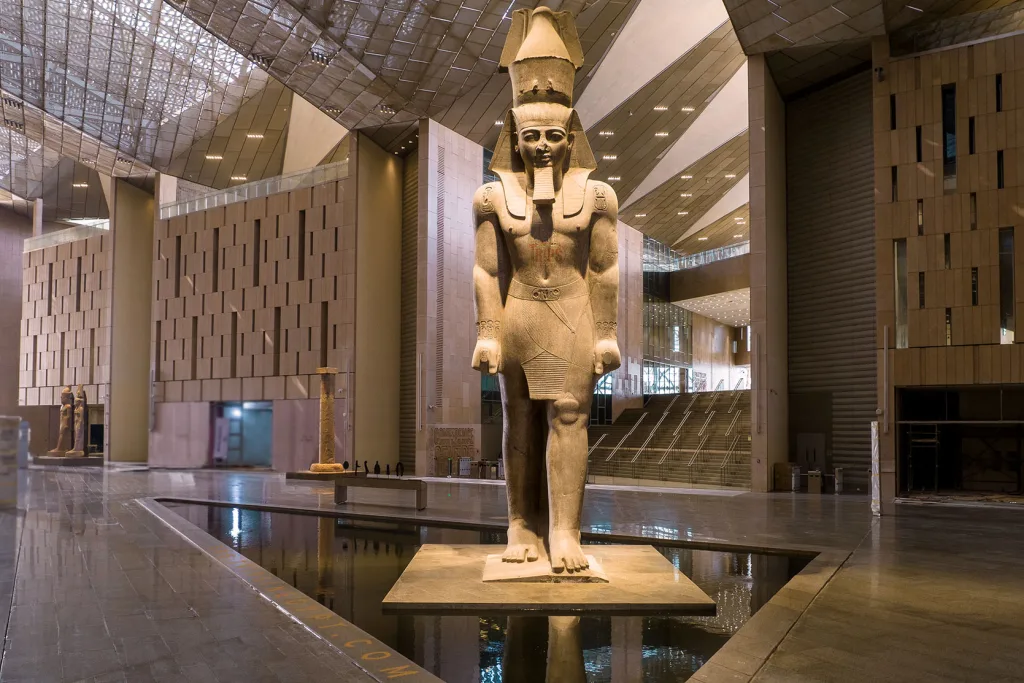
- The foundational narrative claims that modern indigenous Egyptians—both Muslim and Copt—are descendants of Arab, Greek, and Roman invaders who displaced the original builders of ancient Kemet.
- This claim persists despite comprehensive peer-reviewed genetic studies confirming a 97.5% genetic continuity among modern Egyptians since the predynastic eras.
The Encroachment on Morocco and Tunisia:
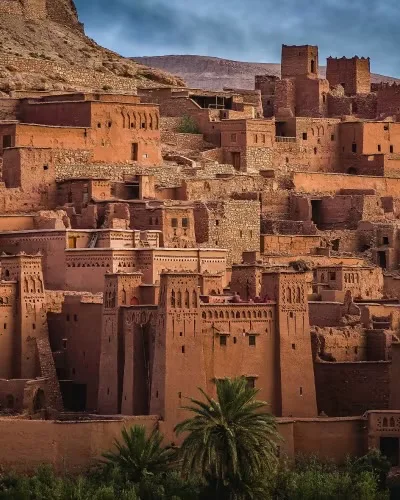
- Revisionist networks are increasingly targeting the heritage of the Amazigh and indigenous North African populations. Prominent historical figures, from the Carthaginian general Hannibal Barca in Tunisia to the indigenous Moorish dynasties of Morocco, are systematically rebranded in digital campaigns as strictly sub-Saharan, disregarding the distinct Mediterranean and local North African lineages of these populations.
How The Afro centric movement Was Established:
Intellectual Lineage and Modern Institutional Backing
To counter this ideological shift, it is essential to trace its structural roots. The movement grew out of 19th-century intellectual pushbacks against the deeply racist, Eurocentric academic structures that sought to dismiss African agency during the colonial era.
Early proponents like Cheikh Anta Diop in the mid-20th century, followed by scholars like Molefi Kete Asante who formally coined the terminology in the 1980s, sought to build a framework centered on black self-determination.
However, over the past decade, this framework has transitioned from a localized academic perspective into a heavily funded digital and cultural apparatus. Today, it is sustained by several key pillars:
Western Entertainment Networks:
- Global streaming conglomerates and production houses frequently prioritize commercial, identity-driven narratives over archeological precision, as seen in controversial docuseries projects that sparked widespread legal and diplomatic pushback from North African authorities.
Academic Endowments:
- Dedicated departments within major Western universities receive substantial private grants to promote revisionist historiography, embedding these theories into mainstream cultural studies curricula.
The Western Political Paradox: Deflecting Domestic Social Pressures
One of the most complex dimensions of this phenomenon is the quiet encouragement it receives from certain political factions within the United States and Europe. Historically, Western powers utilized Eurocentric models to detach Egypt from its geographical context, often portraying ancient Mediterranean civilizations as exclusively proto-European.
The modern shift reveals a distinct political paradox. Facing deep-seated systemic challenges and domestic racial friction, certain Western political and media elite find utility in supporting revisionist cultural paradigms.
By validating historical frameworks that encourage diaspora communities to look backward toward an idealized, ancient North African homeland, these institutions subtly redirect focus away from domestic civil rights demands and structural reforms at home.
This allows Western establishments to project progressive values through media representation while leaving the socio-economic status quo within their own borders entirely unchanged.

The Geopolitical Dimension: Lobbying and the Redefinition of Sovereignty
At its highest level, the systematic effort to decouple modern North Africans from their ancestral land serves deep-seated geopolitical objectives. Within international diplomatic circles, targeted lobbying networks actively work to weaken the sovereign cultural authority of nations like Egypt, Tunisia, and Morocco.
By aggressively promoting the narrative that modern North African populations are merely recent occupiers of their respective lands, these campaigns attempt to erode the moral and legal standing of these sovereign nations under international law.
If a population can be framed as historical usurpers rather than the continuous, rightful inheritors of their land, the legitimacy of their current borders and territorial sovereignty is undermined.
For international lobbying groups aiming to fracture regional stability or lay long-term claim to critical geopolitical corridors, establishing an ideological foundation that delegitimizes the native population is a potent tool for future intervention.
Conclusion: Defending Historical Truth Through Law
Castle Journal’s International Grand Awareness Initiative stands firm in its adherence to the international codes of journalism and scientific fact. Defending the historical integrity of Egypt, Morocco, and Tunisia is not a matter of racial chauvinism; it is an defense of documented truth against ideological distortion. To safeguard the future of global leadership governance, history must be protected from political weaponization.
True international justice requires respecting the verified ancestry of every nation, ensuring that ancient heritages remain anchors of shared human accomplishment rather than tools for geopolitical destabilization.
Castle Journal Ltd
British company for newspapers and magazines publishing
London-UK – licensed 10675
Founder | Owner | CEO Abeer Almadawy
Castle Journal newspapers are the only voice and the brain of the world leadership governance.

