Iran deadlock deepens as Trump’s strikes fail to force solution

Tehran, Iran — June 11, 2026
Introduction: A Ceasefire in Ashes
What was once hailed as a diplomatic window to prevent total war in West Asia has shattered completely.
Today,the United States and Iran find themselves locked in a brutal, direct military escalation that has effectively vaporized the fragile two-month ceasefire established in April.
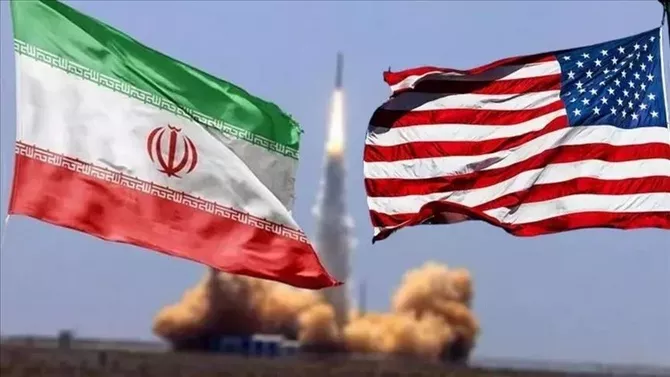
Following a rapid succession of back-and-forth bombardments over the last 48 hours, US President Donald Trump’s strategy of “negotiating with bombs” has pushed the region into uncharted peril.
Rather than forcing Tehran to the negotiating table, the heavy reliance on cruise missiles and tactical airstrikes has triggered a severe defensive consolidation by the Islamic Republic, highlighted by the absolute closure of the world’s most critical maritime oil transit point: the Strait of Hormuz.
The Recent Escalation: Yesterday and Today’s Massive Strikes
The conflict, which technically ignited on February 28, saw its most intense 48-hour cycle of violence this week.
The immediate catalyst for the renewed fire occurred earlier in the week when an Iranian drone downed a US Army AH-64 Apache helicopter near the Persian Gulf.
Though both American pilots were rescued, Washington responded with a vengeance.
- The June 10 American Wave: Beginning at 5:15 PM Eastern Time yesterday (12:45 AM today, Tehran time), US Central Command (CENTCOM) launched a massive four-hour air campaign. Backed by carrier-based fighter jets and 49 Tomahawk cruise missiles launched from Navy warships and submarines, the US systematically targeted Iranian air defense networks, military surveillance installations, and communication hubs.
- The Physical and Civilian Impact: Iranian state media confirmed that explosions echoed across the southern coast, specifically hitting Bandar Abbas, Sirik, Minab, and the strategic islands of Qeshm and Kish. In Sirik County, critical water infrastructure was severely damaged, cutting off drinking water supplies for thousands of local civilians.
- The Iranian Retaliation: Tehran did not back down. Hours later, on the morning of June 11, the Islamic Revolutionary Guard Corps (IRGC) retaliated with a heavy barrage of ballistic missiles and suicide drones. Striking across the Gulf, Iran explicitly targeted the US Fifth Fleet headquarters in Bahrain and other bases in Kuwait and Jordan, triggering widespread emergency missile sirens and forcing Kuwait to temporarily close its entire airspace.
Where the War Has Arrived: The Economic Chokehold
The conflict has officially evolved past a regional security crisis into a global economic emergency. Immediately following the US strikes, Iran’s top military command announced the total, indefinite closure of the Strait of Hormuz, warning that any maritime vessel attempting to cross the waterway would be treated as a hostile target.
In an interview with Fox News, President Trump attempted to project control, revealing a highly sensitive, month-long “secret mission” where the US military reportedly guided 200 commercial vessels past Iranian radars at night, slipping over 100 million barrels of oil through the blockade.
Trump used the interview to lambast the April truce, calling it “the most violated ceasefire in the history of the world,” and explicitly warned that he would “bomb the s— out” of Iran if they refused to capitulate to a new deal.
However, the markets tell a far more chaotic story. International crude oil benchmarks surged past $93 a barrel today—marking a staggering 25% spike since the war began. Concurrently, US consumer inflation accelerated sharply to 4.2%, illustrating that the battlefield in southern Iran is directly impacting the pockets of citizens worldwide.
The Diplomatic Deadlock: Why Trump’s Words Show No Solution
The core problem with the Trump administration’s current doctrine is the fundamental misunderstanding of Iranian geopolitical calculus.
Defense Secretary Pete Hegseth defended the strikes as a “clear negotiating tactic,” asserting that the bombing will stop the moment Iran signs a revised agreement.
Yet, this strongman approach offers no viable off-ramp. Iranian President Masoud Pezeshkian responded with fierce rhetoric today, stating that Iran will “stand firm” against overt infrastructure terrorism. Diplomatically, the two sides are stuck in a classic paradox:
- The Washington Stance: The White House demands immediate, sweeping concessions on Iran’s regional influence and nuclear program before any economic relief is granted.
- The Tehran Stance: Iran refuses to negotiate under active bombardment, demanding the upfront release of billions in frozen international assets as a baseline metric of American good faith.
By utilizing maximum military pressure without offering a face-saving diplomatic exit, the US administration has effectively backed Iran into a corner where surrender is politically impossible for the regime.
Where It Will Go: The Dangerous Path Ahead
The trajectory of this war is rapidly moving toward a sustained, medium-intensity conflict with global collateral damage.
Neither side is currently postured for a full-scale amphibious ground invasion, meaning the warfare will continue to play out through asymmetric naval skirmishes, cyber strikes, and localized aerial devastation.
As Iran strengthens its anti-ship missile batteries along the cliffs of the Persian Gulf and the US maintains its lethal, heavily reinforced presence, the global energy grid will remain under siege.
If the Strait of Hormuz remains locked down for another fortnight, economic pressure on Western allies may force an international intervention that Washington cannot entirely control.
Trump’s strategy assumes that the threat of absolute destruction will force compliance; instead, it is forcing a highly combustible regional escalation that has no clear end in sight.
Castle Journal Ltd
British company for newspapers and magazines publishing
London-UK – licensed 10675
Founder | Owner | CEO Abeer Almadawy
Castle Journal newspapers are the only voice and the brain of the world leadership governance.

