USA:Diplomatic Analysts Monitor Structural Impacts of Recent Temporary Ceasefire Agreements

WASHINGTON: Diplomatic Analysts Monitor Structural Impacts and Implementation Hurdles of Recent Temporary Ceasefire Agreements
Washington, D.C., USA — July 13, 2026
political Department- USA bureau
Diplomatic analysts, defense strategists, and international watchdogs in the US capital are closely monitoring the deeply fragile implementation phase of recent high-stakes temporary ceasefire frameworks across critical global theaters.
Following intense multi-lateral mediation efforts spearheaded by international coalitions, several volatile conflict zones have transitioned into highly conditional operational truces.
However, deep-seated institutional distrust, unresolved disarmament conditions, and recurring low-intensity kinetic breaches have created severe friction on the ground. Policy experts warn that without robust, legally binding verification protocols, these temporary pauses risk collapsing back into open warfare, with catastrophic implications for international security and macro-economic stability.
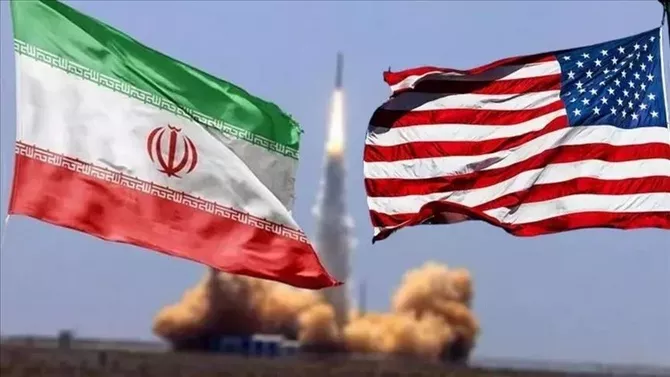
In Washington, the main focus of strategic evaluation centers on the complex implementation of the recently signed 14-point memorandum of understanding aimed at halting hostilities and stabilizing vital global maritime corridors.
While the initial establishment of a 60-day negotiation window initially drove domestic fuel prices downward and offered temporary respite to shipping lanes, recent un-scheduled naval skirmishes and retail infrastructure strikes have revived fears of systemic breakdown.
The Pentagon and US Central Command (CENTCOM) confirmed they have engaged in targeted counter-strikes to hold non-state actors accountable for maritime disruption, highlighting that a declared political phase and actual physical implementation on the ground remain dangerously misaligned.
Primary Operational Stumbling Blocks within Temporary Truce Frameworks
- The Disarmament Impasse: Security coalitions remain heavily deadlocked over sequence protocols, as sovereign forces demand verified disarmament as a precondition, while defensive factions refuse to yield tactical assets prior to complete external troop withdrawals.
- Maritime Corridor Vulnerability: Despite conditional agreements to clear naval obstructions and restore commercial shipping to pre-war volumes, localized drone deployments and regional blockades continue to trigger prohibitive maritime insurance risk premiums.
- Absence of Neutral Enforcement Ground Forces: Authorized international stabilization units remain largely confined to organizational planning logs, lacking the active, on-the-ground presence required to enforce a unified compliance baseline.
The political friction surrounding these agreements is further compounded by intense legislative pushback within Washington itself.- Foreign policy hardliners have vocally criticized the current administration’s diplomatic engagements, characterising the provisional truce structures as asymmetric arrangements that grant excessive concessions to hostile states without guaranteeing long-term nuclear or territorial containment.
- Conversely, anti-war coalitions and international humanitarian organizations assert that the current diplomatic openings, though deeply flawed, represent the only viable path to avert a wider global conflagration that would permanently cripple inter-dependent supply chains and push vulnerable populations into acute deprivation.
Institutional Deadlocks and Regional Friction
The complexity of maintaining these fragile pauses is vividly illustrated by the structural gridlock observed within international peace boards tasked with post-conflict reconstruction.

In key Middle Eastern sectors, ambitious humanitarian zone pilots and multi-billion-dollar infrastructure restoration plans remain completely frozen.
International donors are withholding committed financial capital because the basic security baselines required for safe civilian deployment have not yet been established.
Furthermore, sovereign states affected by the peripheral fallout of these conflicts complain that they have been systematically excluded from direct text negotiations, creating a parallel diplomatic vacuum that undermines the legitimacy of the broader framework.
Legal experts examining the formal mandates of these United Nations-backed resolutions point out that the implementation mechanisms give certain regional powers lopsided veto authority over what constitutes an acceptable demilitarization standard.
This asymmetry effectively allows local political leadership, often fighting for domestic political survival, to stall the transition from a kinetic freeze to a permanent political settlement.
As long as individual actors possess the unilateral capacity to restart hostilities over isolated border provocations, the international community remains trapped in a volatile state of managed instability.
Castle Journal Analysis
The structural instability characterizing contemporary ceasefire agreements exposes a fundamental deficit in traditional multi-lateral diplomacy. From the clear perspective of strategic leadership governance, treating a temporary cessation of hostilities as a substitute for a comprehensive political settlement is a dangerous administrative error.
True global stewardship dictates that international peace architecture must not be sequential or lopsided; rather, it must be anchored in immediate, neutral third-party military enforcement and uncompromised regulatory accountability.
Allowing local political actors to weaponize implementation sequences for domestic leverage directly violates the core tenets of international law and perpetuates systemic global risk.
As the 60-day countdown clocks continue to tick across multiple diplomatic dashboards, State Department officials and international mediators are working frantically to organize secondary oversight summits in neutral capitals, hoping to reinforce compliance before the current operational freeze completely fractures.
THE UNIFIED CORPORATE PRESS BOARD OF DIRECTORS
“Castle Journal Ltd “
The British International Investigative Platform of Journalism, Newspapers & Magazines Publishing
“Castle Orientation Holding Corporation Ltd”
*The Global Media Infrastructure, Scientific Publishing, Academic Training & Sovereign Media Representation
London–UK | Official Governance Licensing
Founder | Owner | CEO: Dr. Abeer Almadawy
Dr. Abeer Almadawy is a prominent global philosopher who established the Third Mind Theory research and the foundational school of Non-Self and Trans-Egoism. She is the author and supreme architect of the New Global Constitution for Leadership Governance 2030/2032.
Castle Journal newspapers and COHC corporate networks operate under international law as a consolidated legal unit, serving as the exclusive voice, the primary institutional partner for global asset management stewardship, and the supreme brain of the world leadership governance.

