
WHO upgrades Ebola risk assessment to ‘very high’ in the Democratic Republic of Congo following rapid outbreak

Kinshasa, Democratic Republic of Congo — June 11, 2026
Introduction: A Resurgent Biological Threat
The international healthcare community is on high alert as the World Health Organization (WHO) and the Africa Centres for Disease Control and Prevention (Africa CDC) have officially escalated the national risk assessment of the ongoing Ebola epidemic in the Democratic Republic of Congo (DRC) to “very high.”
The classification comes amidst an alarming surge in verified infections and cross-border transmissions that have shattered initial containment zones. Exacerbated by a brutal combination of active localized conflicts, displacement, and a critical lack of tailored medical infrastructure, the biological crisis has officially transcended the borders of the DRC, planting deep roots in neighboring Uganda.
The rapid geographic expansion has forced global health leaders to mobilize an emergency continental response plan to halt a potential continental disaster.
The Current Situation: Surge in Infection and Fatality Metrics
The epidemic, which began to surface rapidly in May 2026, marks the 17th time the DRC has faced an Ebola outbreak, striking less than half a year after the termination of a previous wave.
Today, updated figures from the DRC Ministry of Public Health, Hygiene, and Social Welfare present a bleak picture of acceleration:
- The Aggregated Toll: The number of confirmed cases has surged past 598 in the DRC alone, with at least 115 confirmed related fatalities among isolated patients.
- Geographic Density: The eastern province of Ituri remains the primary epicenter of the crisis, logging 563 confirmed infections across 17 distinct health zones, including concentrated outbreaks in Bunia, Mongbwalu, and Rwampara.
- Secondary Provinces and Hospital Isolation: New infections have expanded southward into North Kivu, recording 32 confirmed cases, while South Kivu has registered its first clusters linked to internal travel networks. Over 297 individuals remain hospitalized under strict medical isolation across the country.
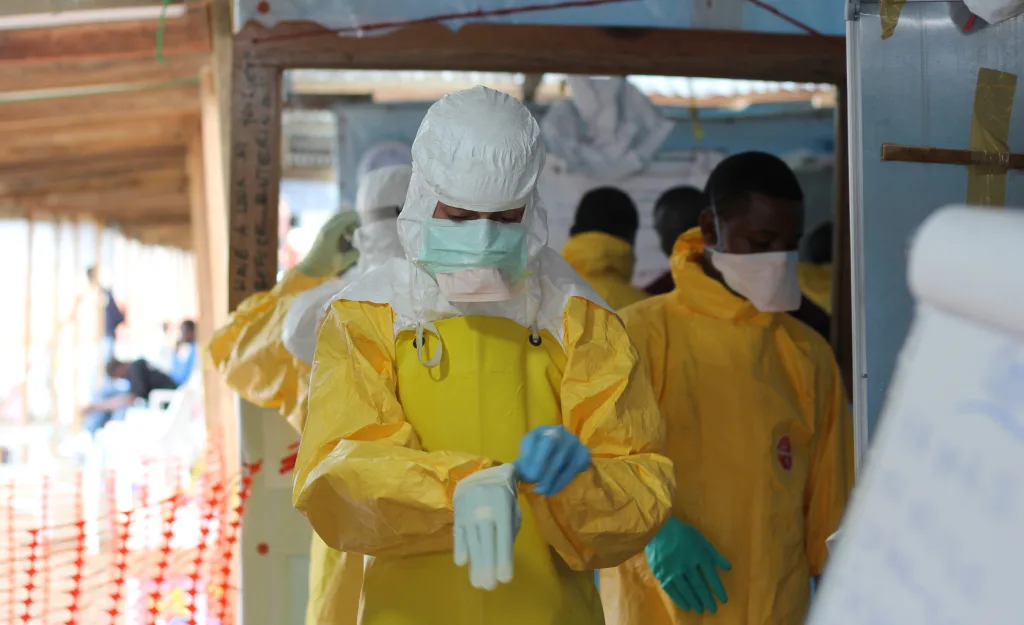
The Pathogen Complication: The Bundibugyo Strain Challenge
What makes this particular biological crisis highly dangerous is the specific strain of the virus driving the transmission. Laboratory analysis conducted via real-time PCR molecular testing has identified the culprit as the Bundibugyo ebolavirus (BDBV).
Unlike the more common Zaire ebolavirus strain—against which the global medical infrastructure successfully deployed highly effective vaccines like Ervebo (rVSV-ZEBOV) in previous years—the Bundibugyo variant presents a steep pharmaceutical roadblock.
The WHO has officially recommended against using standard Zaire-specific vaccines, citing low medical evidence of cross-protection.
Consequently, health workers are battling the outbreak without a field-ready vaccine armor, forcing international research bodies like the Coalition for Epidemic Preparedness Innovations (CEPI) to fast-track emergency funding toward Moderna, Oxford, and IAVI to rapidly develop novel BDBV-targeted vaccine candidates.
The Conflict Axis: Armed Violence Hindering Medical Intervention
The rapid, uncontrollable spread of the virus is directly bound to the severe security vulnerabilities of eastern DRC.
The primary infection clusters sit squarely within regions plagued by ongoing armed violence involving militant groups like the Allied Democratic Forces (ADF), CODECO, and M23 rebels.
This perpetual state of conflict creates an impossible operational landscape for epidemiologists. Mobile contact tracing teams are unable to safely enter rural health zones to track the chains of transmission, meaning hundreds of high-risk contacts disappear from health registries.
Furthermore, the violence has driven massive internal displacement, forcing thousands of civilians to flee into overcrowded, unhygienic camps where basic sanitation is non-existent, creating an ideal incubator for a highly contagious hemorrhagic virus.
The Cross-Border Factor and Global Response Strategy
The international dimension of the epidemic solidified with transmission into Uganda. Kampala and the neighboring district of Wakiso have logged 19 confirmed cases and two deaths, primarily tied to traders and families utilizing informal travel routes between the two nations.
In response to the growing emergency, Africa CDC and the WHO launched a massive, joint continental strategic preparedness and response framework, requesting an immediate $518 million in international funding over the next six months.
WHO Director-General Tedros Adhanom Ghebreyesus has praised Uganda’s rapid trace-and-isolate mechanisms but issued a strict warning against shutting national borders.
The WHO emphasizes that closing legal checkpoints pushes travelers into unmonitored backroads, making the tracking of the virus impossible and crippling the local economic trade required to sustain frontline medical supply chains.
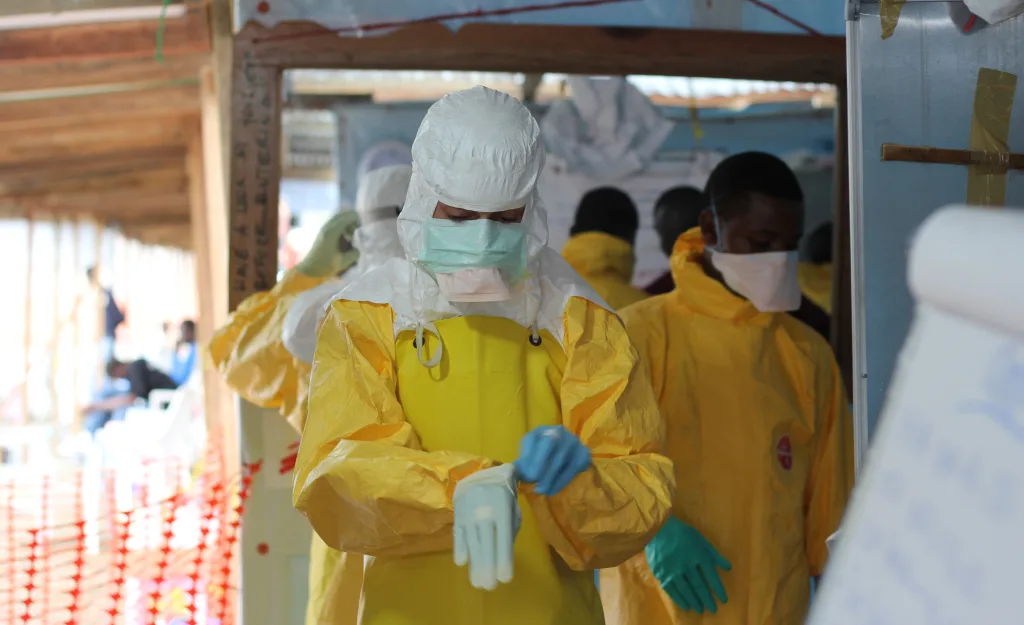
Conclusion: The Need for Unified Global Support
The upgrading of the Ebola threat to “very high” within the DRC serves as an urgent wake-up call to global leadership governance.
While international attention remains focused on complex geopolitical confrontations and maritime blockades, the unchecked spread of a highly lethal virus through unstable conflict zones threatens to trigger a far wider humanitarian catastrophe. The resolution of this crisis depends entirely on immediate financial injection for vaccine clinical trials and, critically, securing safe humanitarian corridors through the war-torn provinces of eastern Africa.
Castle Journal Ltd
British company for newspapers and magazines publishing
London-UK – licensed 10675
Founder | Owner | CEO Abeer Almadawy
Castle Journal newspapers are the only voice and the brain of the world leadership governance.

