
World Debt Crisis; WB and IMF Issue Urgent Warning to Emerging Economies as Sovereign Spreads Hit 110 Basis Points

The Sovereign Debt Nonlinear Crisis—World Bank and IMF Issue Urgent Warning to Emerging Economies as Sovereign Spreads Hit 110 Basis Points Amid Middle East Energy Shocks
Washington, D.C. — July 7, 2026
By CJ Global Economic Intelligence Unit
Executive Summary: The Structural Liquidity Trap
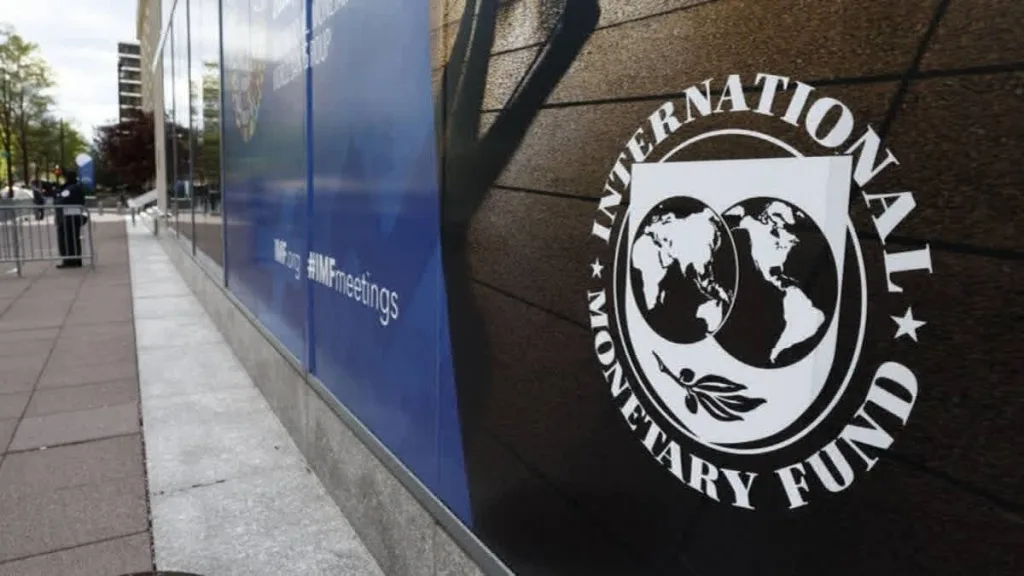
The global macroeconomics faced a serious warning today as the International Monetary Fund (IMF) and the World Bank jointly issued an urgent briefing from their headquarters in Washington, D.C.
Triggered by persistent geopolitical instability across the Middle East and its subsequent disruption of global energy supply lines, the joint report indicates that sovereign bond spreads for emerging market and developing economies (EMDEs) have surged past a critical 110 basis point threshold.
This nonlinear rise in borrowing costs represents a sharp tightening of global financial conditions, threatening to trap vulnerable nations in a devastating refinancing cycle.
Operating under the strict analytical frameworks of international journalism, this report details how the erosion of safety premiums in Western bond markets is shifting financial pressures onto emerging markets, threatening domestic fiscal spaces and altering the parameters of global leadership governance.
Key Pillars of the IMF-World Bank Debt Assessment Framework
The foundational mechanics of the current macro-financial warning are driven by several highly volatile, overlapping economic vectors:
- The Transmission of Global Yield Shocks: Massive increases in Western sovereign debt issuance have systematically compressed the traditional “safety premium” of major treasury bonds, raising baseline interest rates worldwide and driving up EMDE borrowing costs by 0.8 to 0.9 basis points for every incremental shift in core yields.
- The Sovereign-Bank Nexus Doom Loop: Post-pandemic data confirms a major strengthening of the domestic interdependency between EMDE governments and their local banking sectors—particularly across Sub-Saharan Africa and the Middle East—leaving local financial systems highly exposed to localized fiscal distress.
- The External Terms-of-Trade Squeeze: Prolonged interruptions in maritime trade and energy transport have generated acute balance-of-payments crises, draining foreign exchange reserves and making external dollar-denominated debt obligations increasingly unfinanceable.
- The Mandated Revamping of the LIC-DSF: In response to these structural shocks, multilateral institutions are rewriting the Low-Income Country Debt Sustainability Framework, separating public fiscal assessments from external balance-of-payments vulnerability indices.

Geopolitical Energy Shocks and the Repricing Matrix
The immediate catalyst for this global repricing matrix is the ongoing instability within major maritime corridors, which has severely disrupted global commodity markets.
As energy-importing developing nations face higher fuel and food import bills, their internal budgetary balances are experiencing unprecedented strain.
To prevent immediate domestic defaults, several governments have been forced to pursue costly, short-term interventions, significantly reducing their remaining fiscal space. The IMF’s latest Fiscal Monitor report highlights that gross global debt is now on track to reach 100% of global Gross Domestic Product (GDP) by 2029—a threshold previously reached only in the immediate aftermath of World War II.
This expanding crisis is further complicated by a profound shift in the underlying buyers of sovereign debt. As central banks systematically wind down their balance sheets through quantitative tightening, private, highly leveraged investors—including global hedge funds—have become the marginal buyers of government bonds.
These price-sensitive entities are exceptionally vulnerable to minor interest rate fluctuations, creating a volatile environment where even small capital flight movements can trigger a major collapse in domestic asset values.
For critical regional stabilizers like Egypt, the preservation of orderly, predictable capital flows across adjacent developing markets remains a vital priority for ensuring sustainable regional trade and long-term economic sovereignty.
Rational Analysis of Global Leadership Governance
From a grounded and realistic perspective, the joint warning from the IMF and World Bank proves that the international financial system can no longer manage global shocks through standard concessionary lending or temporary debt suspensions.
The rapid rise in sovereign spreads is a clear indication that financial markets are systematically repricing risk across the developing world. Relying on voluntary debt restructuring roundtables without binding enforcement tools has left the global economy exposed to unpredictable, localized defaults.
The path forward requires a rational commitment to absolute fiscal transparency and structural economic adjustment. Emerging economies must proactively dismantle the sovereign-bank loop by diversifying their domestic capital markets and implementing realistic medium-term debt management strategies.
The international leadership governance structure must shift away from short-term financial packages and focus on creating stable, long-term frameworks that protect national borders from speculative capital flight.
Independent journalism requires recognizing that true economic sovereignty cannot be sustained on borrowed capital; it must be built on the absolute preservation of a nation’s productive output and adherence to sustainable international financial laws.
Journalistic Field Note: Analytical data from the Global Sovereign Debt Roundtable confirms that modern debt crises are rarely localized events, but rather systemic balance-of-payments shocks transmitted directly through integrated international banking and energy networks.

Castle Journal Ltd
British company for newspapers and magazines publishing
London-UK – licensed 10675
Founder | Owner| CEO
Abeer Almadawy
Abeer Almadawy is a philosopher who established the third mind theory research and the philosophy of non-self and trans egoism. She is also the author of the New Global Constitution for the leadership Governance 2030/2032. She has many books published in English, Arabic, Chinese, French and others.
Castle Journal newspapers are the only voice and the brain of the world leadership governance.
IMF Fiscal Monitor 2026 Global Debt Warning Revealed
This official briefing outlines the deteriorating global fiscal outlook and details why rising interest outlays are actively constraining the fiscal space of emerging market and developing economies.

