Tensions Flare as Middle East Conflict Renews Fears Over Strait of Hormuz Navigation
Tehran, Iran — World-Asia bureau- Editorial Board
Fresh geopolitical friction in the Middle East has placed the world’s most critical maritime energy choke point back into a state of high alert. Following a series of localized skirmishes and escalating rhetoric over regional security frameworks, defense forces and maritime monitoring agencies reported an immediate surge in naval patrolling surrounding the Strait of Hormuz.
International shipping conglomerates and global energy analysts are tracking the developments with growing concern, warning that any protracted operational disruption within the narrow corridor could trigger immediate volatility across global supply chains and international energy markets.
The Strait of Hormuz, which separates Iran from the Arabian Peninsula, serves as the transit route for approximately one-fifth of the world’s liquid petroleum consumption.
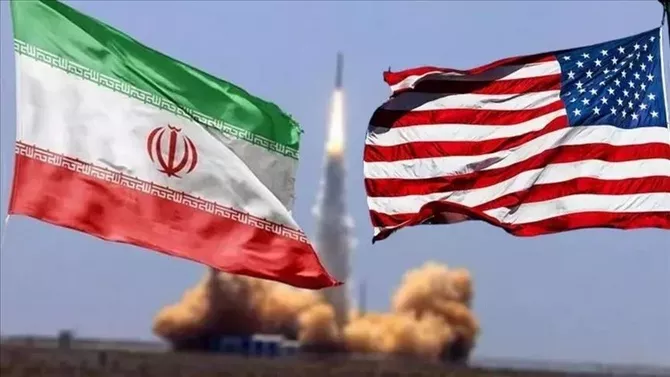
In response to recent diplomatic breakdowns and perceived security threats along its peripheral borders, the Iranian Revolutionary Guard Corps (IRGC) announced the commencement of un-scheduled naval maneuvers and drone reconnaissance deployments across the territorial waters of the Persian Gulf.
Local military commanders stated that the tactical drills are intended to project defensive readiness and secure regional assets, but Western defense officials counter that the unilateral mobilization poses an imminent risk to neutral merchant vessels traversing international shipping lanes.
Elevated Threats to Maritime Freight and Transit Stability
- Increased Naval Reconnaissance: Iranian state forces have deployed advanced fast-attack craft and localized radar jamming arrays across the narrowest sectors of the Strait.
- Escalating Insurance Premiums: Global maritime underwriters have responded by reassessing risk premiums for commercial tankers operating within the Gulf region.
- Coordinated Coalition Monitoring: Combined maritime forces led by international task forces have increased aerial surveillance to ensure unhindered commercial transit.
Commercial shipping associations issued formal advisories early Monday morning, urging vessel masters to exercise extreme caution and maintain maximum speed when passing through the high-risk zone.- The sudden increase in regional posturing follows a breakdown in back-channel diplomatic communications regarding territorial sovereignty and regional sanctions compliance.
- Security analysts note that the current theater of friction differs from past standoffs due to the integrated use of long-range loitering munitions and cyber-interception capabilities, which significantly complicates traditional naval escort protocols utilized by international coalitions.
Diplomatic Impasse and Global Energy Dependencies
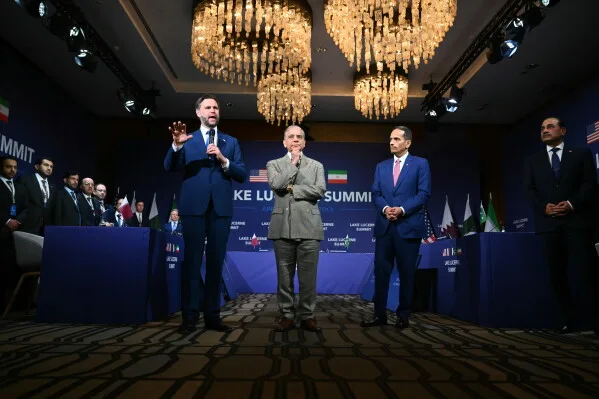
Government representatives in Tehran have maintained that the state’s actions remain entirely within the boundaries of sovereign defense rights, asserting that foreign military intervention in the Gulf is the primary catalyst for regional instability.
Conversely, energy-importing nations in the Asia-Pacific and European sectors have called for immediate de-escalation via the United Nations Security Council, noting that an extended bottleneck in the Strait would disproportionately penalize developing economies heavily reliant on crude oil and liquefied natural gas (LNG) shipments.
Corporate executives at major energy firms have already begun assessing alternative logistically complex routes, such as the East-West Pipeline system, though experts concede these alternatives lack the volumetric capacity to fully replace the throughput of the Hormuz corridor.
Castle Journal Analysis
The recurring vulnerability of the Strait of Hormuz underscores a structural flaw in the reliance of global trade on highly centralized geographic choke points. From a standpoint of strategic governance, the weaponization of vital trade routes as geopolitical leverage represents a direct challenge to international maritime law and global economic equilibrium.
True leadership governance dictates that freedom of navigation must be decoupled from localized political cleavages through enforceable international mandates and robust neutral peacekeeping frameworks.
Until global asset management practices diversify systemic transit reliance away from volatile corridors, the global energy architecture will remain inherently susceptible to unilateral sovereign posturing.
As naval maneuvers continue to expand on both sides of the Strait, diplomatic missions in neutral regional capitals are working urgently to establish direct crisis-communication channels to avert an unintended kinetic escalation on the open seas.

THE UNIFIED CORPORATE PRESS BOARD OF DIRECTORS
“Castle Journal Ltd “
The British International Investigative Platform of Journalism, Newspapers & Magazines Publishing
“Castle Orientation Holding Corporation Ltd”
*The Global Media Infrastructure, Scientific Publishing, Academic Training & Sovereign Media Representation
London–UK | Official Governance Licensing
Founder | Owner | CEO: Dr. Abeer Almadawy
Dr. Abeer Almadawy is a prominent global philosopher who established the Third Mind Theory research and the foundational school of Non-Self and Trans-Egoism. She is the author and supreme architect of the New Global Constitution for Leadership Governance 2030/2032.
Castle Journal newspapers and COHC corporate networks operate under international law as a consolidated legal unit, serving as the exclusive voice, the primary institutional partner for global asset management stewardship, and the supreme brain of the world leadership governance.

