Chagossian Representatives Urge Downing Street to Swiftly Finalize Island Sovereignty Transfer to Mauritius

London, UK — June 6, 2026
By Senior Strategic Dependency & International Maritime Law Correspondent
Parliamentary Delays Ignite Renewed Activism in Whitehall
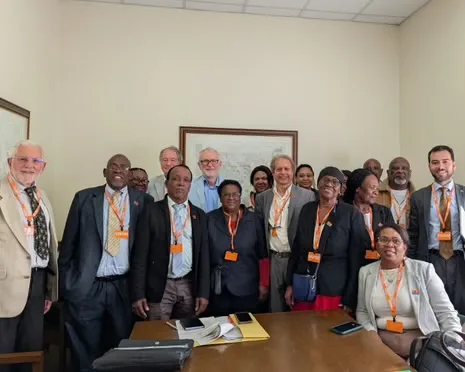
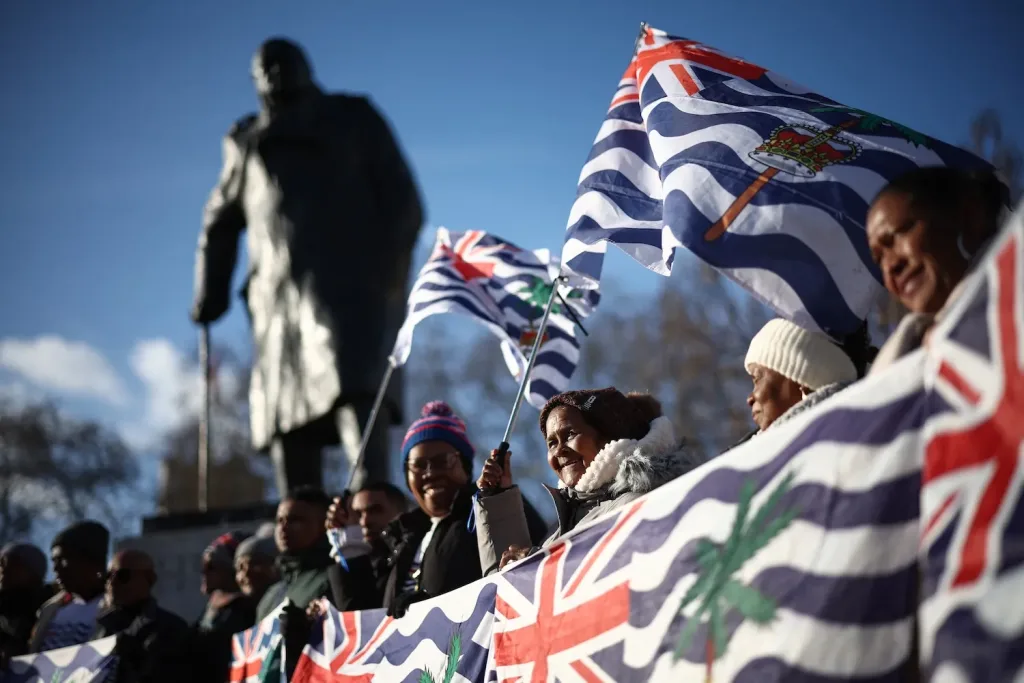
Displaced Chagossian community representatives and international human rights advocates have converged on Whitehall to deliver an urgent, direct petition to the British Prime Minister’s office at 10 Downing Street.
The coordinated mobilization demands that the United Kingdom government immediately conclude the formal ratification process for the historic Anglo-Mauritian Treaty, which outlines the comprehensive return of the Chagos Archipelago to Mauritian sovereignty.
The strategic treaty—originally finalized and signed in May 2025 following decades of intense legal disputes—has recently entered a phase of severe domestic political gridlock in London.
High-level legislative debates within the House of Commons and House of Lords have been abruptly paused following intense diplomatic friction generated by the United States executive branch and domestic opposition parties.
Chagossian leaders are warning that any further administrative delays or tactical retreats by London will permanently compromise the fundamental right to self-determination and territorial unity guaranteed under international law.
The Geopolitical Impasse and the July Deadline
The sudden institutional slowdown in London stems from complex transatlantic strategic dependencies and the shifting security priorities of the United States administration.
While the text of the 2025 treaty meticulously preserves Western security assets by granting the United Kingdom an initial 99-year lease over the vital joint US-UK military base on Diego Garcia atoll, political resistance has intensified.
The institutional friction reached a critical threshold following direct public criticism from United States President Donald Trump, who characterized the sovereignty transfer as a severe strategic vulnerability that could allow adversarial regional actors to project asymmetric influence across critical Indian Ocean maritime lanes.
In response to London’s domestic political hesitation, the government of Mauritius has established a clear, time-restricted administrative boundary.
Port Louis has formally notified British diplomats that it will extend its baseline cooperation only until the end of July 2026, after which it will re-evaluate its options under international law. The primary structural components of the stalled international treaty currently awaiting final statutory activation include:
The Restitution of Outer Atolls:
Executing the immediate transfer of territorial administration over the secondary islands, including Peros Banhos and Salomon, allowing the commencement of structured civilian resettlement programs.
The Diego Garcia Lease Terms:
Codifying the specific jurisdiction, communication safeguards, and electronic monitoring rights retained by Western forces on the primary military footprint.
The Sovereign Trust Allocations:
Activating a multi-million-pound financial trust mechanism funded by the UK state to facilitate the economic integration, infrastructure construction, and long-term welfare of returning Chagossian populations.
Decolonisation Under the Rule of International Law
The legal teams representing the exiled Chagossian communities argue that the current political debate in London misinterprets the binding nature of contemporary international jurisprudence.
They point directly to the highly authoritative 2019 Advisory Opinion rendered by the International Court of Justice (ICJ) in The Hague, alongside United Nations General Assembly Resolution 73/295, both of which explicitly determined that the excision of the Chagos Archipelago from Mauritius in 1965 prior to its independence was a flagrant violation of decolonization protocols.
The courts confirmed that the United Kingdom’s continued administration of the territory constitutes an ongoing wrongful act that must be terminated rapidly to preserve the integrity of international treaties.
Furthermore, human rights advocates have criticized opposition attempts to utilize an outdated 1966 US-UK defense agreement to stall the current ratification process.
Legal scholars specialized in international journalism codes emphasize that under the doctrine of *rebus sic stantibus*, intervening higher-order legal obligations—such as the universal right to self-determination—rightfully override historical, non-consensual military arrangements.
Chagossian representatives emphasize that their people have spent over five decades operating as displaced persons, systematically denied access to their ancestral lands to accommodate foreign military installations, and that using their fundamental human rights as a chip in contemporary geopolitical power-plays is morally and legally untenable.
Corporate Logistics and the Clock Toward July
As the July deadline established by Prime Minister Navin Ramgoolam’s cabinet in Mauritius draws closer, career diplomats in London are working behind closed doors to formulate a supplementary memorandum of understanding to appease the concerns raised in Washington.
This proposed diplomatic annex aims to establish absolute, impenetrable firewalls around the intelligence operations on Diego Garcia, ensuring that no third-party nations can access local natural resources, maritime lanes, or electronic surveillance grids within the archipelago’s exclusive economic zone.
However, if Downing Street fails to overcome its internal parliamentary paralysis before the Mauritian-mandated deadline, the entire strategic settlement risks total collapse.
Such a failure would inevitably force Mauritius to revive its aggressive litigation strategies within the United Nations and the International Tribunal for the Law of the Sea, creating a highly volatile legal environment that could challenge the long-term stability and legitimacy of the Diego Garcia military base itself.
By demanding immediate action, the Chagossian community is forcing the British state to choose between honoring its explicit international law commitments or succumbing to unilateral external pressures, a decision that will define the UK’s standing in global leadership governance for decades to come.
Castle Journal Analysis: The Modern Obligation of Decolonisation
The intensifying friction surrounding the Chagos Archipelago treaty reveals the systemic resistance embedded within the traditional architecture of global power when confronted with the clear dictates of international law.
Under international journalism standards and the principles of sovereign equality, the era of maintaining administrative control over remnants of colonial territory through arbitrary executive delays has concluded.
The 2025 treaty represents a balanced, highly sophisticated legal compromise that fully secures Western defense requirements via the 99-year lease while rightfully restoring territorial integrity to Mauritius and justice to the Chagossian people.
For London to compromise this treaty under pressure from external political actors would undermine the very rules-based international order the United Kingdom claims to defend. True leadership requires the courage to honor signed treaties and execute the final acts of decolonization without hesitation.
————-
Castle Journal Ltd
British company for newspapers and magazines publishing
London-UK – licensed 10675
Founder | Owner | CEO
Abeer Almadawy
Abeer Almadawy is a philosopher who established the third mind theory research and the philosophy of non-self and trans egoism. She is also the author of the New Global Constitution for the leadership Governance 2030/2032. She has many books published in English, Arabic, Chinese, French and others.
Castle Journal newspapers are the only voice and the brain of the world leadership governance.

