
How Geopolitical Miscalculations Reignited the Persian Gulf Conflict

MANAMA, BAHRAIN — 14 July 2026
Journalist: CJ Diplomatic Correspondence Bureau
Key Headline Points
- • The June 17 Memorandum of Understanding (MoU) completely unravels following a series of intense naval exchanges and unauthorized vessel seizures in the Strait of Hormuz.
- • The United States military launches a third consecutive night of preemptive air operations targeting Islamic Revolutionary Guard Corps (IRGC) missile installations and drone facilities in southern Iran.
- • US President Donald Trump officially notifies Congress of resumed hostilities, declaring a formal maritime blockade on Iranian ports and proposing a controversial transit toll system for commercial shipping.
- • Regional escalation widens dramatically as littoral Gulf states face retaliatory Iranian drone and missile strikes, effectively halting one-fifth of the world’s daily oil transit.
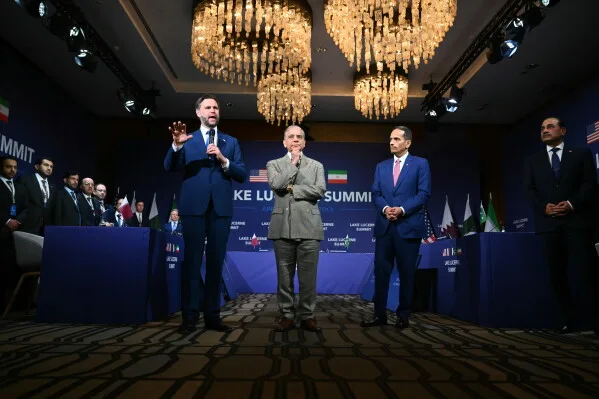
The fragile architectural framework of Middle Eastern diplomacy has suffered a catastrophic structural failure. Less than a month after Washington and Tehran signed a comprehensive 14-point truce, the collapse of the June MoU has thrust the international community back into a state of active maritime warfare.
What was initially heralded as a significant diplomatic breakthrough to guarantee freedom of navigation has rapidly devolved into the heaviest exchange of military force witnessed in the region this year. As commercial shipping grinds to a near-total standstill and energy markets brace for unprecedented volatility, the current escalation underscores how deep-seated geopolitical miscalculations can shatter even the most meticulously negotiated international consensus.
The Failure of the De-escalation Framework
The structural breakdown began when the Islamic Revolutionary Guard Corps (IRGC) Navy openly rejected international oversight mechanisms established under clause five of the June agreement.
The MoU had explicitly mandated a 60-day negotiating window to address regional maritime borders, uranium enrichment caps, and the structured easing of severe economic sanctions.
However, senior Iranian leadership swiftly reframed control of the Strait of Hormuz not as a shared international transit corridor, but as a non-negotiable pillar of national sovereignty and regime survival.
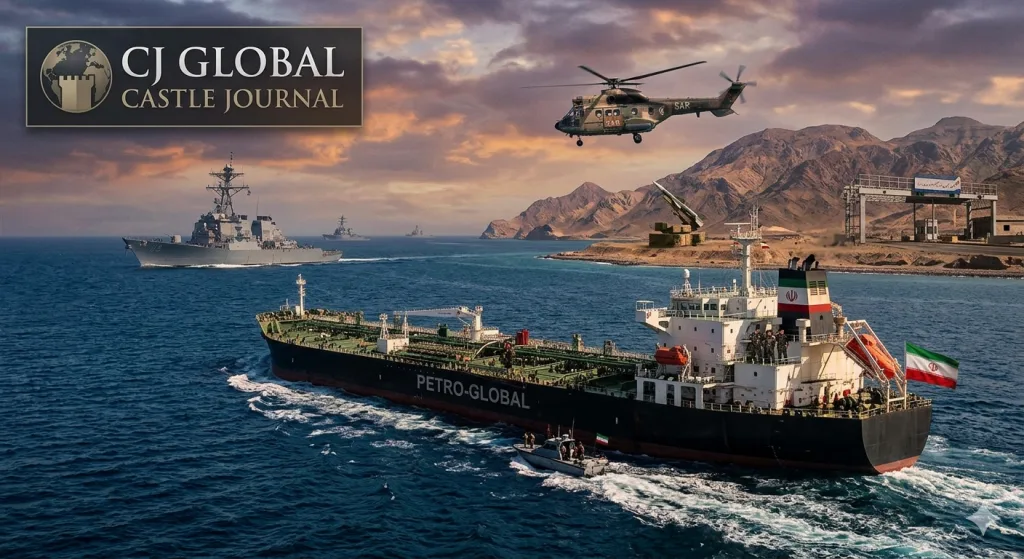
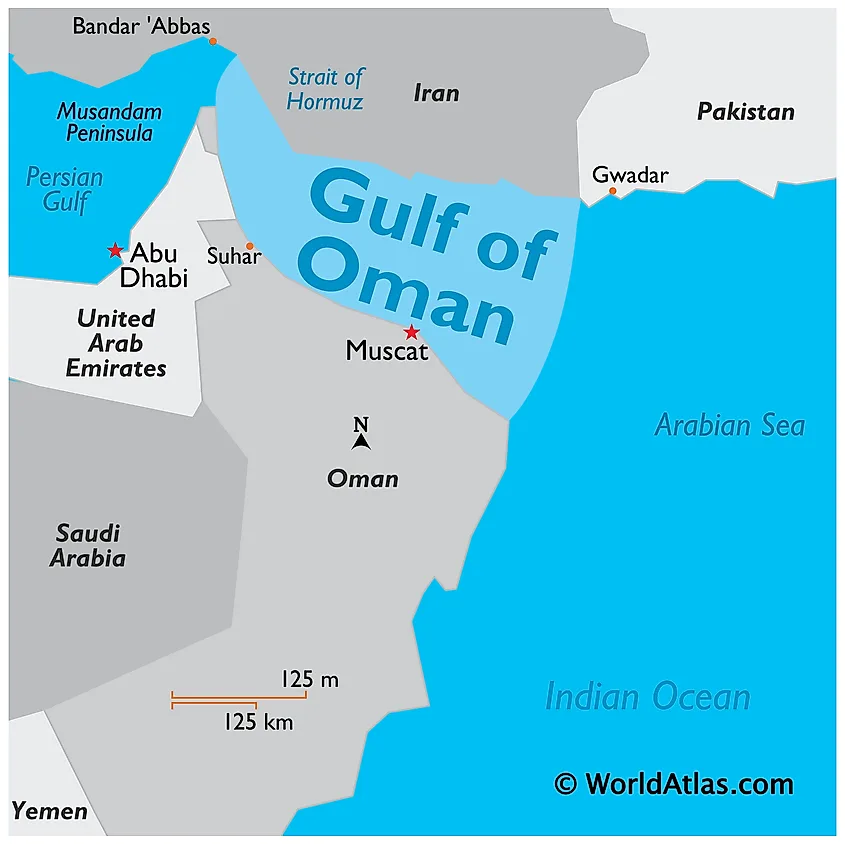
The friction reached a boiling point when the IRGC Navy deployed anti-ship cruise missiles against commercial vessels transiting Omani and international waters, claiming absolute administrative management over the gateway.
Tehran’s strategic gamble—utilizing localized kinetic pressure to force deeper diplomatic concessions from western powers—backfired completely. Rather than forcing a return to the negotiating table, the unauthorized targeting of neutral merchant vessels triggered an immediate, overwhelming military response from the West.
A Massive Air Campaign and Reimposed Blockades
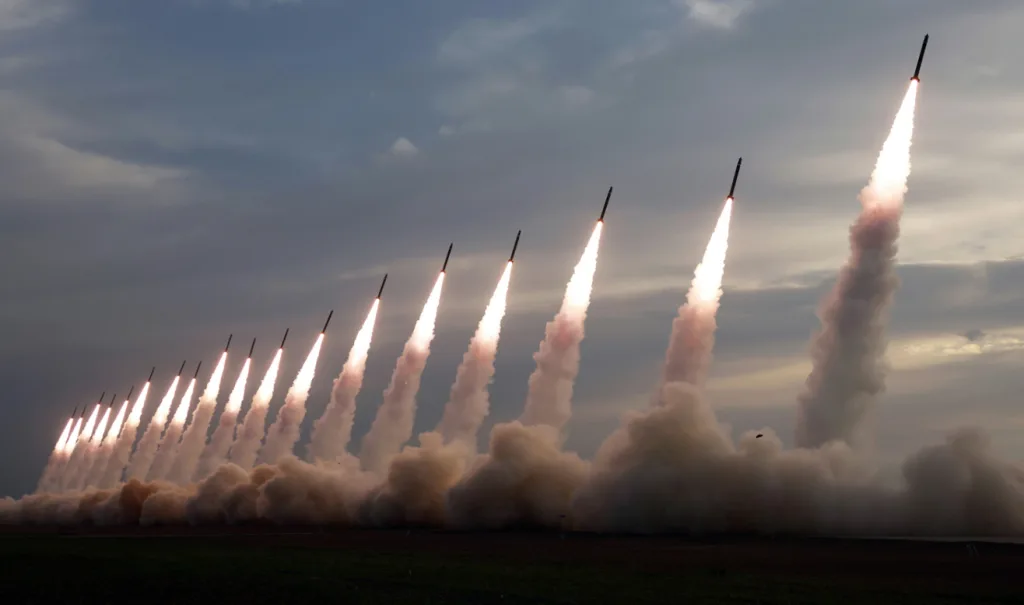
In direct response to the disruption of global energy supply lines, the United States Central Command (CENTCOM) initiated a massive, targeted air campaign.
Over the past 72 hours, allied forces have struck more than 140 military installations across southern Iranian provinces, focusing heavily on coastal radar networks, surface-to-air missile batteries, and drone launch facilities.
Simultaneously, the political landscape in Washington shifted aggressively. President Donald Trump issued formal notification to Congress that the operational parameters of the military footprint have changed, effectively circumventing prolonged legislative debates to secure a 60-day window of unilateral executive action.
The White House has now enacted a total naval blockade on all primary Iranian shipping ports. Under the newly enforced protocols, any vessel suspected of entering or departing blockaded zones without explicit allied authorization will face immediate interception, diversion, or capture.
Furthermore, the American administration introduced a polarizing doctrine suggesting the US will permanently police the waterway as the “guardian of the strait,” hinting at a mandatory transit toll system to offset operational military expenditures—a move that has already drawn sharp rebukes from European and Asian maritime legal bodies.
CJ Global Geopolitical Realism Analysis
From a perspective rooted firmly in international law and strict journalistic realism, the current crisis reveals a profound imbalance between regional asymmetric tactics and global deterrence strategies.
Tehran’s calculated aggression against littoral states—including recent missile operations threatening logistical hubs in Bahrain, Kuwait, and UAE waters—is an explicit attempt to shatter the regional security consensus. By inflicting financial and physical costs on neighboring states, Iran hopes to isolate Washington’s forward-deployed naval assets.
However, this strategy ignores the economic realities of a hyper-connected global supply chain. The International Maritime Organization (IMO) has already advised complete avoidance of the strait until safe transit parameters can be verified, stranding thousands of global seafarers and forcing international shipping conglomerates to reroute around Africa.
The lesson of the June MoU is clear: transitional peace agreements cannot survive when signed under bad-faith pretenses or when treated as temporary covers for territorial expansion.
For global governance to be restored, any future diplomatic framework must be backed by enforceable maritime penalties and an absolute, unyielding adherence to the international laws governing free trade and navigation.
Conclusion
The Persian Gulf stands at a perilous crossroads. The collapse of the June MoU proves that localized ceasefires are entirely insufficient if they fail to dismantle the underlying proxy networks and aggressive naval doctrines that drive the conflict. As long as regional actors view vital international waterways as private levers for political extortion, the global economy will remain inherently vulnerable to sudden supply shocks and catastrophic military escalations.
Castle Journal will continue to monitor the frontlines, providing clear, unembellished, and rigorous analysis as world leaders scramble to contain a war that threatens to consume the entire global energy landscape.
Abeer Almadawy is a philosopher who established the third mind theory research and the philosophy of non-self and trans egoism. She is also the author of the New Global Constitution for the leadership Governance 2030/2032. She has many books published in English, Arabic, Chinese, French and others.
——
Castle Journal Ltd
British company for newspapers and magazines publishing
London-UK – licensed 10675
Founder | Owner| CEO
Abeer Almadawy
Castle Journal newspapers are the only voice and the brain of the world leadership governance.

