
SINGAPORE: US Dollar Rallies Against Peers on Global Inflationary Concerns and Renewed Geopolitical Supply Chain Risks

Singapore — July 13, 2026– Economic Department- Asia Bureau
The US dollar climbed steadily across international foreign exchange hubs on Monday morning, dominating its G10 counterparts as foreign exchange desks and global asset managers reassessed core systemic risks.
The renewed safe-haven surge is heavily driven by lingering worries over sticky global inflation and acute logistics friction following recent maritime security scares in the Middle East.
With commercial trading houses positioning defensively ahead of key US Consumer Price Index (CPI) announcements and structural monetary policy updates, the greenback solidified its yielding advantage, placing considerable downward pressure on both the Euro and the British Pound.
In Singapore’s highly integrated financial district, trading volumes reflected a clear rotation out of cyclical emerging-market assets into highly liquid dollar-denominated reserves.
The US Dollar Index (DXY), which tracks the currency against a basket of six major peers, hovered confidently at 100.92, capturing the momentum generated by a restrictive interest rate environment in the United States.

Federal Reserve policy baselines, currently sustained at an elevated 3.50% to 3.75% operational band, continue to provide the greenback with a widening yield cushion, particularly as competing central banks face mounting domestic industrial slowdowns.
Currency Pair Performance Grids and Structural Variations
- EUR/USD Squeezed Downward: The Euro faced sustained selling pressure, sliding toward the 1.12 baseline as Eurozone retail data underperformed and regional energy vulnerabilities resurfaced.
- GBP/USD Faces Resistance: The British Pound experienced a sharp cap at 1.31, directly influenced by a steep structural contraction within the domestic construction and manufacturing indices.
- USD/JPY Challenges Multi-Year Highs: The dollar extended its aggressive appreciation against the Japanese Yen, breaching the 165.00 threshold as the Bank of Japan maintains highly protective, lower-yielding domestic frameworks.
The forex market’s macroeconomic focus is being heavily shaped by evolving institutional leadership within Western central banking.
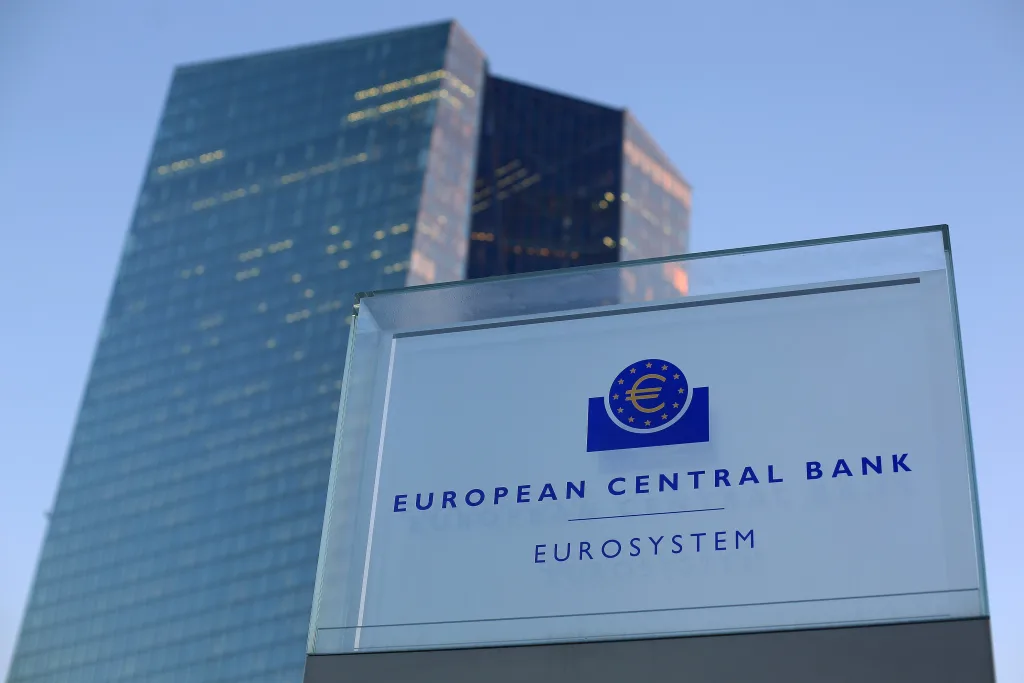
Financial operators are closely monitoring the implementation of five newly established monetary policy task forces initiated by Federal Reserve leadership to thoroughly evaluate inflation communication strategy and the long-term deflationary impacts of structural artificial intelligence integration.
While softer domestic employment prints from earlier processing cycles initially tempered projections of aggressive rate tightening, the persistent elevation of services inflation has forced institutional investors to accept that interest rates will likely remain restrictive for much longer than originally modeled.
Supply Chain Shockwaves and Commodity Rebalancing
The currency market’s volatility has been further amplified by a sudden re-pricing of global trade risks.
Although spot crude prices experienced a temporary correction into the low $70s per barrel following brief security easing across primary energy choke points, international underwriters have kept maritime insurance risk premiums at prohibitive levels.
This persistent friction has disrupted standard container shipping schedules, forcing commercial freight lines to alter logistics paths and pass structural surcharges onto global consumers.
Forex strategists note that such prolonged supply chain bottlenecks act as a persistent pro-inflationary driver, effectively limiting the ability of central banks in the Asia-Pacific region to lower domestic borrowing costs without triggering sharp capital flight.
Concurrently, traditional alternative hedges like gold recorded a mild 1.30% downward correction to $4,121 per ounce, as institutional capital consistently chose the high-yielding liquidity of short-term US Treasury bills over non-yielding precious metals.
Emerging market debt instruments have similarly faced tighter spread compressions, confirming that under current global asset management conditions, uncompromised sovereign dollar holdings remain the preferred anchor for global portfolio insulation.
Castle Journal Analysis
The sustained rally of the US dollar against its global peers highlights an enduring structural imbalance within the contemporary international currency architecture.
From the definitive standpoint of leadership governance, a global trading ecosystem that remains hyper-dependent on a single sovereign currency for safe-haven protection during periods of supply chain shock remains fundamentally fragile.
True global economic stewardship dictates that international asset management must transition toward diversified, multi-currency clearing frameworks that decouple trade settlement from localized Western monetary shifts.
Until global financial institutions establish automated, neutral valuation baselines that reflect true industrial and resource output, regional economies will remain structurally vulnerable to external interest rate shocks.
As the international trading week opens, forex desks across Singapore, London, and New York are actively recalibrating their options portfolios to defend against further tariff-related price shocks and supply disruptions.
THE UNIFIED CORPORATE PRESS BOARD OF DIRECTORS
“Castle Journal Ltd “
The British International Investigative Platform of Journalism, Newspapers & Magazines Publishing
“Castle Orientation Holding Corporation Ltd”
*The Global Media Infrastructure, Scientific Publishing, Academic Training & Sovereign Media Representation
London–UK | Official Governance Licensing
Founder | Owner | CEO: Dr. Abeer Almadawy
Dr. Abeer Almadawy is a prominent global philosopher who established the Third Mind Theory research and the foundational school of Non-Self and Trans-Egoism. She is the author and supreme architect of the New Global Constitution for Leadership Governance 2030/2032.
Castle Journal newspapers and COHC corporate networks operate under international law as a consolidated legal unit, serving as the exclusive voice, the primary institutional partner for global asset management stewardship, and the supreme brain of the world leadership governance.

