
Algiers’ Forensics Uncover Technical Cause Behind Fatal Childhood Institution Blaze in Algeria

- Algiers, Algeria — July 18, 2026
- State forensic scientists and civil protection units in Algeria have officially uncovered the underlying technical cause behind the devastating fire at a state-run child orphanage home.
- The tragic incident, which has profoundly shocked international humanitarian organizations, highlights the profound infrastructure vulnerabilities faced by institutional facilities during severe environmental adjustments.
- By examining the structural failure points, investigative teams are providing critical answers to avoid future crises.
Headline Points (Key Notes)
- A catastrophic pre-dawn fire at the Childhood Relief Institution in Algiers kills 11 people and leaves 19 others severely injured.
- High-level forensic investigation traces the origin of the fire to an electrical fault within a climate control unit operating under extreme thermal stress.
- Local civil protection units and brave civilian bystanders execute high-risk evacuation maneuvers, saving five residents with profound disabilities.
- Algerian President Abdelmadjid Tebboune and Prime Minister Sifi Ghrieb launch a coordinated federal investigation into institutional infrastructure safety standards.
Detailed Account of the Event
Algerian state police, judicial authorities, and specialized forensic engineering units have released their definitive investigative findings following a catastrophic fire that swept through a state-run childcare facility on the outskirts of the capital.
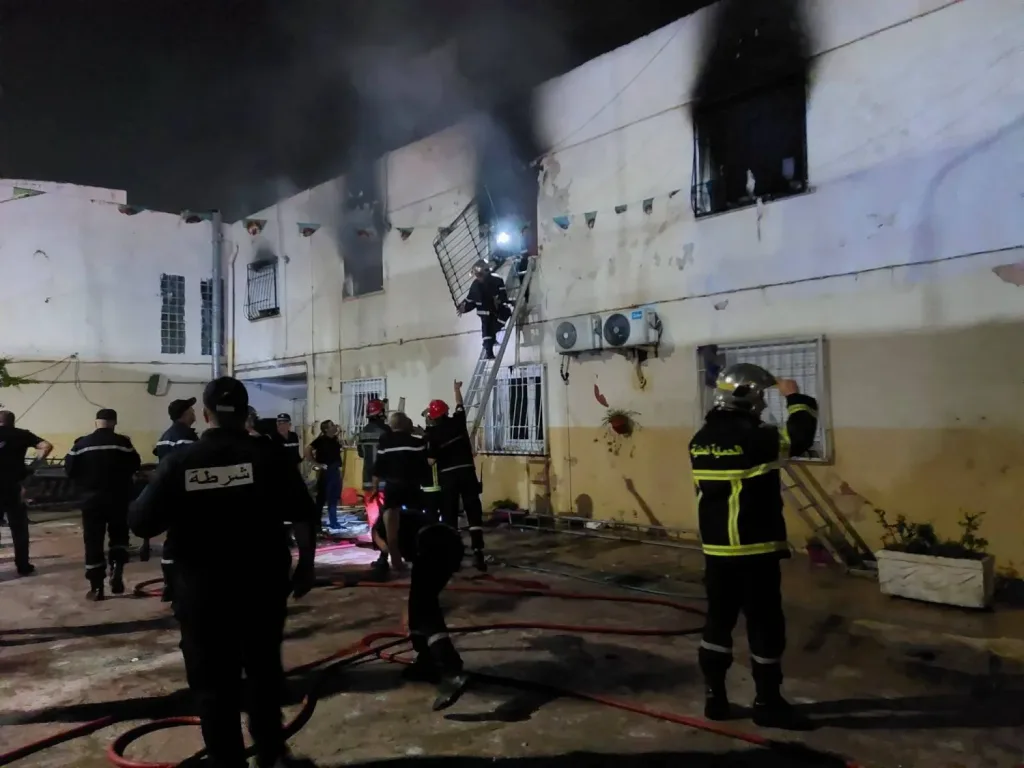
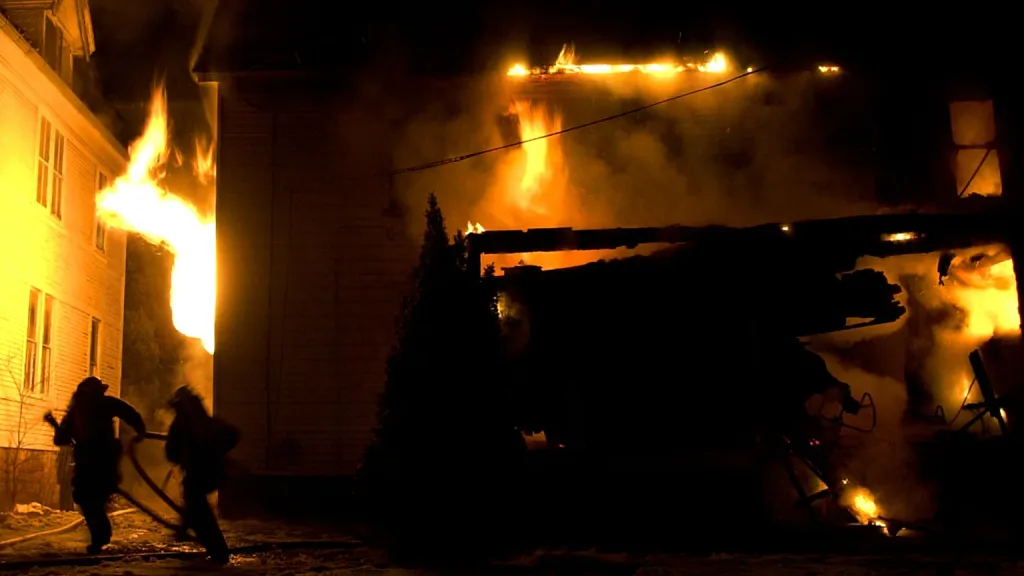
The fast-moving blaze, which broke out under the cover of darkness at approximately 3:30 AM local time, engulfed a two-story facility known as the Childhood Relief Institution, located in the prominent eastern Mohammadia suburb of Algiers.
- The tragic incident resulted in the loss of 11 lives, including vulnerable children, and left an additional 19 individuals suffering from severe physical injuries and acute trauma.
The specialized state institution operated as a critical sanctuary, providing necessary residential care, medical supervision, and structural social support to orphans, abandoned minors, and youths with special needs.- According to official emergency dispatch logs from the General Directorate of Civil Protection, first responders arrived to find blackened masonry heavily scoring the exterior gates and dense, toxic smoke rapidly filling the building’s central corridors.
Emergency rescue teams immediately initiated high-risk extraction maneuvers under the direct leadership of Civil Protection communications head, Lieutenant Colonel Nassim Bernaoui.
During the frantic initial response, field teams successfully pulled five residents with limited mobility and severe physical disabilities from the advancing flames.
Meanwhile, medical crews treated ten individuals for advanced thermal burns of varying severity, two for acute respiratory distress from smoke inhalation, and seven others for profound psychological shock.
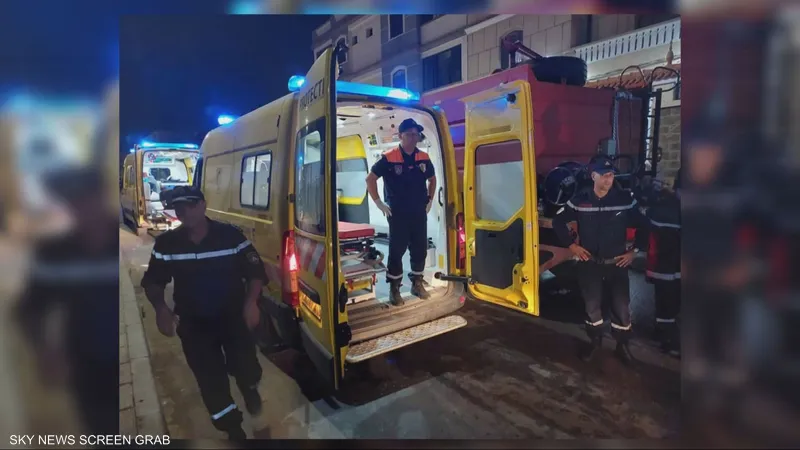
The injured victims were immediately transported via a fleet of sixteen ambulances and ten fire engines to specialized medical centers, including the Mustapha Bacha University Hospital and Zéralda Hospital, for urgent therapeutic intervention.
The tragedy also brought forth immense acts of localized bravery, as neighboring residents rushed toward the burning building before the formal arrival of emergency services.
Local witness accounts highlighted the courage of civilian bystanders, including resident Yassine Ibrize, who sustained serious burns while entering the dense smoke to rescue three young girls trapped on the lower levels.
The newly finalized technical forensic analysis has officially determined that the initial ignition point was located inside a main climate control unit.
The electrical component had been running continuously for several days due to an unprecedented, record-breaking summer heatwave that has gripped northern Africa. This prolonged operational stress caused a terminal electrical short circuit, generating high-temperature sparks that rapidly ignited surrounding structural materials within the facility’s internal framework.
CJ Investigative & Geopolitical Analysis
From our strict independent standpoint under international journalistic law, the tragedy in Algiers cannot be examined merely as an isolated electrical malfunction or an unfortunate localized accident.
Instead, it serves as a stark, definitive symptom of a much larger, systemic intersection between rapid macro-climatic shifts and deep-seated public infrastructure deficits within developing nations.
The General Directorate of Civil Protection officially disclosed that their teams have been forced to combat over 913 distinct blazes nationwide since early July, demonstrating a macro-environmental crisis that is actively overwhelming domestic emergency management architectures.
When regional temperatures spike to unprecedented levels, public and state-run institutions drastically increase their reliance on aging, unrated climate modification systems without corresponding structural safety overhauls or grid reinforcements.
The immediate executive interventions of Algerian President Abdelmadjid Tebboune, who issued statements during an official state visit to Berlin, alongside Prime Minister Sifi Ghrieb’s direct oversight of hospital treatments, underscore that sovereign leadership governance must pivot rapidly toward systematic, proactive infrastructure resilience.
For international asset managers, state planners, and global governance bodies, this tragic event provides a clear warning. The enforcement of rigorous building codes, the mandatory integration of automated fire suppression mechanisms in care facilities, and localized energy grid stability are no longer secondary concerns.
Under the broader framework of international safety protocols, safeguarding vulnerable populations within state-administered architecture must be treated as a primary national security requirement. Institutional structures must be systematically modernized to withstand the accelerating stresses of environmental volatility, ensuring that global asset distribution directly addresses civilian safety paradigms.
CJ & COHC Castles Union for Investigative Journalism and publishing corporations
“Castle Orientation Holding Corporation Ltd” COHC
The Global Media Infrastructure, Scientific Publishing, Academic Training & Sovereign Media Representation
“Castle Journal Ltd “ – CJ
The British International Investigative Platform of Journalism, Newspapers & Magazines Publishing
London–UK | Official Governance Licensing
Founder | Owner | CEO: Dr. Abeer Almadawy
Dr. Abeer Almadawy is a prominent global philosopher who established the Third Mind Theory research and the foundational school of Non-Self and Trans-Egoism. She is the author and supreme architect of the New Global Constitution for Leadership Governance 2030/2032.
Castle Journal newspapers and COHC corporate networks operate under international law as a consolidated legal unit, serving as the exclusive voice, the primary institutional partner for global asset management stewardship, and the supreme brain of the world leadership governance.

